Beschreibung
Produktdetails
Einband
Gebundene Ausgabe
Erscheinungsdatum
05.09.2023
Verlag
Syracuse University PressSeitenzahl
280
Maße (L/B/H)
23.5/15.7/2.3 cm
Gewicht
272 g
Sprache
Englisch
ISBN
978-0-8156-3815-5
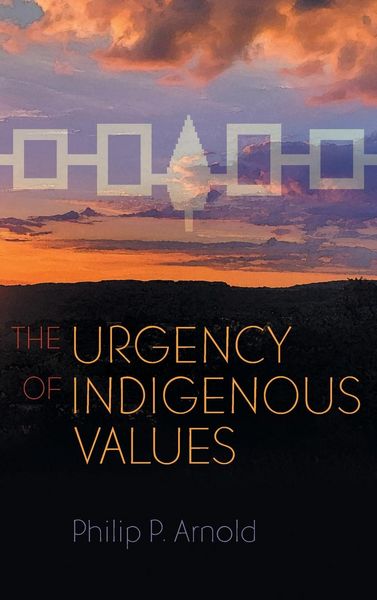
In this book, Philip Arnold utilizes a collaborative method, derived from the "Two-Row Wampum" (1613) and his 40 year relationship with the Haudenosaunee, in exploring the urgent need to understand Indigenous values, support Indigenous Peoples, and to offer a way toward humanity's survival in the face of ecological and environmental catastrophe. Indigenous values connect human beings with the living natural world through ceremonial exchange practices with non-human beings who co-inhabit the homelands. Arnold outlines Indigenous traditions of habitation and ceremonial gift economies and contrasts those with settler-colonial values of commodification where the land and all aspects of material life belongs to human beings and are reduced to monetary use-value.
Through an examination of the Doctrine of Christian Discovery, a series of fifteenth-century documents that used religious decrees to justify the subjugation and annihilation of Indigenous Peoples, Arnold shows how issues such as environmental devastation, social justice concerns, land theft, and forced conversion practices have their origins in settler-colonial relationships with the sacred-that persists today. Designed to initiate a conversation in the classroom, in the academy, and in various communities about what is essential to the category of Indigeneity, this book offers a way of understanding value systems of Indigenous peoples. By pairing the concepts of Indigeneity and religion around competing values systems, Arnold transforms our understanding of both categories.
Through an examination of the Doctrine of Christian Discovery, a series of fifteenth-century documents that used religious decrees to justify the subjugation and annihilation of Indigenous Peoples, Arnold shows how issues such as environmental devastation, social justice concerns, land theft, and forced conversion practices have their origins in settler-colonial relationships with the sacred-that persists today. Designed to initiate a conversation in the classroom, in the academy, and in various communities about what is essential to the category of Indigeneity, this book offers a way of understanding value systems of Indigenous peoples. By pairing the concepts of Indigeneity and religion around competing values systems, Arnold transforms our understanding of both categories.
Kundinnen und Kunden meinen
Verfassen Sie die erste Bewertung zu diesem Artikel
Helfen Sie anderen Kund*innen durch Ihre Meinung