Gutscheinbedingungen

*Gültig bis 07.06.2026 auf (fast) alles. Ausgeschlossen sind Smartboxen, Zeitschriften, Tickets, Lebensmittel, Gaming-Elektroartikel, Tinte/Toner, Gutscheine, Geschenkkarten, Blumen und Abos | Einlösbar in allen Buchhandlungen von Orell Füssli, Barth Bücher, Buchladen Rapunzel, Schuler Orell Füssli, Stauffacher und ZAP unter Vorweisung des Gutscheins, auf www.orellfüssli.ch durch Eingabe des Gutscheincodes. Beim Service „eBooks verschenken“ und bei eBook-Käufen via eReader nicht einlösbar | Mindesteinkaufswert: Fr. 100.- | Nicht mit anderen Rabatten kumulierbar.

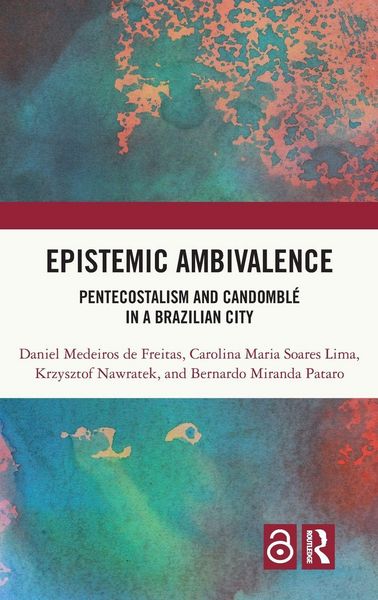
Produktbild: Epistemic Ambivalence

Epistemic Ambivalence Pentecostalism and Candomblé in a Brazilian City

Fr. 253.00

inkl. gesetzl. MwSt., Versandkostenfrei


Beschreibung

Produktdetails

Einband

Gebundene Ausgabe

Erscheinungsdatum

28.07.2023

Abbildungen

schwarz-weiss Illustrationen, Zeichnungen, schwarz-weiss, Tabellen, schwarz-weiss

Verlag

Taylor & Francis

Seitenzahl

118

Maße (L/B/H)

24/16.1/1.1 cm

Gewicht

295 g

Sprache

Englisch

ISBN

978-1-03-216312-3

Beschreibung

Rezension

"Epistemic Ambivalence: Pentecostalism and Candomblé in a Brazilian City" offers a fascinating and nuanced account of Candomblé and Pentecostal churches in Belo Horizonte, Brazil. By exploring the parishioners' sense of place and especially their appeals to various sources of epistemic capital, this transdisciplinary work challenges conventional theories of urban spaces and makes an intriguing contribution to larger discussions in the study of post-secularism as well as decolonial urban theory. It will necessarily be appealing to a range of scholars in urban theory and religious studies."

-Jason Ananda Josephson Storm, Professor of Religion, Chair of Science & Technology Studies, Williams College


"Epistemic Ambivalence: Pentecostalism and Candomblé in a Brazilian City is a necessary disruptor to the field of Religious Studies. From its collaborative, inclusive and interdisciplinary composition to its embrace of new spacial, material and epistemic models, the authors have given us an exemplar of decolonisation and inclusivity. Not merely an account of religious diversity and change, Epistemic Ambivalence is an example of how the study of religion itself must change."

-Dr David Robertson, The Open University


"This book presents and demonstrates a new framework for analyzing the presence of religion in urban spaces. It questions the popular sacred-profane dialogue and inaugurates a new type of engagement based on the repertoire or epistemic capital of city dwellers in Brazil. This is a very sensitive and sympathetic approach to the study of lived experiences of the urban population. The result is a refreshing analysis that navigates epistemic ambivalences with internal understanding. It is a book that will remain popular for a long time."

-Olufunke Adeboye, Professor of History & Dean of Arts, University of Lagos, Nigeria

Produktdetails

Einband

Gebundene Ausgabe

Erscheinungsdatum

28.07.2023

Abbildungen

schwarz-weiss Illustrationen, Zeichnungen, schwarz-weiss, Tabellen, schwarz-weiss

Verlag

Taylor & Francis

Seitenzahl

118

Maße (L/B/H)

24/16.1/1.1 cm

Gewicht

295 g

Sprache

Englisch

ISBN

978-1-03-216312-3

Kundinnen und Kunden meinen

0 Bewertungen

Informationen zu Bewertungen

Zur Abgabe einer Bewertung ist eine Anmeldung im Konto notwendig. Die Authentizität der Bewertungen wird von uns nicht überprüft. Wir behalten uns vor, Bewertungstexte, die unseren Richtlinien widersprechen, entsprechend zu kürzen oder zu löschen.

Die Bewertungen sind nach Format, Anzahl Sterne und Datum sortiert.

Verfassen Sie die erste Bewertung zu diesem Artikel

Helfen Sie anderen Kund*innen durch Ihre Meinung

Kundinnen und Kunden meinen

0 Bewertungen filtern

Die Leseprobe wird geladen.
  • Produktbild: Epistemic Ambivalence
  • 1. Introduction: The confusing religious landscape in Brazil

    2. Flattening power structure (we have been being preached to)

    3. Conquer or hide

    4. Profane space does not exist

    5. Religious infrastructure

    6. Temple, street, home, and nature

    7. Interlude: Religion and music (Daniel's story)

    8. Beyond space (lessons from the pandemic)

    9. Conclusions: Demolishing the Babel