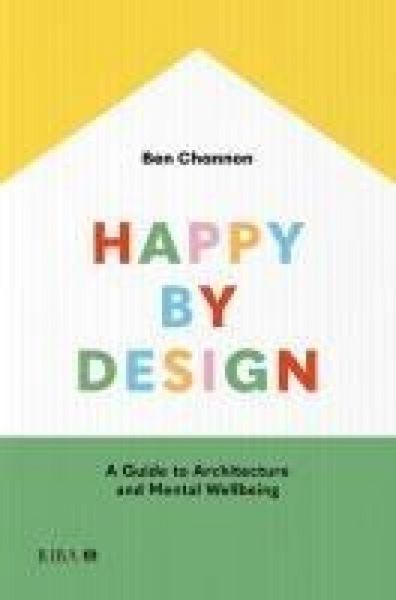
Produktbild: Channon, B: Happy by Design

Channon, B: Happy by Design A Guide to Architecture and Mental Wellbeing

Fr. 47.90

inkl. gesetzl. MwSt., Versandkostenfrei


Beschreibung

Produktdetails

Einband

Taschenbuch

Erscheinungsdatum

01.11.2023

Abbildungen

farbige, schwarzweisse Abbildungen

Verlag

Taylor and Francis

Seitenzahl

160

Maße (L/B/H)

12.3/18.7/1.4 cm

Gewicht

268 g

Sprache

Englisch

ISBN

978-1-915722-28-7

Beschreibung

Produktdetails

Einband

Taschenbuch

Erscheinungsdatum

01.11.2023

Abbildungen

farbige, schwarzweisse Abbildungen

Verlag

Taylor and Francis

Seitenzahl

160

Maße (L/B/H)

12.3/18.7/1.4 cm

Gewicht

268 g

Sprache

Englisch

ISBN

978-1-915722-28-7

Kundinnen und Kunden meinen

0 Bewertungen

Informationen zu Bewertungen

Zur Abgabe einer Bewertung ist eine Anmeldung im Konto notwendig. Die Authentizität der Bewertungen wird von uns nicht überprüft. Wir behalten uns vor, Bewertungstexte, die unseren Richtlinien widersprechen, entsprechend zu kürzen oder zu löschen.

Die Bewertungen sind nach Format, Anzahl Sterne und Datum sortiert.

Verfassen Sie die erste Bewertung zu diesem Artikel

Helfen Sie anderen Kund*innen durch Ihre Meinung

Kundinnen und Kunden meinen

0 Bewertungen filtern

Die Leseprobe wird geladen.
  • Produktbild: Channon, B: Happy by Design
  • Acknowledgements About the Author Introduction 1. Light, Orient buildings sensitively, Consider shadows, Be selective about window sizes, Avoid deep plans, Use rooflights shrewdly, Don’t overlook artificial light, Consider the temperature of artificial light, Use artificial light to create pockets of calm. 2. Comfort, Use tactile materials, Consider comfort as well as aesthetics, Think about the temperature of buildings, Ensure a good supply of fresh air, Ventilation (new addition), Keep the noise out 3. Control, Design adaptable spaces, Give people better control over their environment, Provide people with a range of environments, Allow for personalisation, Give people better control over their diets, Give building users privacy. 4. Nature, Bring nature in, Provide views of nature, Put gardens on the roof, Design gardens and parks as an escape from the urban, Integrate or give views of water, Improve ecology and biodiversity, Use nature to educate, engage and involve. 5. Aesthetics, Use colour wisely, Create moments of joy, Avoid visual monotony, Make buildings legible, Celebrate the simple, Get the proportions right. 6. Activity, Encourage activity, Design-in spaces for exercise, Design wider streets, Design for the bicycle, Connect to nearby facilities, Don’t overlook spaces for inactivity. 7. Psychology, Storage, Provide high ceilings wherever possible, Celebrate the entrance, Go open-plan, Bigger isn’t always better, Consider prospect and refuge theory, Create an atmosphere, Conclusions Notes + References Index