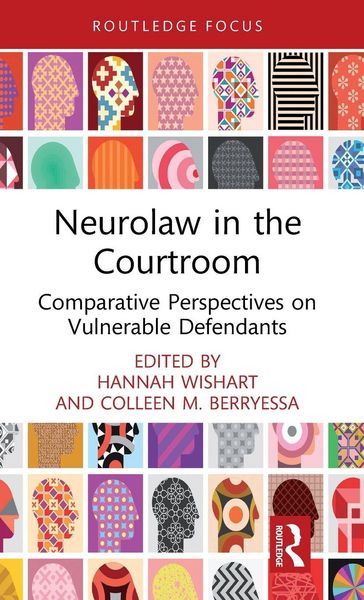

Neurolaw in the Courtroom Comparative Perspectives on Vulnerable Defendants
-
- Hardcover ausgewählt
- Taschenbuch
- eBook
-
Sprache:Englisch
Fr. 93.90
inkl. gesetzl. MwSt.,
Beschreibung
Produktdetails
Einband
Gebundene Ausgabe
Erscheinungsdatum
18.10.2023
Herausgeber
Hannah Wishart + weitereVerlag
Taylor & FrancisSeitenzahl
132
Maße (L/B/H)
22.2/14.5/1.1 cm
Gewicht
100 g
Sprache
Englisch
ISBN
978-1-03-236267-0
This collection presents a comparative perspective on interdisciplinary issues that fall under the emerging field of Neurolaw. The chapters embrace distinct procedural and evidential issues in the courtroom for vulnerable defendants, such as immature defendants, mentally disordered offenders and unfit-to-plead defendants, through a neuroscientific lens. This view is informed by worldwide analyses from legal academics, philosophers, and legal practitioners. The work brings together interdisciplinary and leading perspectives to discuss the use and relevancy of neuroscience at trial, and how the use of neuroscience is currently benefiting and impacting vulnerable defendants in global criminal trials. As such, the book builds upon and adds to the existing literature in this field by providing a comprehensive coverage of the intersection between these disciplines for vulnerable defendants in the courtroom. Key issues covered include: vulnerable defendants and the pre-trial process; the trial process; the use of neuroscience as expert evidence at trial; and vulnerable defendants, neuroscience and mitigation of sentence. Through original exploration presented by contributors from both academia and practice, the book will be of interest to academics, researchers and policy-makers working in the areas of Criminal Law and Procedure.
Kundinnen und Kunden meinen
Verfassen Sie die erste Bewertung zu diesem Artikel
Helfen Sie anderen Kund*innen durch Ihre Meinung