Gutscheinbedingungen

*Gültig bis 07.06.2026 auf (fast) alles. Ausgeschlossen sind Smartboxen, Zeitschriften, Tickets, Lebensmittel, Gaming-Elektroartikel, Tinte/Toner, Gutscheine, Geschenkkarten, Blumen und Abos | Einlösbar in allen Buchhandlungen von Orell Füssli, Barth Bücher, Buchladen Rapunzel, Schuler Orell Füssli, Stauffacher und ZAP unter Vorweisung des Gutscheins, auf www.orellfüssli.ch durch Eingabe des Gutscheincodes. Beim Service „eBooks verschenken“ und bei eBook-Käufen via eReader nicht einlösbar | Mindesteinkaufswert: Fr. 100.- | Nicht mit anderen Rabatten kumulierbar.

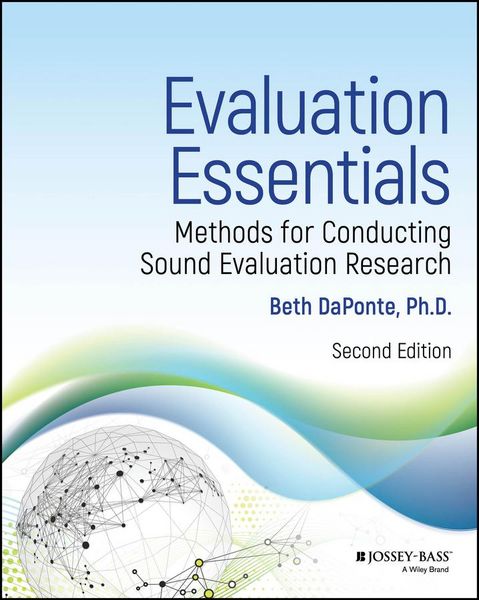
Produktbild: Evaluation Essentials
Band 23

Evaluation Essentials Methods for Conducting Sound Evaluation Research

Fr. 139.00

inkl. gesetzl. MwSt., Versandkostenfrei


Beschreibung

Produktdetails

Einband

Taschenbuch

Erscheinungsdatum

24.04.2025

Verlag

WILEY

Seitenzahl

208

Maße (L/B/H)

23.4/18.8/1.5 cm

Gewicht

390 g

Auflage

2. Auflage

Sprache

Englisch

ISBN

978-1-394-23478-3

Beschreibung

Produktdetails

Einband

Taschenbuch

Erscheinungsdatum

24.04.2025

Verlag

WILEY

Seitenzahl

208

Maße (L/B/H)

23.4/18.8/1.5 cm

Gewicht

390 g

Auflage

2. Auflage

Sprache

Englisch

ISBN

978-1-394-23478-3

Herstelleradresse

Libri GmbH
Europaallee 1
36244 Bad Hersfeld
DE

Email: gpsr@libri.de

Kundinnen und Kunden meinen

0 Bewertungen

Informationen zu Bewertungen

Zur Abgabe einer Bewertung ist eine Anmeldung im Konto notwendig. Die Authentizität der Bewertungen wird von uns nicht überprüft. Wir behalten uns vor, Bewertungstexte, die unseren Richtlinien widersprechen, entsprechend zu kürzen oder zu löschen.

Die Bewertungen sind nach Format, Anzahl Sterne und Datum sortiert.

Verfassen Sie die erste Bewertung zu diesem Artikel

Helfen Sie anderen Kund*innen durch Ihre Meinung

Kundinnen und Kunden meinen

0 Bewertungen filtern

Die Leseprobe wird geladen.
  • Produktbild: Evaluation Essentials
  • Preface ix

    Acknowledgments x

    One: Introduction 1

    Learning Objectives 1

    Introduction 2

    Size and Importance of Nonprofit Sector 3

    The Evaluation Framework 5

    Structure of Book 9

    Summary 9

    Key Terms 10

    Discussion Questions 10

    Two: Describing the Initiative 11

    Learning Objectives 11

    Introduction 12

    Reasons to Rigorously Describe the Program 13

    The Logistics of Describing the Program 14

    Common Mistakes Made Describing Initiative and Programs 16

    The Program Is Alive and So Is Its Description 18

    Theory of Change 19

    The Program Logic Model 25

    Analyzing the Program Logic Model 34

    Challenges of Multisite Programs 35

    Program Implementation Model 36

    Examples of Program Descriptions 37

    Summary 67

    Key Terms 68

    Discussion Questions 68

    Three: Laying the Evaluation Ground Work 69

    Learning Objectives 69

    Evaluation Approaches 70

    Framing Evaluation Questions 72

    Insincere Reasons for Evaluation 75

    High Stakes Evaluation 75

    Who Will do the Evaluation? 76

    External Evaluators 77

    Internal Evaluators 79

    Independence of the Evaluator 79

    External Versus Internal Evaluators 80

    Confidentiality and Ownership of Evaluations 81

    Endorsement and Action on Recommendations 82

    Evaluation Policy 83

    The Evaluation Report 84

    Summary 86

    Key Terms 86

    Discussion Questions 86

    Four: Causation 87

    Learning Objectives 87

    Introduction 88

    Necessary and Sufficient 88

    Setting Cutoff Points and Causal Interpretation 91

    Intervening Variables 95

    Types of Causal Effects 97

    Lagged Effects 98

    Permanency of Effects 98

    Functional Form of Impact 99

    Spectacular Causes and Effects 100

    Summary 101

    Key Terms 102

    Discussion Questions 102

    Five: the Prisms of Validity 103

    Learning Objectives 103

    Introduction 104

    Statistical Conclusion Validity 105

    Types of Erroneous Conclusions: Type 1 and Type 2 Errors 106

    Threats to Statistical Conclusion Validity 107

    Internal Validity 111

    Threats to Internal Validity 111

    Summary 118

    Construct Validity 119

    Threats to Construct Validity 120

    Summary 122

    External Validity 122

    Considerations for Determining the External Validity of Studies 122

    Summary 123

    Conclusions 124

    Key Terms 124

    Discussion Questions 124

    Six: Attributing Outcomes to the Program: Quasi-Experimental Design 126

    Learning Objectives 126

    Introduction 127

    Quasi-Experimental Notation 127

    Frequently used Designs that do not Show Causation 128

    One-Group Posttest-Only 128

    Posttest-Only with Nonequivalent Groups 129

    Participants' Pretest-Posttest 130

    Designs that Generally Permit Causal Inferences 131

    Untreated Control Group Design with Pretest and Posttest 131

    Delayed Treatment Control Group 137

    Different Samples from the Same Populations Design 140

    Nonequivalent Observations Drawn from One Group 141

    Equivalent Groups Using Switched Measures 142

    Cohort Designs 144

    Time Series Designs 146

    Summary 148

    Key Terms 149

    Discussion Questions 149

    Seven: Collecting Data 150

    Learning Objectives 150

    Introduction 151

    Informal and Loosely Structured Interviews 152

    Focus Groups 154

    Surveys 160

    Survey Instrument Design 161

    Target Populations and Sampling 169

    Informal Sampling Approaches 170

    Formal Sampling Approaches 171

    Best Practices in Administering Surveys to a Purposive Sample 172

    Follow-up for Nonresponse 173

    Secondary Data Sources 173

    Summary 174

    Key Terms 174

    Discussion Questions 175

    Eight: Conclusions 176

    Learning Objectives 176

    Using Evaluation Tools to Write Grant Proposals 177

    Hiring Evaluation Consultants 177

    Writing Recommendations 180

    The Tone of Evaluation Reports 180

    Finalization Process of Evaluation Reports 181

    Conclusions 182

    Discussion Questions 182

    Glossary 183

    Index 188