• Produktbild: Plant Peptide Hormones and Growth Factors
  • Produktbild: Plant Peptide Hormones and Growth Factors

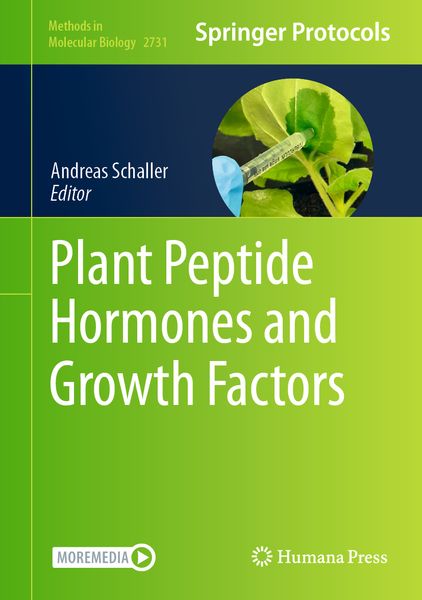
Plant Peptide Hormones and Growth Factors

Fr. 241.00

inkl. gesetzl. MwSt., Versandkostenfrei


Beschreibung

Produktdetails

Einband

Gebundene Ausgabe

Erscheinungsdatum

30.11.2023

Herausgeber

Andreas Schaller

Verlag

Springer Us

Seitenzahl

314

Maße (L/B/H)

26/18.3/2.4 cm

Gewicht

816 g

Sprache

Englisch

ISBN

978-1-07-163510-0

Beschreibung

Produktdetails

Einband

Gebundene Ausgabe

Erscheinungsdatum

30.11.2023

Herausgeber

Andreas Schaller

Verlag

Springer Us

Seitenzahl

314

Maße (L/B/H)

26/18.3/2.4 cm

Gewicht

816 g

Sprache

Englisch

ISBN

978-1-07-163510-0

Herstelleradresse

Libri GmbH
Europaallee 1
36244 Bad Hersfeld
DE

Email: gpsr@libri.de

Kundinnen und Kunden meinen

0 Bewertungen

Informationen zu Bewertungen

Zur Abgabe einer Bewertung ist eine Anmeldung im Konto notwendig. Die Authentizität der Bewertungen wird von uns nicht überprüft. Wir behalten uns vor, Bewertungstexte, die unseren Richtlinien widersprechen, entsprechend zu kürzen oder zu löschen.

Die Bewertungen sind nach Format, Anzahl Sterne und Datum sortiert.

Verfassen Sie die erste Bewertung zu diesem Artikel

Helfen Sie anderen Kund*innen durch Ihre Meinung

Kundinnen und Kunden meinen

0 Bewertungen filtern

  • Produktbild: Plant Peptide Hormones and Growth Factors
  • Produktbild: Plant Peptide Hormones and Growth Factors
  • Bioinformatics Methods for Prediction of Gene Families Encoding Extracellular Peptides.-  Identification of Bioactive Phytocytokines Using Transcriptomic Data and Plant Bioassays.-  Purification of Phytaspases Using a Biotinylated Peptide Inhibitor.-  Characterization of Phytaspase Proteolytic Activity Using Fluorogenic Peptide Substrates.-  Characterization of prolyl-4 hydroxylase substrate specificity using Pichia pastoris as an effective eukaryotic expression system.-  Extraction of Apoplastic Peptides for the Structural Elucidation of Mature Peptide Hormones in Arabidopsis.-  Assaying the Effect of Peptide Treatment on H + -Pumping Activity in Plasma Membranes from Arabidopsis Seedlings.-  A Seedling Growth Inhibition Assay to Measure Phytocytokine Activity.-  A Trojan Horse Aproach Using Ustilago maydis to Study Apoplastic Maize ( Zea mays ) Peptides in situ.-  Feeding Assay to Study the Effect of Phytocytokines on Direct and Indirect Defense in Maize.-  A Quick Method to Analyze Peptide-Regulated Anthocyanin Biosynthesis.-  Quantitative Measurement of Pattern-Triggered ROS Burst as an Early Immune Response in Tomato.-  Automated Real-Time Monitoring of Extracellular pH to Assess Early Plant Defense Signaling.-  Peptide-Mediated Cyclic Nucleotide Signaling in Plants: Identification and Characterization of Interactor Proteins with Nucleotide Cyclase Activity.-  Detection of Ligand-Induced Receptor Kinase and Signaling Component Phosphorylation With Mn 2+ -Phos-Tag SDS-PAGE.-  In-vivo Cross Linking of Biotinylated Peptide Ligands to Cell Surface Receptors.-  Evaluation of Direct Ligand-Receptor Interactions by Photoaffinity Labeling.-  Rapid Identification of Peptide-Receptor-Coreceptor Complexes in Protoplasts.-  Acridinium-Based Chemiluminescent Receptor-Ligand Binding Assay for Protein/Peptide Hormones.-  LuBiA (Luciferase-based Binding Assay): Glowing Peptides as Sensitive Probes to Study Ligand-Receptor Interactions.-  Microscale Thermophoresis (MST) to Study Rapid Alkalinization Factor (RALF) - Receptor Interactions.-  Isothermal Titration Calorimetry to Study Plant Peptide Ligand-Receptor Interactions.