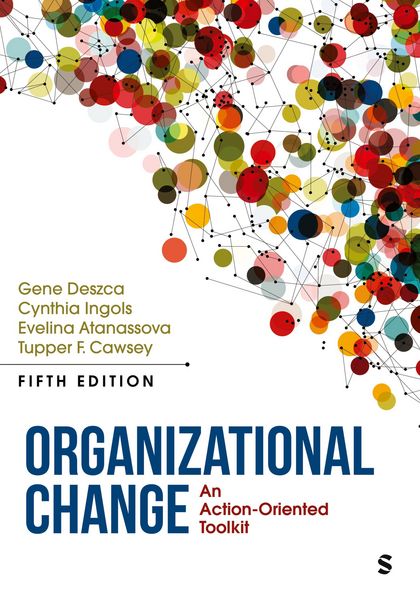
Produktbild: Organizational Change

Organizational Change An Action-Oriented Toolkit

Fr. 239.00

inkl. gesetzl. MwSt., Versandkostenfrei


Beschreibung

Produktdetails

Einband

Taschenbuch

Erscheinungsdatum

29.03.2024

Verlag

Sage Publications

Seitenzahl

568

Maße (L/B/H)

25.4/17.8/3.5 cm

Gewicht

970 g

Auflage

5. überarbeitete Auflage

Sprache

Englisch

ISBN

978-1-07-187631-2

Beschreibung

Rezension

"Easy to read, students will be able to understand and relate." Hal Kingsley 20211113

Produktdetails

Einband

Taschenbuch

Erscheinungsdatum

29.03.2024

Verlag

Sage Publications

Seitenzahl

568

Maße (L/B/H)

25.4/17.8/3.5 cm

Gewicht

970 g

Auflage

5. überarbeitete Auflage

Sprache

Englisch

ISBN

978-1-07-187631-2

EU-Ansprechpartner

Zeitfracht Medien GmbH
Ferdinand-Jühlke-Straße 7|99095|Erfurt|DE
produktsicherheit@zeitfracht.de

Herstelleradresse

SAGE Publications
1 Oliver's Yard 55 City Road|EC1Y 1SP|London|GB
orders@sagepub.co.uk

Kundinnen und Kunden meinen

0 Bewertungen

Informationen zu Bewertungen

Zur Abgabe einer Bewertung ist eine Anmeldung im Konto notwendig. Die Authentizität der Bewertungen wird von uns nicht überprüft. Wir behalten uns vor, Bewertungstexte, die unseren Richtlinien widersprechen, entsprechend zu kürzen oder zu löschen.

Die Bewertungen sind nach Format, Anzahl Sterne und Datum sortiert.

Verfassen Sie die erste Bewertung zu diesem Artikel

Helfen Sie anderen Kund*innen durch Ihre Meinung

Kundinnen und Kunden meinen

0 Bewertungen filtern

  • Produktbild: Organizational Change
  • Chapter 1 ¿ Changing Organizations in Our Complex World
    Defining Organizational Change
    The Orientation of This Book
    The Implications of Worldwide Trends for Change Management
    Organizational Change Roles
    The Requirements for Becoming a Successful Change Leader
    Chapter 2 ¿ How to Lead Organizational Change: Frameworks
    Why Systematically Learn about Organizational Change?
    Differentiating How to Change from What to Change
    (1) Stage Theory of Change: Lewin
    (2) Eight-Stage Model of Organizational Change: Kotter
    (3) Giving Voice to Values: Gentile
    (4) Emotional Transitions Through Change: Duck
    (5) The Change Path Model: Deszca, Ingols, and Atanassova
    Application of the Change Path Model
    Chapter 3 ¿ What to Change in an Organization: Frameworks
    Open Systems Approach to Organizational Analysis
    (1) Nadler and Tushman's Congruence Model
    (2) Bolman and Deal's Four-Frame Model
    (3) Sterman's Systems Dynamics Model
    (4) Greiner's Model of Organizational Growth
    Chapter 4 ¿ Who Leads the Change
    The Strategic Purpose of Change Leadership
    Demystifying Successful Change Leaders
    Developing into a Change Leader
    Diverse Types of Change Leaders
    Change Teams
    Internal Versus External Consultants
    Change from the Middle: Everyone Needs to Be a Change Leader
    Rules of Thumb for Change Agents
    Chapter 5 ¿ Awakening: Building and Energizing the Need for Change
    Understanding the Need for Change
    Assessing the Readiness for Change
    Developing a Powerful Vision for Change
    The Difference Between an Organizational Vision and a Change Vision
    Examples of Visions for Change
    Chapter 6 ¿ Navigating Change Through Formal Structures and Systems
    Making Sense of Formal Structures and Systems
    Impact of Uncertainty and Complexity on Formal Structures and Systems
    Formal Structures and Systems from an Information Perspective
    Using Structures and Systems to Influence the Approval and Implementation of Change
    Aligning Strategically, Starting Small, and "Morphing" Tactics
    The Interaction of Structures and Systems with Change During Implementation
    Using Structures and Systems to Facilitate the Acceptance of Change
    Chapter 7 ¿ Navigating Organizational Politics and Culture
    Power Dynamics in Organizations
    Organizational Culture and Change
    Tools to Assess the Need for Change
    Chapter 8 ¿ Mobilizing: Recipients of Change and Internal Stakeholders
    Stakeholders Respond Variably to Change Initiatives
    Responding to Various Feelings in Stakeholders
    Make the Change to the Psychological Contract Explicit and Transparent
    Integrity and Competence Are Two Important Antidotes to Skepticism and Cynicism
    Avoiding Coercion but Pushing Hard: The Sweet Spot?
    Ensuring Consistent Signals from Systems and Processes
    Steps to Minimize the Negative Effects of Change
    Chapter 9 ¿ Moving from Mobilizing to Accelerating Change: Action Planning & Implementation Tools
    Prelude to Action: Selecting the Path Forward
    Plan the Work
    Action Planning Tools
    Working the Plan Ethically and Adaptively
    Transition Management
    Chapter 10 ¿ Institutionalizing the Changes
    Aligning the Change with the Organization
    Engaging People Operations
    Celebrating and Learning
    Chapter 11 ¿ Change Management Data Analysis
    Selecting and Implementing Change Metrics
    Measurement Systems and Change Management
    Change Strategy Measurement Tools
    Chapter 12 ¿ The Future of Change and the Future of Organizations
    The Framework: Change Path Model
    Future Organizations and Their Impact
    Specialist and Generalist: Divergent Career Paths
    Paradoxes in Organizational Change
    Orienting Yourself to Organizational Change