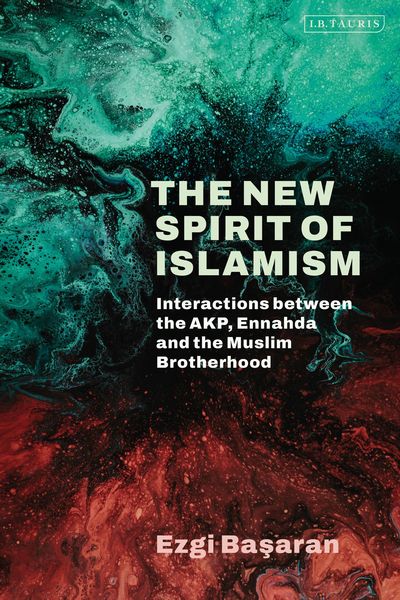
The New Spirit of Islamism Interactions between the AKP, Ennahda and the Muslim Brotherhood
-
- Hardcover
- Taschenbuch ausgewählt
- eBook
-
Sprache:Englisch
Fr. 43.90
inkl. gesetzl. MwSt.,
Beschreibung
Produktdetails
Einband
Taschenbuch
Erscheinungsdatum
30.05.2024
Verlag
I.B. TaurisSeitenzahl
256
Maße (L/B/H)
15.7/23.4/1.7 cm
Gewicht
400 g
Sprache
Englisch
ISBN
978-0-7556-5295-2
This book explains the aspirations and concerns of Islamist actors in the aftermath of the Arab Uprisings by looking at two sets of relationships between Turkey’s ruling AKP and the Egyptian Muslim Brotherhood, and the AKP and Tunisia’s Ennahda. It presents a unique analysis of the interplay between the AKP, Ennahda and the Muslim Brotherhood, characterizing the actors, the structure and the main features of the relationship and thereby illuminating a political confluence among these three critical Islamist entities in the aftermath of the Arab Uprisings. Existing scholarship has assumed that this relationship revolves primarily around an ideological Islamist agenda, however, this research demonstrates a more complex and nuanced situation. Ezgi Basaran puts forward that the interplay was not based on an aspiration of building an ideological Islamist bloc in the MENA region, but rather revolved around the concept of political success and had a strong neoliberal ethos. Basaran draws on data collected from over 60 interviews with high-level members of the AKP, Ennahda and Muslim Brotherhood to demonstrate how, in the hope of achieving success and legitimization, Ennahda and the Muslim Brotherhood have relied on the managerial prescriptions provided by the AKP. The contents of this success formula were derived from the AKP’s experience as an Islamist party in power since 2002 and includes tactics on crisis evasion, legitimization, winning elections and maintaining power.
Kundinnen und Kunden meinen
Verfassen Sie die erste Bewertung zu diesem Artikel
Helfen Sie anderen Kund*innen durch Ihre Meinung