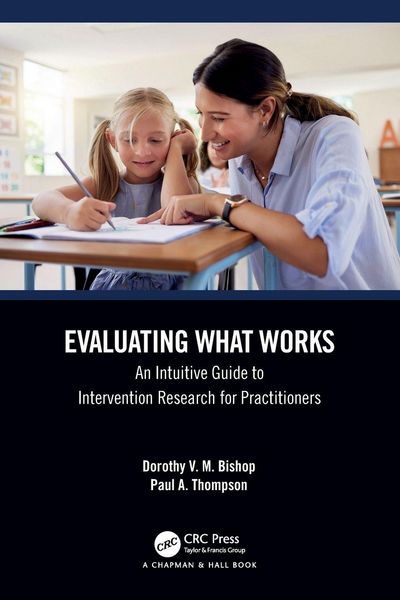
Evaluating What Works An Intuitive Guide to Intervention Research for Practitioners
-
- Hardcover
- Taschenbuch ausgewählt
- eBook
-
Sprache:Englisch
Fr. 89.90
inkl. gesetzl. MwSt.,
Beschreibung
Produktdetails
Einband
Taschenbuch
Erscheinungsdatum
07.12.2023
Abbildungen
schwarz-weiss Illustrationen, Zeichnungen, farbig, Tabellen, schwarz-weiss
Verlag
Taylor & FrancisSeitenzahl
234
Maße (L/B/H)
23.4/15.6/1.3 cm
Gewicht
440 g
Sprache
Englisch
ISBN
978-1-03-259061-5
Those who work in allied health professions and education aim to make people's lives better. Often, however, it is hard to know how effective this work has been: would change have occurred if there was no intervention? Is it possible we are doing more harm than good? To answer these questions and develop a body of knowledge about what works, we need to evaluate interventions. Objective intervention research is vital to improve outcomes, but this is a complex area, where it is all too easy to misinterpret evidence. This book uses practical examples to increase awareness of the numerous sources of bias that can lead to mistaken conclusions when evaluating interventions. The focus is on quantitative research methods, and exploration of the reasons why those both receiving and implementing intervention behave in the ways they do. Evaluating What Works: Intuitive Guide to Intervention Research for Practitioners illustrates how different research designs can overcome these issues, and points the reader to sources with more in-depth information. This book is intended for those with little or no background in statistics, to give them the confidence to approach statistics in published literature with a more critical eye, recognise when more specialist advice is needed, and give them the ability to communicate more effectively with statisticians.
Key Features:
- Strong focus on quantitative research methods
- Complements more technical introductions to statistics
- Provides a good explanation of how quantitative studies are designed, and what biases and pitfalls they can involve
Kundinnen und Kunden meinen
Verfassen Sie die erste Bewertung zu diesem Artikel
Helfen Sie anderen Kund*innen durch Ihre Meinung