Gutscheinbedingungen

*Gültig bis 07.06.2026 auf (fast) alles. Ausgeschlossen sind Smartboxen, Zeitschriften, Tickets, Lebensmittel, Gaming-Elektroartikel, Tinte/Toner, Gutscheine, Geschenkkarten, Blumen und Abos | Einlösbar in allen Buchhandlungen von Orell Füssli, Barth Bücher, Buchladen Rapunzel, Schuler Orell Füssli, Stauffacher und ZAP unter Vorweisung des Gutscheins, auf www.orellfüssli.ch durch Eingabe des Gutscheincodes. Beim Service „eBooks verschenken“ und bei eBook-Käufen via eReader nicht einlösbar | Mindesteinkaufswert: Fr. 100.- | Nicht mit anderen Rabatten kumulierbar.

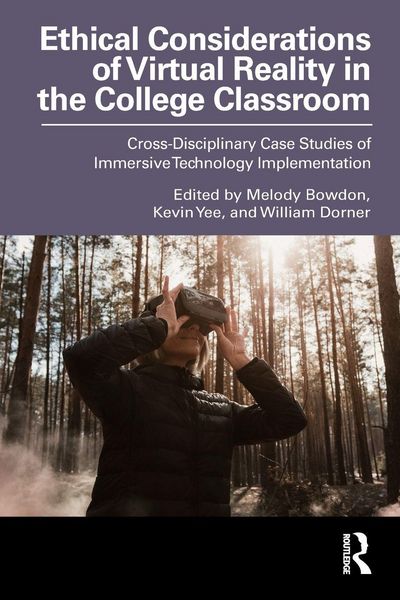
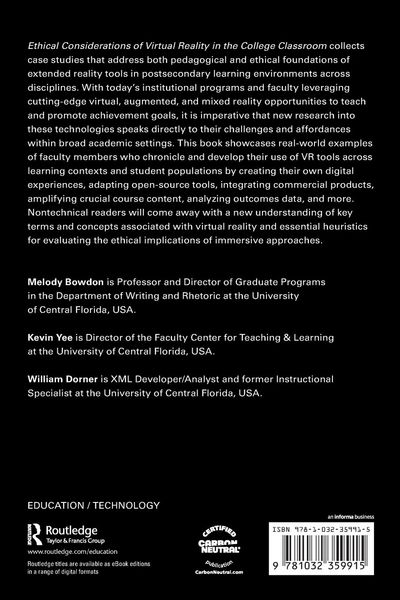
  • Produktbild: Ethical Considerations of Virtual Reality in the College Classroom
  • Produktbild: Ethical Considerations of Virtual Reality in the College Classroom

Ethical Considerations of Virtual Reality in the College Classroom Cross-Disciplinary Case Studies of Immersive Technology Implementation

Fr. 79.90

inkl. gesetzl. MwSt., Versandkostenfrei


Beschreibung

Produktdetails

Einband

Taschenbuch

Erscheinungsdatum

22.12.2023

Abbildungen

schwarz-weiss Illustrationen, Raster, schwarz-weiss, Zeichnungen, schwarz-weiss, Tabellen, schwarz-weiss

Herausgeber

Melody Bowdon + weitere

Verlag

Taylor & Francis

Seitenzahl

366

Maße (L/B/H)

22.9/15.2/2 cm

Gewicht

700 g

Sprache

Englisch

ISBN

978-1-03-235991-5

Beschreibung

Rezension

"Ethical Virtual Reality in the College Classroom represents an impressive global cohort of scholar-teachers who share detailed case studies of the ethical implementation of extended reality in diverse pedagogical contexts. Melody A. Bowdon, Kevin Yee, and William Dorner skillfully assemble a range of disciplinary perspectives, from biology, psychology, and medical education to humanities and social work, all designed to powerfully document the relative affordances of virtual, augmented, and mixed reality. Each contributor foregrounds numerous ethical dimensions, specifically accessibility and neuroinclusiveness, privacy, representation, and scalability, all while stressing an important balance between student and instructor needs. In aggregate, the chapters deploy an engaging set of heuristics for interdisciplinary audiences that address learning outcomes, expectations for student achievement, instructor learning curve, and practical strategies for curricular feasibility and sustainability. Regardless of approach, the takeaway from this innovative collection is to promote an ethic of care in implementing extended reality experiences that privilege both student learning and student well-being, along with hyper-awareness of the intended and unintended consequences of immersive technology in the classroom. In this way, the collection is an ambitious yet responsible and socially just introduction to the brave new world of virtual reality for college-level educators."
-Kristine L. Blair, Dean of Liberal Arts in the McAnulty College and Graduate School of Liberal Arts at Duquesne University, USA

Produktdetails

Einband

Taschenbuch

Erscheinungsdatum

22.12.2023

Abbildungen

schwarz-weiss Illustrationen, Raster, schwarz-weiss, Zeichnungen, schwarz-weiss, Tabellen, schwarz-weiss

Herausgeber

Verlag

Taylor & Francis

Seitenzahl

366

Maße (L/B/H)

22.9/15.2/2 cm

Gewicht

700 g

Sprache

Englisch

ISBN

978-1-03-235991-5

Herstelleradresse

Libri GmbH
Europaallee 1
36244 Bad Hersfeld
DE

Email: gpsr@libri.de

Kundinnen und Kunden meinen

0 Bewertungen

Informationen zu Bewertungen

Zur Abgabe einer Bewertung ist eine Anmeldung im Konto notwendig. Die Authentizität der Bewertungen wird von uns nicht überprüft. Wir behalten uns vor, Bewertungstexte, die unseren Richtlinien widersprechen, entsprechend zu kürzen oder zu löschen.

Die Bewertungen sind nach Format, Anzahl Sterne und Datum sortiert.

Verfassen Sie die erste Bewertung zu diesem Artikel

Helfen Sie anderen Kund*innen durch Ihre Meinung

Kundinnen und Kunden meinen

0 Bewertungen filtern

Die Leseprobe wird geladen.
  • Produktbild: Ethical Considerations of Virtual Reality in the College Classroom
  • Produktbild: Ethical Considerations of Virtual Reality in the College Classroom
  • Section One: Introduction 1. Exploring the Intersection of Pedagogy and Ethics in the use of VR/XR in Higher Education 2. Extended Reality, Pedagogy, and the Ethics of Embodiment Section Two: The Case Studies 3. Teaching Conscientious Design: How Learning VR Development Can Lead to Greater Understanding of Sustainability 4. Virtual Reality Technology in Norwegian Teacher Education: Creating an Innovative Experience or Another Academic Elite? 5. Technology Sunset, Can We Pivot? by Eileen Grodziak, Kathleen Morgan, and Amy Kuntz 6. Building Student Capacity and Disciplinary Identity in an Immersive Media Course at a Small Liberal Arts College 7. Enacting Equity and Ethics through VR in the Public Speaking Classroom: The Virtual Martin Luther King Project 8. Using Virtual Reality to Immerse Students in the Middle Passage: Ethics, Challenges, and Benefits 9. Virtual Perception and the Accessible Implementation of VR/AR Technology in Psychology Education 10. A Virtual Reality App Created with CoSpaces: Student Perceptions and Attitudes 11. Access and Opportunity: Removing Barriers to a Discipline through Virtual Field Work 12. Conemaugh River Immersive Experience: A 360° Virtual Biology Field Trip 13. Pros, Cons, and Considerations of Implementing Live Virtual Reality in Medical Education 14. Digital Dinosaurs: Bringing Dinosaurs Back to Life with VR/AR in the College Classroom 15. Ethical Considerations in Using Virtual Reality to Support Competency-Based Education in Social Work 16. Mission, Morals and the Metaverse: How Morehouse College is Transforming Undergraduate Education in the Sciences and Humanities with Virtual Reality Section Three: Further Explorations 17. Boundaries, Informed Consent, and Learning 18. Post-Qualitative Virtuality: Assembling Reality as New Material for Teaching and Learning by Eleanor Dare 19. Ethical, Moral, and Philosophical Challenges of Creating and Evaluating the Impact of Virtual Reality Experiences