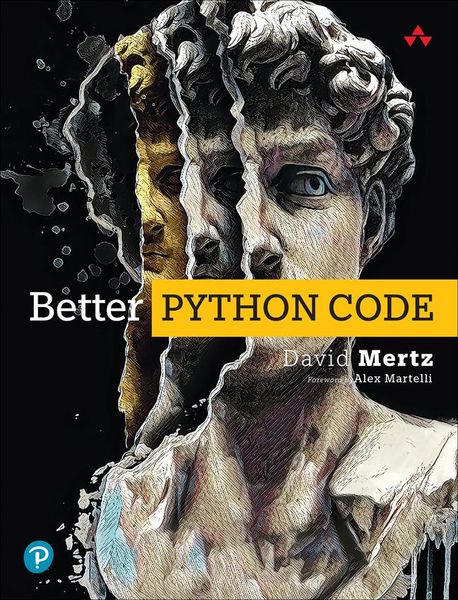
Better Python Code A Guide for Aspiring Experts
-
- Taschenbuch ausgewählt
- eBook
-
Sprache:Englisch
Fr. 51.90
inkl. gesetzl. MwSt.,
Beschreibung
Produktdetails
Einband
Taschenbuch
Erscheinungsdatum
24.11.2023
Verlag
Pearson AcademicSeitenzahl
288
Maße (L/B/H)
23.1/18/0.8 cm
Gewicht
463 g
Auflage
1. Auflage
Sprache
Englisch
ISBN
978-0-13-832094-2
Move Beyond Python Code That "Mostly Works" to Code That Is Expressive, Robust, and Efficient Python is arguably the most-used programming language in the world, with applications from primary school education to workaday web development, to the most advanced scientific research institutes. While there are many ways to perform a task in Python, some are wrong, inelegant, or inefficient. Better Python Code is a guide to "Pythonic" programming, a collection of best practices, ways of working, and nuances that are easy to miss, especially when ingrained habits are borrowed from other programming languages. Author David Mertz presents concrete and concise examples of various misunderstandings, pitfalls, and bad habits in action. He explains why some practices are better than others, based on his 25+ years of experience as an acclaimed contributor to the Python community. Each chapter thoroughly covers related clusters of concepts, with chapters sequenced in ascending order of sophistication. Whether you are starting out with Python or are an experienced developer pushing through the limitations of your Python code, this book is for all who aspire to be more Pythonic when writing better Python code. Use the right kind of loops in PythonLearn the ins and outs of mutable and immutable objectsGet expert advice to avoid Python "gotchas"Examine advanced Python topicsNavigate the "attractive nuisances" that exist in PythonLearn the most useful data structures in Python and how to avoid misusing themAvoid security mistakesUnderstand the basics of numeric computation, including floating point numbers and numeric datatypes "My high expectations for this engaging Python book have been exceeded: it offers a great deal of insight for intermediate or advanced programmers to improve their Python skills, includes copious sharing of precious experience practicing and teaching the language, yet remains concise, easy to read, and conversational."--From the Foreword by Alex Martelli Register your book for convenient access to downloads, updates, and/or corrections as they become available. See inside book for details.
Kundinnen und Kunden meinen
Verfassen Sie die erste Bewertung zu diesem Artikel
Helfen Sie anderen Kund*innen durch Ihre Meinung