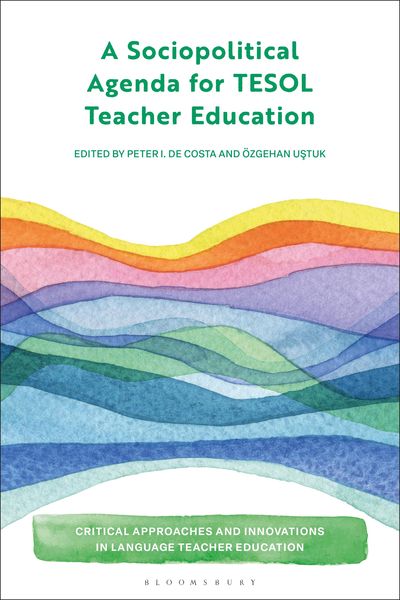
A Sociopolitical Agenda for TESOL Teacher Education
Aus der Reihe
Critical Approaches and Innova
-
- Hardcover
- Taschenbuch
- eBook ausgewählt
-
Form:Einzelkauf Download
-
Sprache:Englisch
-
eBook Format:PDF
- PDF Fr. 34.90 ausgewählt
- ePUB Fr. 34.90
Fr. 34.90
inkl. gesetzl. MwSt.Beschreibung
Produktdetails
Format
Kopierschutz
Ja
Family Sharing
Nein
Text-to-Speech
Nein
Erscheinungsdatum
05.10.2023
Herausgeber
Peter De Costa + weitereVerlag
Bloomsbury eBooks UKSeitenzahl
208 (Printausgabe)
Auflage
1. Auflage
Sprache
Englisch
EAN
9781350262850
Teaching English to Speakers of Other Languages (TESOL) sits at the nexus of constant change, which makes it vitally important for language teachers to engage in continuous development and keep abreast of the sociopolitical milieu in which they are embedded. However, most teacher education activities are often associated with what is perceived as best practices that are expected to be adopted
(often uncritically) for classroom application and practice, with the intention of training teachers to become technicians in their respective classrooms. In reality, TESOL practitioners often find themselves
in situations that require them to be reflexive practitioners and to negotiate sites of political struggles and social injustice.
Given that a socially situated understanding of TESOL teacher education is often overlooked, this volume highlights the sociopolitical dimensions of TESOL teacher education. In Part 1, the authors introduce the theoretical underpinnings of the sociopolitical agenda proposed by this volume. Building on these theories, Part 2 realizes the proposed agenda by situating it within actual TESOL teacher education contexts that are characterized by power imbalances and neoliberally inflected educational injustices.
(often uncritically) for classroom application and practice, with the intention of training teachers to become technicians in their respective classrooms. In reality, TESOL practitioners often find themselves
in situations that require them to be reflexive practitioners and to negotiate sites of political struggles and social injustice.
Given that a socially situated understanding of TESOL teacher education is often overlooked, this volume highlights the sociopolitical dimensions of TESOL teacher education. In Part 1, the authors introduce the theoretical underpinnings of the sociopolitical agenda proposed by this volume. Building on these theories, Part 2 realizes the proposed agenda by situating it within actual TESOL teacher education contexts that are characterized by power imbalances and neoliberally inflected educational injustices.
Kundinnen und Kunden meinen
Verfassen Sie die erste Bewertung zu diesem Artikel
Helfen Sie anderen Kund*innen durch Ihre Meinung