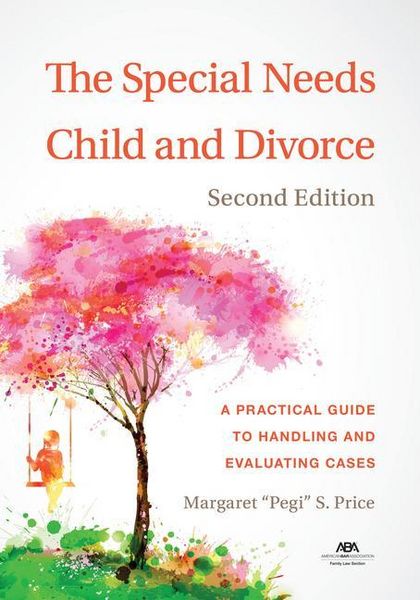
Produktbild: The Special Needs Child and Divorce

The Special Needs Child and Divorce A Practical Guide to Handling and Evaluating Cases, Second Edition

Fr. 159.00

inkl. gesetzl. MwSt., Versandkostenfrei


Beschreibung

Produktdetails

Einband

Taschenbuch

Erscheinungsdatum

12.09.2023

Verlag

Ingram Publishers Services

Seitenzahl

318

Maße (L/B/H)

25.1/17.3/1.8 cm

Gewicht

581 g

Sprache

Englisch

ISBN

978-1-63905-204-2

Beschreibung

Produktdetails

Einband

Taschenbuch

Erscheinungsdatum

12.09.2023

Verlag

Ingram Publishers Services

Seitenzahl

318

Maße (L/B/H)

25.1/17.3/1.8 cm

Gewicht

581 g

Sprache

Englisch

ISBN

978-1-63905-204-2

Herstelleradresse

Libri GmbH
Europaallee 1
36244 Bad Hersfeld
DE

Email: gpsr@libri.de

Kundinnen und Kunden meinen

0 Bewertungen

Informationen zu Bewertungen

Zur Abgabe einer Bewertung ist eine Anmeldung im Konto notwendig. Die Authentizität der Bewertungen wird von uns nicht überprüft. Wir behalten uns vor, Bewertungstexte, die unseren Richtlinien widersprechen, entsprechend zu kürzen oder zu löschen.

Die Bewertungen sind nach Format, Anzahl Sterne und Datum sortiert.

Verfassen Sie die erste Bewertung zu diesem Artikel

Helfen Sie anderen Kund*innen durch Ihre Meinung

Kundinnen und Kunden meinen

0 Bewertungen filtern

Die Leseprobe wird geladen.
  • Produktbild: The Special Needs Child and Divorce
  • Contents

    Author’s Note ix

    About the Author xi

    Acknowledgments xiii

    Introduction xv

    CHAPTER 1

    What Are Special Needs? 1

    I. Legislation Regarding Disabilities 2

    II. Evaluating Special Needs in Family Court Cases 3

    III. Case Management for the Courts 6

    A. What Types of Special Needs Can a Child Have? 7

    B. How Can the Lawyer or Judge Know When a Particular

    Case Should Be Considered a Special Needs Case? 10

    CHAPTER 2

    How to Recognize and Handle Issues of Special Needs

    in Family Law Cases 11

    I. The Initial Client Interview 12

    II. Drafting Divorce Petitions and Answers 17

    III. Additional Litigation Stages 35

    A. Interrogatories—Standard Question for Form Interrogatories 35

    B. Discovery in General 36

    C. Maintenance/Alimony Calculations 52

    D. Parenting Plan 53

    IV. Posttrial Motions 80

    V. Undiagnosed Special Needs 84

    A. Indicators That an Evaluation May Be Necessary 85

    1. Autism 85

    2. Hearing Deficits 86

    3. Visual Deficits 86

    4. Mental Retardation 87

    5. Learning Disabilities 87

    6. Attention-Deficit/Hyperactivity Disorder 89

    7. Emotional Disturbances 90

    8. Orthopedic Impairments 92

    9. Multiple Disabilities 92

    10. Traumatic Brain Injury 92

    11. Other Health Impairments 93

    VI. Recognizing and Applying Special Needs to Divorce Cases 93

    CHAPTER 3

    How Special Needs Can Affect a Child in a Divorce Case 95

    I. Treating Children with Special Needs during Divorce 96

    A. During the Divorce 97

    B. After the Divorce 97

    II. Impact of Divorce on Special Needs Children, by Category

    of Special Need 98

    A. Autism, Developmental Delays 98

    B. Hearing Impairment, Visual Impairment, and Speech

    or Language Impairment 98

    C. Emotional Disturbance 99

    D. Mental Retardation, Traumatic Brain Injury 99

    E. Orthopedic Impairments, Other Health Impairments 99

    CHAPTER 4

    Why Child Support Guidelines and Standard Visitation Schedules

    Do Not Meet the Needs of Special Needs Children 101

    I. Child Support Charts 101

    A. Short-Term Needs 101

    1. Preexisting Expenses 101

    2. Therapy 102

    3. Equipment 103

    4. Medication 103

    5. Supplements 103

    6. Dietary Costs 103

    7. Sensory Items (Therapy, Different Clothing/Other Items,

    Take-Along Items) 104

    8. Respite Care 105

    9. Professionals 106

    10. Modifications to the Home Environment 106

    11. Changes in the Child’s Needs 106

    12. Costs Caused by the Divorce 107

    B. Long-Term Needs 107

    II. Visitation Schedules 108

    A. Noncustodial Parent 108

    1. Child’s Schedule 109

    B. Environmental Modifications 111

    CHAPTER 5

    Legislation, Case Law, and Parenting Plans 113

    I. Legislation 113

    A. Federal Law 114

    1. Health Care Issues 114

    2. Educational Issues 115

    B. State Law 116

    II. Case Law 119

    A. Standard Child Support Chart 123

    B. Standard Parenting Plan 126

    CHAPTER 6

    Model Child Support Chart, Parenting Plan, and Modification 151

    CHAPTER 7

    Maintenance and Property Distribution in Special Needs Cases 165

    I. Maintenance 165

    II. Property Distribution 167

    III. Retirement Accounts 167

    IV. Career Advancement 168

    CHAPTER 8

    Roles of the Parties 169

    I. Rights of the Parties 169

    A. Special Needs Child 169

    B. Custodial Parent (Primary Caregiver Parent) 169

    C. Noncustodial Parent (Non–primary Caregiver Parent) 169

    D. Lawyers 170

    E. Judge 170

    F. Guardian ad Litem/Special Needs Coordinator 171

    G. Other Professionals 171

    II. Responsibilities of the Parties 171

    A. Special Needs Child 171

    B. Parents 171

    C. Lawyers 171

    D. Judge 172

    E. Other Professionals 172

    III. Participation 173

    CHAPTER 9

    Special Considerations in Special Needs Family Law Cases 175

    I. Individualized Education Plans (IEPs) and 504 Plans 175

    II. Behavior—School and Criminal Justice System 177

    III. Religion 178

    IV. Parents with Special Needs 179

    V. Planning for a Crisis 180

    VI. Using Technology to Facilitate Co-Parenting 182

    CHAPTER 10

    Estate Planning for Families with Special Needs 183

    I. Special Needs Trusts 184

    II. Guardianships 185

    III. Conservatorships 185

    IV. Additional Estate Planning Options for Families with Special Needs 186

    CHAPTER 11

    Forms and Samples 187

    CHAPTER 12

    Resources 245

    I. Center for Parent Information and Resources 245

    II. State Councils on Developmental Disabilities 246

    III. State Departments of Education 251

    CHAPTER 13

    Bibliography 257

    CHAPTER 14

    Checklists 275

    1. Initial Interview—What to Ask the Client 275

    2. Client File Contents—Items the Lawyer Should Have in Her Client

    File When Handling a Special Needs Divorce Case 278

    3. Drafting the Petition—Special Subject Areas for the Petition 279

    4. Statement of Income and Expenses—What Should Be Included

    in the Statement of Income and Expenses 279

    5. Answer and Cross-Petition—How to Prepare the Answer

    and Cross-Petition 279

    6. Discovery—Subjects to Explore through the Discovery Process 280

    7. Temporary Orders—Do You Need to File a PDL Motion

    (Interim Order)? 284

    8. Child Support—Special Considerations Regarding Child Support 285

    9. Custody—Special Considerations Regarding Custody 285

    10. Visitation—Special Considerations Regarding Visitation 286

    11. Support Systems for the Special Needs Child—Help for the Special

    Needs Child during and after Divorce 286

    12. Property Distribution—Special Considerations Regarding Property

    Distribution, Including Retirement Accounts 287

    13. Counseling—Special Issues for Counseling 287

    Parents 287

    Special Needs Children 288

    Siblings of Special Needs Children 288

    Glossary 289

    Index 297