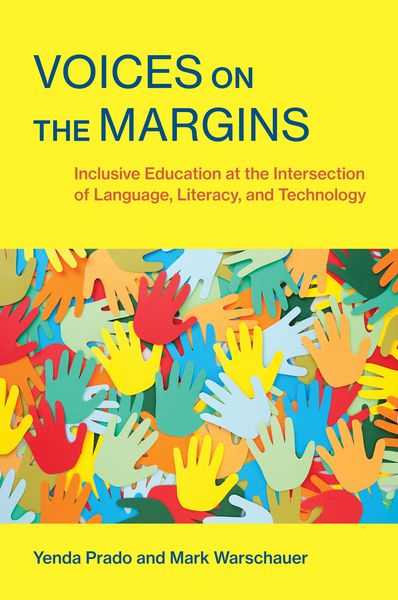
Voices on the Margins Inclusive Education at the Intersection of Language, Literacy, and Technology
-
- Taschenbuch
- eBook ausgewählt
-
Form:Einzelkauf Download
-
Sprache:Englisch
Fr. 48.90
inkl. gesetzl. MwSt.Beschreibung
Produktdetails
Format
ePUB 3
Kopierschutz
Ja
Family Sharing
Ja
Text-to-Speech
Ja
Erscheinungsdatum
14.05.2024
Verlag
Mit PressSeitenzahl
318 (Printausgabe)
Dateigröße
3643 KB
Sprache
Englisch
EAN
9780262378598
A rich view of inclusive education at the intersection of language, literacy, and technology-drawing on case study research in a diverse full-inclusion US school before, during, and after the COVID-19 pandemic.
Despite advancing efforts at integration, the segregation of students with disabilities from their nondisabled peers persists. In the United States, 34 percent of all students with disabilities spend at least 20 percent of their instructional time in segregated classrooms. For students with intellectual or multiple disabilities, segregated placement soars to 80 percent. In Voices on the Margins, Yenda Prado and Mark Warschauer provide an ethnography of an extraordinary full-inclusion public charter school in the western United States-Future Visions Academy. And they ask: What does it mean to be inclusive in today's schools with their increasingly pervasive use of digital technologies?
Voices on the Margins examines the ways digital technologies support inclusion and language and literacy practices for culturally and linguistically diverse children with and without disabilities. A wide range of qualitative data collected in the case study illuminates three central themes: (1) the kinds of social organization that allow a fully inclusive environment for children with disabilities to thrive, (2) the ways that digital technologies can be used to help students express their voice and agency, while developing language and literacy skills, and (3) the ways that digital technologies can be used to foster stronger networks and connections between students, teachers, staff, and parents.
Despite advancing efforts at integration, the segregation of students with disabilities from their nondisabled peers persists. In the United States, 34 percent of all students with disabilities spend at least 20 percent of their instructional time in segregated classrooms. For students with intellectual or multiple disabilities, segregated placement soars to 80 percent. In Voices on the Margins, Yenda Prado and Mark Warschauer provide an ethnography of an extraordinary full-inclusion public charter school in the western United States-Future Visions Academy. And they ask: What does it mean to be inclusive in today's schools with their increasingly pervasive use of digital technologies?
Voices on the Margins examines the ways digital technologies support inclusion and language and literacy practices for culturally and linguistically diverse children with and without disabilities. A wide range of qualitative data collected in the case study illuminates three central themes: (1) the kinds of social organization that allow a fully inclusive environment for children with disabilities to thrive, (2) the ways that digital technologies can be used to help students express their voice and agency, while developing language and literacy skills, and (3) the ways that digital technologies can be used to foster stronger networks and connections between students, teachers, staff, and parents.
Kundinnen und Kunden meinen
Verfassen Sie die erste Bewertung zu diesem Artikel
Helfen Sie anderen Kund*innen durch Ihre Meinung