• Produktbild: Smart CMOS Image Sensors and Applications
  • Produktbild: Smart CMOS Image Sensors and Applications

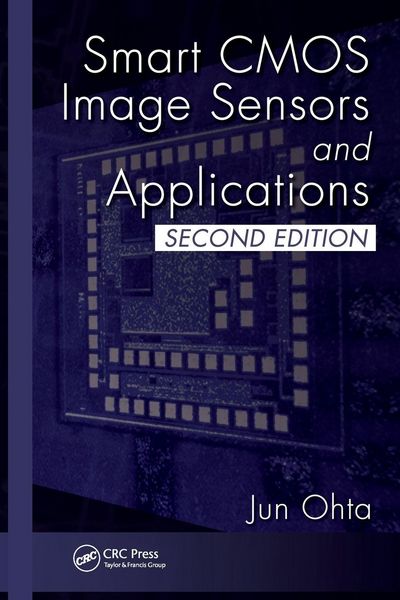
Smart CMOS Image Sensors and Applications

Fr. 93.90

inkl. gesetzl. MwSt., Versandkostenfrei


Beschreibung

Produktdetails

Einband

Taschenbuch

Erscheinungsdatum

02.10.2023

Verlag

Taylor & Francis

Seitenzahl

310

Maße (L/B/H)

23.4/15.6/1.7 cm

Gewicht

570 g

Auflage

2. Auflage

Sprache

Englisch

ISBN

978-1-03-265236-8

Beschreibung

Produktdetails

Einband

Taschenbuch

Erscheinungsdatum

02.10.2023

Verlag

Taylor & Francis

Seitenzahl

310

Maße (L/B/H)

23.4/15.6/1.7 cm

Gewicht

570 g

Auflage

2. Auflage

Sprache

Englisch

ISBN

978-1-03-265236-8

Kundinnen und Kunden meinen

0 Bewertungen

Informationen zu Bewertungen

Zur Abgabe einer Bewertung ist eine Anmeldung im Konto notwendig. Die Authentizität der Bewertungen wird von uns nicht überprüft. Wir behalten uns vor, Bewertungstexte, die unseren Richtlinien widersprechen, entsprechend zu kürzen oder zu löschen.

Die Bewertungen sind nach Format, Anzahl Sterne und Datum sortiert.

Verfassen Sie die erste Bewertung zu diesem Artikel

Helfen Sie anderen Kund*innen durch Ihre Meinung

Kundinnen und Kunden meinen

0 Bewertungen filtern

Die Leseprobe wird geladen.
  • Produktbild: Smart CMOS Image Sensors and Applications
  • Produktbild: Smart CMOS Image Sensors and Applications
  • 1 Introduction. A general overview. 1.2 Brief history of CMOS image sensors . 1.3 Brief history of smart CMOS image sensors. 1.4 Organization of the book. 2 Fundamentals of CMOS image sensors. 2.1 Introduction. 2.2 Fundamentals of photo detection. 2.2.1 Absorption coefficient. 2.2.2 Behavior of minority carriers. 2.2.3 Sensitivity and quantum efficiency. 2.3 Photodetectors for smart CMOS image sensors. 2.3.1 pn-junction photodiode. 2.3.2 Photogate. 2.3.3 Phototransistor. 2.3.4 Avalanche photodiode. 2.3.5 Photoconductive detector. 2.4 Accumulation mode in PDs.. 2.4.1 Potential change in accumulation mode. 2.4.2 Potential description. 2.4.3 Behavior of photo-generated carriers in PD. 2.5 Basic pixel structures. 2.5.1 Passive pixel sensor. 2.5.2 Active pixel sensor,3T-APS. 2.5.3 Active pixel sensor,4T-APS. 2.6 Sensor peripherals. 2.6.1 Addressing. 2.6.2 Readout circuits. 2.6.3 Analog-to-digital converters. 2.7 Basic sensor characteristics. 2.7.1 Noise. 2.7.2 Dynamic range. 2.7.3 Speed. 2.8 Color. 2.9 Pixel sharing. 2.10 Comparison between pixel architecture. 2.11 Comparison with CCDs. 3 Smart functions and materials. 3.1 Introduction 3.2 Pixel structure. 3.2.1 Current mode. 3.2.2 Log sensor. 3.3 Analog operation. 3.3.1 Winner-take-all. 3.3.2 Projection. 3.3.3 Resistive network. 3.4 Pulse modulation. 3.4.1 Pulse width modulation. 3.4.2 Pulse frequency modulation. 3.5 Digital processing. 3.6 Materials other than silicon. 3.6.1 Silicon-on-insulator. 3.6.2 Extending the detection wavelength. 3.7 Structures other than standard CMOS technologies. 3.7.1 3D integration. 3.7.2 Integration with light emitters. 3.7.3 Color realization using nonstandard structures. 4 Smart imaging. 4.1 Introduction. 4.2 Low light imaging. 4.2.2 PFM for lowlight imaging. 4.2.3 Differential APS. 4.2.4 Geiger mode APD for a smart CMOS image sensor. 4.3 High speed. 4.3.1 Global shutter. 4.4 Wide dynamic range. 4.4.1 Principle of wide dynamic range. 4.4.2 Dual sensitivity. 4.4.3 Nonlinear response. 4.4.4 Multiple sampling. 4.4.5 Saturation detection. 4.4.6 Diffusive brightness. 4.5 Demodulation. 4.5.1 Principles of demodulation. 4.5.2 Correlation. 4.5.3 Method of two accumulation regions. 4.6 Three-dimensional rangefinder. 4.6.1 Time of flight. 4.6.2 Triangulation. 4.6.3 Depth key. 4.7 Target tracking. 4.7.1 Maximum detection for target tracking. 4.7.2 Projection for target tracking. 4.7.3 Resistive network and other analog processing for target. Tracking. 4.7.4 Digital processing for target tracking. 4.8 Dedicated arrangement of pixel and optics. 4.8.1 Non-orthogonal arrangement. 4.8.2 Dedicated optics. 4.8.3 Light field detection. 4.9 Polarization detection. 5 Applications. 5.1 Introduction. 5.2 Information and communication applications. 5.2.1 Optical ID tag. 5.2.2 Optical wireless communication. 5.3 Biotechnology applications. 5.3.1 Smart CMOS image sensor with multi-modal functions. 5.3.2 Smart CMOS image sensor with ISFET. 5.3.3 Potential imaging combining MEMS technology. 5.3.4 Smart CMOS sensor for optical and electrochemical imaging. 5.3.5 Fluorescence detection. 5.4 Medical applications. 5.4.1 Capsule endoscope. 5.4.2 Retinal prosthesis. A Tables of constants. B Illuminance. C Human eye and CMOS image sensors. D Fundamental characteristics of MOS capacitors. E Fundamental characteristics of MOSFET. F Optical format and resolution. References. Index