Gutscheinbedingungen

*Gültig bis 07.06.2026 auf (fast) alles. Ausgeschlossen sind Smartboxen, Zeitschriften, Tickets, Lebensmittel, Gaming-Elektroartikel, Tinte/Toner, Gutscheine, Geschenkkarten, Blumen und Abos | Einlösbar in allen Buchhandlungen von Orell Füssli, Barth Bücher, Buchladen Rapunzel, Schuler Orell Füssli, Stauffacher und ZAP unter Vorweisung des Gutscheins, auf www.orellfüssli.ch durch Eingabe des Gutscheincodes. Beim Service „eBooks verschenken“ und bei eBook-Käufen via eReader nicht einlösbar | Mindesteinkaufswert: Fr. 100.- | Nicht mit anderen Rabatten kumulierbar.

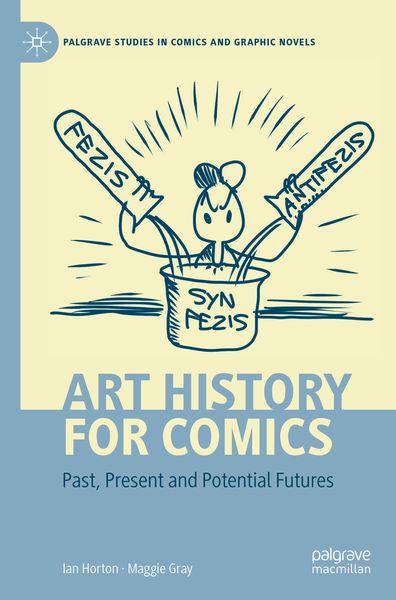
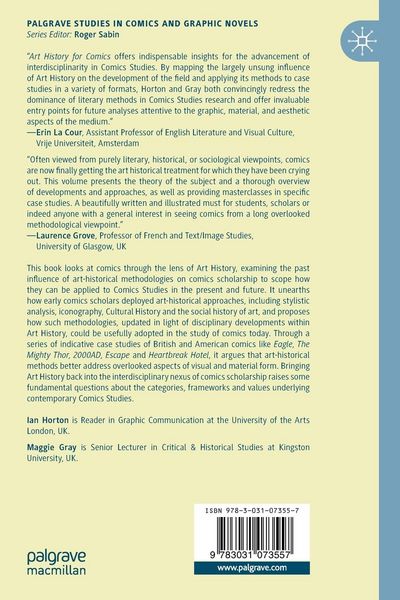
  • Produktbild: Art History for Comics
  • Produktbild: Art History for Comics

Art History for Comics Past, Present and Potential Futures

Fr. 72.90

inkl. gesetzl. MwSt., Versandkostenfrei


Beschreibung

Produktdetails

Einband

Taschenbuch

Erscheinungsdatum

22.09.2023

Verlag

Springer

Seitenzahl

241

Maße (L/B/H)

23.5/15.5/1.5 cm

Gewicht

400 g

Auflage

1st ed. 2022

Sprache

Englisch

ISBN

978-3-031-07355-7

Beschreibung

Rezension

“Art History for Comics: Past, Present and Potential Futures, is a monograph by Maggie Gray and Ian Horton ... . The chapters are designed to elucidate and educate, carefully outlining the challenges and benefits of various approaches in ways that should make the book a useful teaching tool. The case studies also showcase the authors’ respective areas of expertise ... . art historians will find a wealth of inspiration between the covers of this wide-ranging collection.” (Roger Sabin, The Year’s Work in English Studies, Issue 2, July 10, 2024)

Produktdetails

Einband

Taschenbuch

Erscheinungsdatum

22.09.2023

Verlag

Springer

Seitenzahl

241

Maße (L/B/H)

23.5/15.5/1.5 cm

Gewicht

400 g

Auflage

1st ed. 2022

Sprache

Englisch

ISBN

978-3-031-07355-7

Herstelleradresse

Springer-Verlag GmbH
Tiergartenstr. 17
69121 Heidelberg
DE

Email: ProductSafety@springernature.com

Kundinnen und Kunden meinen

0 Bewertungen

Informationen zu Bewertungen

Zur Abgabe einer Bewertung ist eine Anmeldung im Konto notwendig. Die Authentizität der Bewertungen wird von uns nicht überprüft. Wir behalten uns vor, Bewertungstexte, die unseren Richtlinien widersprechen, entsprechend zu kürzen oder zu löschen.

Die Bewertungen sind nach Format, Anzahl Sterne und Datum sortiert.

Verfassen Sie die erste Bewertung zu diesem Artikel

Helfen Sie anderen Kund*innen durch Ihre Meinung

Kundinnen und Kunden meinen

0 Bewertungen filtern

  • Produktbild: Art History for Comics
  • Produktbild: Art History for Comics
  • Why Does Comics Studies Need Art History (and Vice Versa)?.- Disciplinary and Methodological Concerns.- Part I: The History of Art History and Comics Studies.- Part II: Possibilities for Comics Art History Now.- References.- Part I The History of Art History and Comics Studies.- Establishing Canons, Styles and Schools at the Dawn of Comics Studies.- Creating Classical Canons.- Defining Styles and Schools.- References.- Iconography and Cultural History in Comics Studies.- Iconography as Method and Methodology.- Cultural History as a Critical Framework.- References.- Art History Turned Upside Down: David Kunzle and the Social History of Art.- Volume 1: Exe⁄orcising Gombrich.- New Left Art History.- How Karl Marx Prevailed over Carl Barks.- Volume 2: The Social History of Comics.- References.- Variations of Formalism, Modernism, Abstraction.- Claude Moliterni: A Formalism of Narrative Technique.- Gerald Gassiot-Talabot: Comics Against Formalism and Abstraction?.- Comics (and the) Modernist Avant-Garde.- Andrei Molotiu: Abstract Comics Formalism.- Abstraction Beyond Modernist Formalism.- References.- Part II Possibilities for Comics Art History Now.- Challenging Canons and the Challenge of Style: Visualising the Baroque Storyworld of Judge Dredd’s “The Cursed Earth”.- Contesting Canons in Comics Studies.- The Challenge of Style for Comics Studies.- Styles and Schools as Canonical Markers.- Picturing a Baroque Storyworld: Seeing “The Cursed Earth” Through Wolfflin’s Comparative Methodology.- The Limits and Potential of Wolfflin’s Analysis of Style for Comics Studies.- References.- Iconography for Comics Studies Reconsidered: Interpreting Visual Transformations in Jack Kirby’s The Mighty Thor.- From Iconography to Iconology.- The Semiotic Turn in Art History (and Comics Studies).- Thump, Karrrack! The Iconology of Transformation in Thor.- The Challenge of Iconography and Iconology for Comic Studies (and Art History).- References.- Cultural History for Comics Studies: Reinterpreting the Eagle and “Dan Dare - Pilot of the Future”.- From Iconology to Cultural History.- The Discourse of Cultural Studies Within Comics Studies.- Recontextualising the Eagle and “Dan Dare - Pilot of the Future”.- Daring to Use Cultural History in Comics Studies.- References.- A Social History of Comics Art: Looking at Writers and Readers’ Capitalism for Beginners.- Marxist Art History and Comics.- Style, Ideology and Class.- Ideology and Autonomy.- Affect, Materiality and Ways of Reading and Seeing.- Writers and Readers ... for Beginners Comic Books.- Relations of Production, Distribution and Consumption.- Style, Materiality and the Politics of Form.- Ways of Reading and Looking.- References.- Re-framing the Avant-Garde: Different Ways of Seeing Escape.- Positioning the Avant-Garde in Comics Studies.- Unpopular Culture and Postmodern Modernism.- Framing the Avant-Garde in Art History.- Advancing Towards the Picture Plane.- AdvancingAgainst Art and into Life.- Advancing as Reaction and Repetition.- Advancing Beyond the Frame.- Escape Artistry.- Reading Escape as Unpopular Culture.- Small Press and Alternative Avant-Gardes.- A Mainstream Alternative.- Putting Comics Studies in the Frame.- References.- Modernism and Comics Revisited: Form and Fragmentation in Alan Moore’s “I Can Hear the Grass Grow”.- Comics and Modernism.- Modernism in Art History.- The Significance of Form.- The Specificity of Medium.- The Defence of Autonomy.- The Occlusions of Modernist Criticism.- Reframing Modernism and Comics.- I Can Hear the Grass Grow.- Form: The Abstract Underscore, Medium and Modernism.- A Medium of Fragments: Modernity, Montage and the Politics of Form.- References.- Conclusion: Future Directions.- References.- Index.