
Gutscheinbedingungen

*Gültig bis 07.06.2026 auf (fast) alles. Ausgeschlossen sind Smartboxen, Zeitschriften, Tickets, Lebensmittel, Gaming-Elektroartikel, Tinte/Toner, Gutscheine, Geschenkkarten, Blumen und Abos | Einlösbar in allen Buchhandlungen von Orell Füssli, Barth Bücher, Buchladen Rapunzel, Schuler Orell Füssli, Stauffacher und ZAP unter Vorweisung des Gutscheins, auf www.orellfüssli.ch durch Eingabe des Gutscheincodes. Beim Service „eBooks verschenken“ und bei eBook-Käufen via eReader nicht einlösbar | Mindesteinkaufswert: Fr. 100.- | Nicht mit anderen Rabatten kumulierbar.

  • Produktbild: The Modern Legacy of Gibson's Affordances for the Sciences of Organisms
  • Produktbild: The Modern Legacy of Gibson's Affordances for the Sciences of Organisms

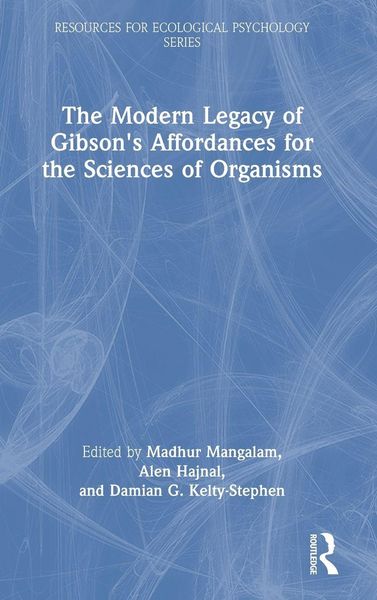
The Modern Legacy of Gibson's Affordances for the Sciences of Organisms

Fr. 253.00

inkl. gesetzl. MwSt., Versandkostenfrei


Beschreibung

Produktdetails

Einband

Gebundene Ausgabe

Erscheinungsdatum

13.02.2024

Abbildungen

schwarz-weiss Illustrationen, Raster, schwarz-weiss, Zeichnungen, schwarz-weiss, Tabellen, schwarz-weiss

Herausgeber

Madhur Mangalam + weitere

Verlag

Taylor & Francis

Seitenzahl

414

Maße (L/B/H)

23.5/15.7/2.7 cm

Gewicht

748 g

Sprache

Englisch

ISBN

978-1-03-250019-5

Beschreibung

Produktdetails

Einband

Gebundene Ausgabe

Erscheinungsdatum

13.02.2024

Abbildungen

schwarz-weiss Illustrationen, Raster, schwarz-weiss, Zeichnungen, schwarz-weiss, Tabellen, schwarz-weiss

Herausgeber

Verlag

Taylor & Francis

Seitenzahl

414

Maße (L/B/H)

23.5/15.7/2.7 cm

Gewicht

748 g

Sprache

Englisch

ISBN

978-1-03-250019-5

Herstelleradresse

Libri GmbH
Europaallee 1
36244 Bad Hersfeld
DE

Email: gpsr@libri.de

Kundinnen und Kunden meinen

0 Bewertungen

Informationen zu Bewertungen

Zur Abgabe einer Bewertung ist eine Anmeldung im Konto notwendig. Die Authentizität der Bewertungen wird von uns nicht überprüft. Wir behalten uns vor, Bewertungstexte, die unseren Richtlinien widersprechen, entsprechend zu kürzen oder zu löschen.

Die Bewertungen sind nach Format, Anzahl Sterne und Datum sortiert.

Verfassen Sie die erste Bewertung zu diesem Artikel

Helfen Sie anderen Kund*innen durch Ihre Meinung

Kundinnen und Kunden meinen

0 Bewertungen filtern

Die Leseprobe wird geladen.
  • Produktbild: The Modern Legacy of Gibson's Affordances for the Sciences of Organisms
  • Produktbild: The Modern Legacy of Gibson's Affordances for the Sciences of Organisms
  • PART I: Ontology and Epistemology of Affordances 1. Why It Matters That Affordances Are Relations 2. The Sociomaterial Theory of Affordances 3. When It Comes to Affordances, What Do Animals Know and How Do They Know It? 4. Mental Action and the Scope of Affordance Perception 5. An Affordance-Based Approach to the Origins of Concepts 6. Toward an Ecological Theory of Time PART II: The Role of Exploratory Activity and Scale in Perception of Affordances 7. The Dynamics of Affordance Emergence and Perception 8. Description of the World That Agential Systems Fit Into 9. The Role of Exploratory Activity in Affordance Perception 10. Scaling Up: Lawfulness of Affordances Requires Independence From Any Single “Scale of Behavior” PART III: Affordances Through the Lens of Neuroscience 11. Affordance Switching in Self-Organizing Brain-Body-Environment Systems 12. What Is NExT for Affordances? Taking Brains Seriously in Organism-Environment Systems 13. Affordance and Tool Use: A Neurocognitive Approach 14. From Turing to Gibson: Implications of Affordances for the Sciences of Organisms PART IV: Applications of the Ecological Theory of Affordances 15. Understanding Skilled Adaptive Behavior: The Role of Action, Perception and Cognition in an Ecological Dynamics Perspective 16. Disability Through the Lens of Affordances: A Promising Pathway for Transforming Physical Therapy Practice 17. “I Got All I Need to Know About Affordances From Norman”: What Engineers, Designers, and Architects Need to Know About Affordances 18. Perception of Affordances in Interaction With Autonomous Systems 19. On Affordances and Their Entailment for Autonomous Robotic Systems