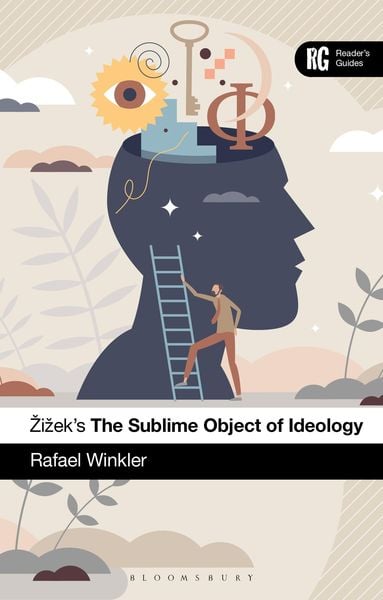
Zizek's The Sublime Object of Ideology A Reader's Guide
-
- Hardcover
- Taschenbuch ausgewählt
- eBook
-
Sprache:Englisch
Fr. 39.90
inkl. gesetzl. MwSt.,
Beschreibung
Produktdetails
Einband
Taschenbuch
Erscheinungsdatum
27.06.2024
Verlag
Bloomsbury AcademicSeitenzahl
176
Maße (L/B/H)
23.3/15.9/1.5 cm
Gewicht
284 g
Sprache
Englisch
ISBN
978-1-350-42565-1
First published in 1989, The Sublime Object of Ideology was Zizek's breakthrough work, and is still regarded by many as his masterpiece. It was an iconoclastic reinvention of ideology critique that introduced the English-speaking world to Zizek's scorching brand of cultural and philosophical commentary and the multifaceted ways in which he explained it. Tying together concepts from aesthetics, psychoanalytic theory, cultural studies and the philosophy of belief, it changed the face of contemporary commentary and remains the underpinning of much of his subsequent thinking. This compelling guide introduces all of the influential thinkers and foundational concepts which Zizek draws on to create this seminal work. Grounding the text's many and varied references in the work of Peter Sloterdijk, Saul Kripke, Walter Benjamin, Jacques Lacan, Jacques Derrida, Immanuel Kant and G.W.F. Hegel, amongst others, helps students who are encountering this mercurial writer for the first time to understand the philosophical context of his early explorations. Each of Zizek's key arguments are unpacked and laid out, alongside an invaluable account of how The Sublime Object of Ideology impacted the critical terrain on which it landed.
Kundinnen und Kunden meinen
Verfassen Sie die erste Bewertung zu diesem Artikel
Helfen Sie anderen Kund*innen durch Ihre Meinung