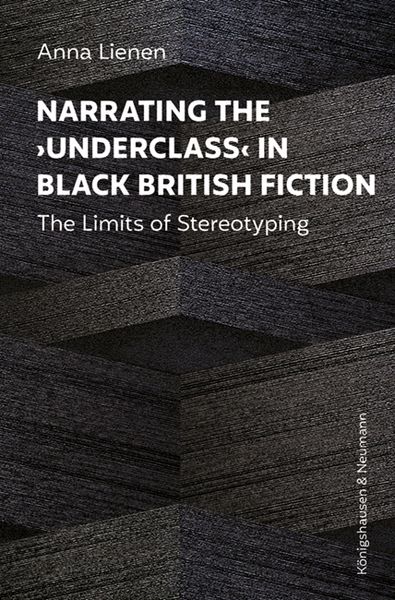
Narrating the ›Underclass‹ in Black British Fiction The Limits of Stereotyping
-
- Taschenbuch ausgewählt
- eBook
-
Sprache:Englisch
Fr. 55.90
inkl. gesetzl. MwSt.,
Beschreibung
Produktdetails
Einband
Taschenbuch
Erscheinungsdatum
02.04.2024
Verlag
Königshausen u. NeumannSeitenzahl
284
Maße (L/B/H)
23.2/15.3/2.3 cm
Gewicht
447 g
Auflage
1. Auflage
Sprache
Englisch
ISBN
978-3-8260-7935-1
When one is poor and black, it is hard »to come into representation«
(Hall, New Ethnicities 164). Those on the margins of society are usually
talked and written about rather than given a voice of their own.
Young black men in particular are stereotyped as criminal and violent,
as dangerous threats to society. In this context the term ›underclass‹
comes up time and again in public discourse. It is a very controversial
label which masquerades as a scientific descriptor but actually fulfils
the ideological function of stigmatising the poor and justifying their
criminalisation and marginalisation.
Black British novels dealing with the ›underclass‹, such as Alex
Wheatle’s East of Acre Lane (2001) and The Dirty South (2008) as well
as Courttia Newland’s The Scholar (1997), put those living on the periphery
of British society at the centre of their narratives – as focalisers
or first-person narrators. Their stories provide a place where stereotypes
about ›black youth‹ are scrutinised and challenged.
Within the field of black British fiction, black ›underclass‹ subjectivities
seem to be somewhat overlooked in literary representations; and
they only appear on the margins of academic research. This study aims
at improving this situation by providing a comprehensive analysis of
the representational strategies employed by the selected black British
novels as well as discussing the conditions under which black British
authors and their work are perceived and marketed by the publishing
industry. The analysis draws attention to the way in which structural
racism, classism and sexism impact protagonists and authors alike.
(Hall, New Ethnicities 164). Those on the margins of society are usually
talked and written about rather than given a voice of their own.
Young black men in particular are stereotyped as criminal and violent,
as dangerous threats to society. In this context the term ›underclass‹
comes up time and again in public discourse. It is a very controversial
label which masquerades as a scientific descriptor but actually fulfils
the ideological function of stigmatising the poor and justifying their
criminalisation and marginalisation.
Black British novels dealing with the ›underclass‹, such as Alex
Wheatle’s East of Acre Lane (2001) and The Dirty South (2008) as well
as Courttia Newland’s The Scholar (1997), put those living on the periphery
of British society at the centre of their narratives – as focalisers
or first-person narrators. Their stories provide a place where stereotypes
about ›black youth‹ are scrutinised and challenged.
Within the field of black British fiction, black ›underclass‹ subjectivities
seem to be somewhat overlooked in literary representations; and
they only appear on the margins of academic research. This study aims
at improving this situation by providing a comprehensive analysis of
the representational strategies employed by the selected black British
novels as well as discussing the conditions under which black British
authors and their work are perceived and marketed by the publishing
industry. The analysis draws attention to the way in which structural
racism, classism and sexism impact protagonists and authors alike.
Kundinnen und Kunden meinen
Verfassen Sie die erste Bewertung zu diesem Artikel
Helfen Sie anderen Kund*innen durch Ihre Meinung