• Produktbild: Francoist Repression and Incarceration in Contemporary Spanish Culture
  • Produktbild: Francoist Repression and Incarceration in Contemporary Spanish Culture

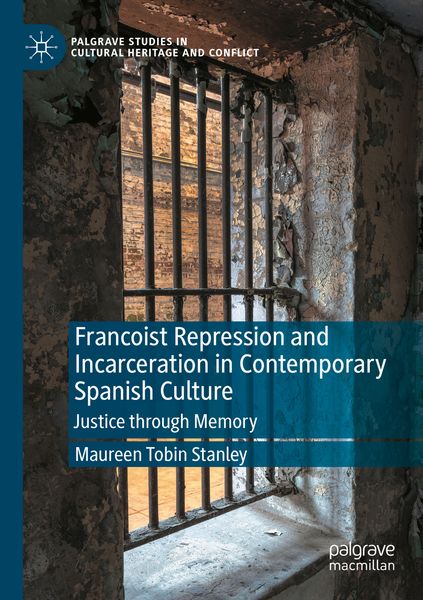
Francoist Repression and Incarceration in Contemporary Spanish Culture Justice through Memory

Fr. 149.00

inkl. gesetzl. MwSt., Versandkostenfrei


Beschreibung

Produktdetails

Einband

Taschenbuch

Erscheinungsdatum

11.10.2023

Verlag

Springer

Seitenzahl

335

Maße (L/B/H)

21/14.8/2 cm

Gewicht

461 g

Auflage

1st ed. 2022

Sprache

Englisch

ISBN

978-3-031-13394-7

Beschreibung

Produktdetails

Einband

Taschenbuch

Erscheinungsdatum

11.10.2023

Verlag

Springer

Seitenzahl

335

Maße (L/B/H)

21/14.8/2 cm

Gewicht

461 g

Auflage

1st ed. 2022

Sprache

Englisch

ISBN

978-3-031-13394-7

Herstelleradresse

Springer-Verlag GmbH
Tiergartenstr. 17
69121 Heidelberg
DE

Email: ProductSafety@springernature.com

Kundinnen und Kunden meinen

0 Bewertungen

Informationen zu Bewertungen

Zur Abgabe einer Bewertung ist eine Anmeldung im Konto notwendig. Die Authentizität der Bewertungen wird von uns nicht überprüft. Wir behalten uns vor, Bewertungstexte, die unseren Richtlinien widersprechen, entsprechend zu kürzen oder zu löschen.

Die Bewertungen sind nach Format, Anzahl Sterne und Datum sortiert.

Verfassen Sie die erste Bewertung zu diesem Artikel

Helfen Sie anderen Kund*innen durch Ihre Meinung

Kundinnen und Kunden meinen

0 Bewertungen filtern

  • Produktbild: Francoist Repression and Incarceration in Contemporary Spanish Culture
  • Produktbild: Francoist Repression and Incarceration in Contemporary Spanish Culture
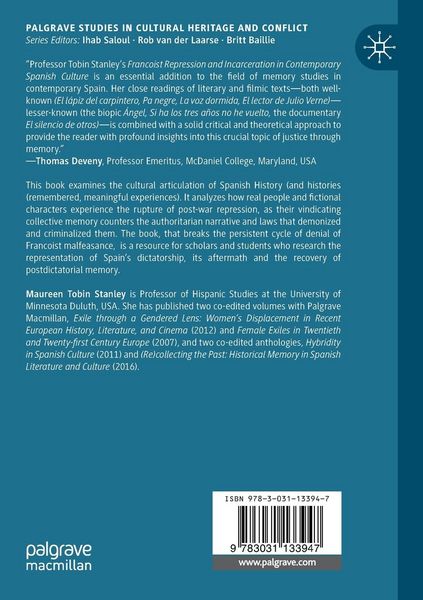
  • Chapter 1: Introduction Legislation, the Banality of Evil, and the Moral Imperative of Memory.- Chapter 2: The Aestheticized Pilgrimage from Fragmentation to Community: the Journey from the Testimonial Page to the Documentary Screen of Ángel Fernández Vicente (b. 1928), Anti-Fascist Resistant, Political Prisoner and Expatriate .- Chapter 3: The Pórtico de la Gloria in Manuel Rivas’ Post-war Novel The Carpenter’s Pencil: Art and Hagiography as a Metaphor that Subverts the Glory of Franco’s New Spain.- Chapter 4: The Path to Ambiguous Monstrosity: Illness, Martyrdom, and Castration in Emili Teixidor’s 2003 Novel and Agustí Villaronga’s Eponymous 2010 Film Pa negre (Black Bread).- Chapter 5: Transgenerational Feminist Memory in Dulce Chacón’s 2002 Novel La voz dormida/The Dormant Voice .- Chapter 6: Miscarriage of Justice: the Perverted Fairy Tale of Pregnancy, Childbirth, and State-sanctioned Removal of Children from Mothers Incarcerated in Madrid’s Prisons in Ana Cañil’s 2011 Novel Si ha los tres años no he vuelto (If I Have Not Returned in Three Years).- Chapter 7: Lessons Learned in Almudena Grandes’ 2012 Bildungsroman El lector de Julio Verne: Gender, Repression, and Resistance.- Chapter 8: Opening Graves and Seeking Closure: Remembering the Dismembered Beloved on the Quest for Justice in Almudena Carracedo and Robert Bahar’s 2018 Documentary El silencio de otros (The Silence of Others).