Gutscheinbedingungen

*Gültig bis 07.06.2026 auf (fast) alles. Ausgeschlossen sind Smartboxen, Zeitschriften, Tickets, Lebensmittel, Gaming-Elektroartikel, Tinte/Toner, Gutscheine, Geschenkkarten, Blumen und Abos | Einlösbar in allen Buchhandlungen von Orell Füssli, Barth Bücher, Buchladen Rapunzel, Schuler Orell Füssli, Stauffacher und ZAP unter Vorweisung des Gutscheins, auf www.orellfüssli.ch durch Eingabe des Gutscheincodes. Beim Service „eBooks verschenken“ und bei eBook-Käufen via eReader nicht einlösbar | Mindesteinkaufswert: Fr. 100.- | Nicht mit anderen Rabatten kumulierbar.

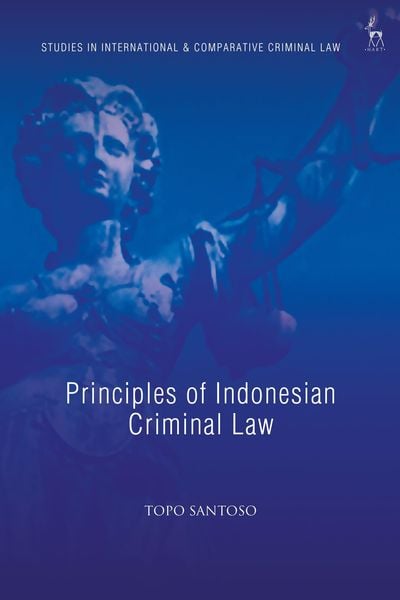
Produktbild: Santoso, T: Principles of Indonesian Criminal Law

Santoso, T: Principles of Indonesian Criminal Law

Fr. 93.90

inkl. gesetzl. MwSt., Versandkostenfrei


Produktdetails

Einband

Taschenbuch

Erscheinungsdatum

22.08.2024

Verlag

Hart Publishing

Seitenzahl

336

Maße (L/B/H)

23.4/15.6/2.5 cm

Gewicht

480 g

Sprache

Englisch

ISBN

978-1-5099-5096-6

Produktdetails

Einband

Taschenbuch

Erscheinungsdatum

22.08.2024

Verlag

Hart Publishing

Seitenzahl

336

Maße (L/B/H)

23.4/15.6/2.5 cm

Gewicht

480 g

Sprache

Englisch

ISBN

978-1-5099-5096-6

Kundinnen und Kunden meinen

0 Bewertungen

Informationen zu Bewertungen

Zur Abgabe einer Bewertung ist eine Anmeldung im Konto notwendig. Die Authentizität der Bewertungen wird von uns nicht überprüft. Wir behalten uns vor, Bewertungstexte, die unseren Richtlinien widersprechen, entsprechend zu kürzen oder zu löschen.

Die Bewertungen sind nach Format, Anzahl Sterne und Datum sortiert.

Verfassen Sie die erste Bewertung zu diesem Artikel

Helfen Sie anderen Kund*innen durch Ihre Meinung

Kundinnen und Kunden meinen

0 Bewertungen filtern

Die Leseprobe wird geladen.
  • Produktbild: Santoso, T: Principles of Indonesian Criminal Law
  • 1. A Brief Overview of Indonesian Criminal Law I. Definition II. Substantive Criminal Law and Law on Criminal Procedure III. Functions of Criminal Law IV. Types of Criminal Law: General and Special Criminal Law, National and Local Criminal Law V. Criminal Law as Ultimum Remedium 2. The History of Criminal Law in Indonesia I. Prior to Western Colonisation II. During the Colonial Period (Dutch, English, and Japanese) III. The Years of 1945-1958 IV. 1958 to Present V. The New Criminal Code (Law No 1 of 2023) 3. Sources of Criminal Law in Indonesia I. Definition II. Criminal Code III. Special Criminal Law IV. Administrative Law with Criminal Provisions 4. Scope of Application of Criminal Law I. The Legality Principle II. Legality in Article 1 of the Criminal Code, 1945 Constitution, Human Rights Law, and New Criminal Code Bill III. Articles 2 to 9 of the Criminal Code IV. Scope of Application of Criminal Law in the New Criminal Code 5. Criminal Offences I. Definition II. Types of Criminal Offence III. Elements of a Criminal Offence IV. Causality V. Criminal Offences in the New Criminal Code 6. Culpability and Criminal Liability I. Definition II. Categories of Culpability III. Criminal Liability IV. Criminal Liability and Competency V. Culpability and Criminal Liability in the New Criminal Code 7. Justificatory Defences I. Definition II. Noodtoestand/Necessity (Article 48 of the Criminal Code) III. Self-Defence (Article 49 (1) of the Criminal Code) IV. Acting on the Basis of a Statutory Provision (Article 50 of the Criminal Code) V. Acting on the Basis of an Official Order (Article 51 (1) of the Criminal Code) VI. Justificatory Defence in the New Criminal Code 8. Excusatory Defences I. Insanity (Incompetency) II. Duress III. Excessive Self-Defence IV. Acting on an Unauthorised Official Order, but in Good Faith V. Excusatory Defences in the New Criminal Code 9. Attempts I. Definition II. Attempt Requirements in Article 53 of the Criminal Code III. Types of Attempts IV. Attempts in the New Criminal Code 10. Participation I. Definition II. Participation in Articles 55 and 56 of the Criminal Code III. Plegen and Dader (Direct Perpetration) IV. Doen Plegen V. Medeplegen (Co-perpetratorship) VI. Uitlokking (Abetting) VII. Assisting in Committing a Criminal Act VIII. 'Participation' in the New Criminal Code 11. Sentencing I. Definition II. The Philosophy of Punishment III. Types of Punishment IV. Purpose and Types of Punishment in the New Criminal Code V. Increases and Reductions of Sentences VI. Concurrence of Criminal Offences in the Criminal Code VII. Concurrence of Criminal Offences in the New Criminal Code