Band 1523
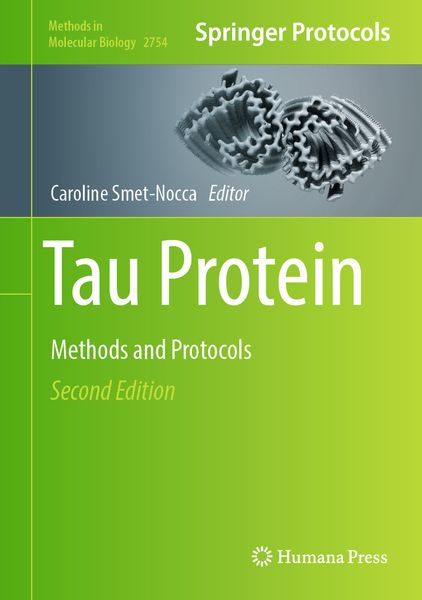
Tau Protein Methods and Protocols
Aus der Reihe
Methods in Molecular Biology
-
- Hardcover ausgewählt
- Taschenbuch
- eBook
-
Sprache:Englisch
-
Auflage:2. Auflage
- 1st ed. 2017 Fr. 192.00
- 2. Auflage Fr. 276.00 ausgewählt
Fr. 276.00
inkl. gesetzl. MwSt.,
Beschreibung
Produktdetails
Einband
Gebundene Ausgabe
Erscheinungsdatum
22.03.2024
Herausgeber
Caroline Smet-NoccaVerlag
Springer UsSeitenzahl
608
Maße (L/B/H)
26/18.3/3.9 cm
Gewicht
1290 g
Auflage
2. Auflage
Sprache
Englisch
ISBN
978-1-07-163628-2
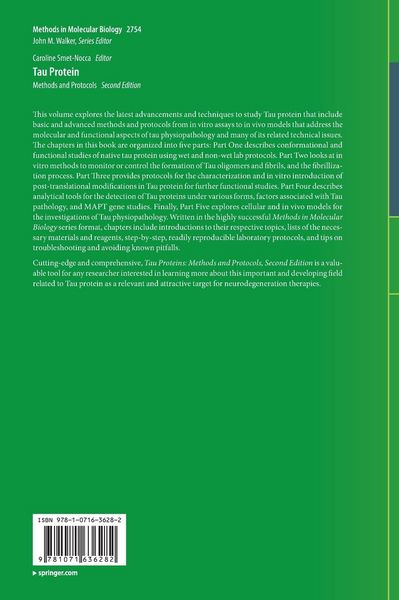
This volume explores the latest advancements and techniques to study Tau protein that include basic and advanced methods and protocols from in vitro assays to in vivo models that address the molecular and functional aspects of tau physiopathology and many of its related technical issues. The chapters in this book are organized into five parts: Part One describes conformational and functional studies of native tau protein using wet and non-wet lab protocols. Part Two looks at in vitro methods to monitor or control the formation of Tau oligomers and fibrils, and the fibrillization process. Part Three provides protocols for the characterization and in vitro introduction of post-translational modifications in Tau protein for further functional studies. Part Four describes analytical tools for the detection of Tau proteins under various forms, factors associated with Tau pathology, and MAPT gene studies. Finally, Part Five explores cellular and in vivo models for the investigations of Tau physiopathology. Written in the highly successful Methods in Molecular Biology series format, chapters include introductions to their respective topics, lists of the necessary materials and reagents, step-by-step, readily reproducible laboratory protocols, and tips on troubleshooting and avoiding known pitfalls.
Cutting-edge and comprehensive, Tau Proteins: Methods and Protocols, Second Edition is a valuable tool for any researcher interested in learning more about this important and developing field related to Tau protein as a relevant and attractive target for neurodegeneration therapies.
Cutting-edge and comprehensive, Tau Proteins: Methods and Protocols, Second Edition is a valuable tool for any researcher interested in learning more about this important and developing field related to Tau protein as a relevant and attractive target for neurodegeneration therapies.
Noch keine Bewertungen vorhanden
Verfassen Sie die erste Bewertung zu diesem Artikel
Helfen Sie anderen Kundinnen und Kunden durch Ihre Meinung.