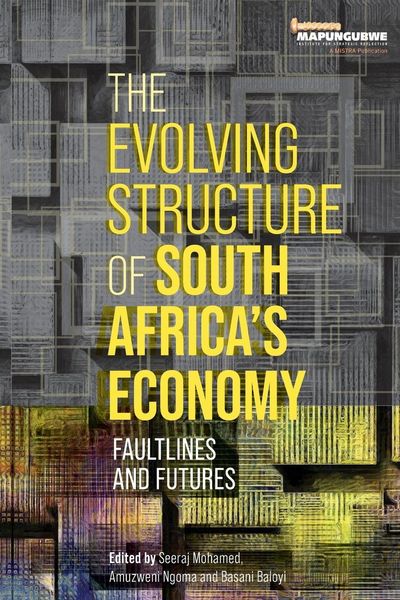
The Evolving Structure of South Africa's Economy Faultlines and Futures
-
- Englisch ausgewählt
Fr. 85.90
inkl. gesetzl. MwSt.,
Beschreibung
Produktdetails
Einband
Taschenbuch
Erscheinungsdatum
23.09.2023
Herausgeber
Seeraj Mohamed + weitereVerlag
Mapungubwe Institute (MISTRA)Seitenzahl
618
Maße (L/B/H)
23.4/15.6/3.4 cm
Gewicht
925 g
Sprache
Englisch
ISBN
978-1-920690-39-7
South Africa still faces low economic growth and high unemployment, coupled with the persistent challenges of poverty and inequality. These exert pressure on South Africa to foster structural transformation that will facilitate a more inclusive and resilient economy. Authors apply multiple theoretical and empirical perspectives to take stock of the historical and contemporary structure of the South African economy, its evolving nature and possible future pathways. The explore how South Africa's structural transformation agenda is affected by the global context, and discuss debates on the extreme social impacts of globalised and financialised economic structures. Contributors offer technical and analytical discussions of the overlapping structural faultlines that produce uneven economic performance. They explain the changes and continuities of South Africa's economic structure, bound by an analytical thread that centres power relations and political settlements. Varied chapters explain how poor governance and corruption have slowed down structural reform. This has been further exacerbated by the inconsistent availability of energy and the deterioration of logistics. The book details the structural reforms and policy regimes necessary for increasing productive capacity in South Africa's agriculture, manufacturing, agro-processing. retail and services, energy and mining industries. It also reflects on the role that micro- and informal enterprises can play if afforded the necessary support. The technical details and analyses in the book highlight the need for a radical review of macroeconomic policy to reduce the country's chronic vulnerability to poverty and inequality.
Kundinnen und Kunden meinen
Verfassen Sie die erste Bewertung zu diesem Artikel
Helfen Sie anderen Kund*innen durch Ihre Meinung