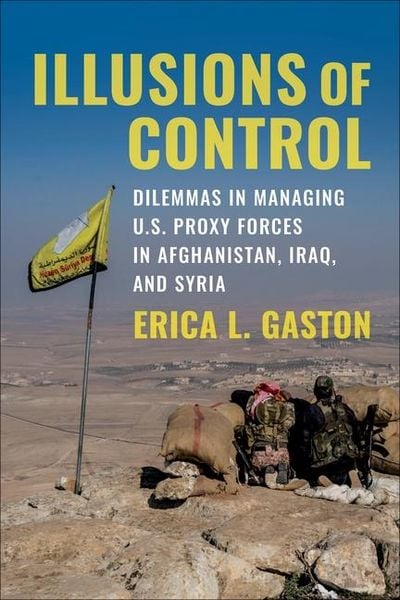
Illusions of Control Dilemmas in Managing U.S. Proxy Forces in Afghanistan, Iraq, and Syria
-
- Hardcover
- Taschenbuch ausgewählt
- eBook
-
Sprache:Englisch
Fr. 55.90
inkl. gesetzl. MwSt.,
Beschreibung
Produktdetails
Einband
Taschenbuch
Erscheinungsdatum
30.07.2024
Verlag
University PressesSeitenzahl
424
Maße (L/B/H)
22.6/15.1/2.5 cm
Gewicht
610 g
Sprache
Englisch
ISBN
978-0-231-21013-3
Over the last two decades, the United States has supported a range of militias, rebels, and other armed groups in Afghanistan, Iraq, and Syria. Critics have argued that such partnerships have many perils, from enabling human rights abuses to seeding future threats. Policy makers, however, have sought to mitigate the risks of partnering with irregular armed groups. Militia group leaders in far-flung corners of these war-torn countries were subjected to background checks and instructed about international law and human rights, and their funding was cut when they crossed red lines. To what extent have such mechanisms curbed the dangers of proxy warfare, and what unforeseen consequences has this approach unleashed?
Drawing on a decade of field research and hundreds of interviews with stakeholders, Erica L. Gaston unpacks the dilemmas of attempting to control proxy forces. She demonstrates that, although the tools U.S. policy makers used to constrain partners' behavior increased in number and sophistication, they never fully addressed the range of political, security, and legal concerns surrounding these forces. Moreover, by shifting policy makers' calculations, the use of proxy forces introduced additional moral hazards and may have enabled riskier decision making. Featuring substantial empirical detail and close analysis of key internal debates, Illusions of Control offers new perspectives on some of the most significant and controversial elements of recent U.S. security policy. In addition to nuanced insights about proxy relationships, this book provides a novel analytical toolkit for exploring transnational bargaining and foreign policy deliberations in hybrid political environments.
Kundinnen und Kunden meinen
Verfassen Sie die erste Bewertung zu diesem Artikel
Helfen Sie anderen Kund*innen durch Ihre Meinung