Gutscheinbedingungen

*Gültig bis 20.07.2026 auf alle Bücher. Ausgeschlossen sind Zeitschriften, Prozentbücher und Abos | Einlösbar in allen Buchhandlungen von Orell Füssli, Barth Bücher, Buchladen Rapunzel, Papeterie Köhler, Schuler Orell Füssli, Stauffacher und ZAP unter Vorweisung des Gutscheins, auf www.orellfüssli.ch durch Eingabe des Gutscheincodes. Beim Service „eBooks verschenken“ und bei eBook-Käufen via eReader nicht einlösbar | Mindesteinkaufswert: Fr. 30.- | Nicht mit anderen Rabatten kumulierbar.

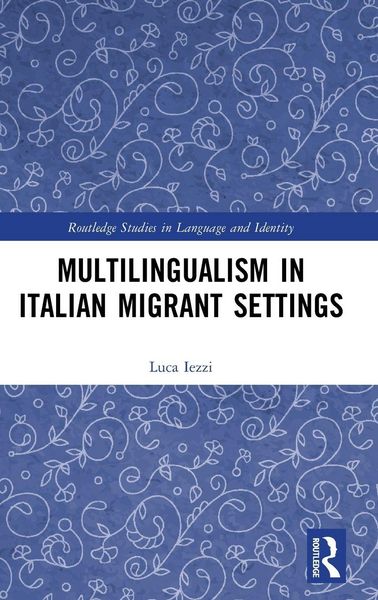
Produktbild: Multilingualism in Italian Migrant Settings

Multilingualism in Italian Migrant Settings

Fr. 229.00

inkl. gesetzl. MwSt., Versandkostenfrei


Beschreibung

Produktdetails

Einband

Gebundene Ausgabe

Erscheinungsdatum

26.09.2024

Abbildungen

schwarz-weiss Illustrationen, Raster, schwarz-weiss, Zeichnungen, schwarz-weiss, Tabellen, schwarz-weiss

Verlag

Taylor & Francis

Seitenzahl

158

Maße (L/B/H)

24/16.1/1.3 cm

Gewicht

450 g

Sprache

Englisch

ISBN

978-1-03-268464-2

Beschreibung

Produktdetails

Einband

Gebundene Ausgabe

Erscheinungsdatum

26.09.2024

Abbildungen

schwarz-weiss Illustrationen, Raster, schwarz-weiss, Zeichnungen, schwarz-weiss, Tabellen, schwarz-weiss

Verlag

Taylor & Francis

Seitenzahl

158

Maße (L/B/H)

24/16.1/1.3 cm

Gewicht

450 g

Sprache

Englisch

ISBN

978-1-03-268464-2

EU-Ansprechpartner

Taylor & Francis Verlag GmbH
Kaufingerstraße 24
80331 München
DE
GPSR@taylorandfrancis.com

Herstelleradresse

Taylor & Francis Group
5 Howick Place
SW1P 1WG London
UK
GPSR@taylorandfrancis.com

Noch keine Bewertungen vorhanden

Verfassen Sie die erste Bewertung zu diesem Artikel

Helfen Sie anderen Kundinnen und Kunden durch Ihre Meinung.

Kundinnen und Kunden meinen

Bewertungen (0)

Die Leseprobe wird geladen.
  • Produktbild: Multilingualism in Italian Migrant Settings
  • List of figures and tables

    Acknowledgements

    INTRODUCTION: Beyond borders: global changes and linguistic challenges in migratory contexts

    CHAPTER 1: The European migrant crisis

    1.1  Migrations and migratory policies in Europe

    1.2  Unauthorised migrations in Italy

    1.3  Migration and language

    CHAPTER 2: The sociolinguistics of (im)migration

    2.1  Multilingualism, speech community, and repertoires

    2.2  The sociolinguistics of (im)migration across time and space

    2.3  Multilingualism in postcolonial countries

    2.4  Status and function of a language

    2.4.1        Geopolitical factors

    2.4.2        Socio-demographical factors

    2.4.3        Linguistic factors

    2.5  Language ideologies and attitudes

    CHAPTER 3: Language contact 

    3.1  Language maintenance and shift

    3.2  Contact in speech

    3.2.1        Structural approaches to CS

    3.2.2        Functional approaches to CS

    3.3  From CS to grammaticalisation

    3.4  Contact in language

    3.4.1        Matter replication

    3.4.2        At the boundary between switching and matter replication

    3.4.3        Pattern replication

    3.5  Structure, function and cognition: the usage-based approach

    CHAPTER 4: Linguistic ethnography and multilingualism  

    4.1  Objectives of the research

    4.1.1        Research methods

    4.2  Data transcription

    4.2.1        Language transcription

    4.2.2        Graphic and phonetic correspondences

    4.2.3        Morphemic glossing

    4.3  The pilot study

    4.3.1        The CAS

    4.3.2        Methodology

    4.3.3        Data analysis

    4.3.4        Discussion

    4.4  The main study

    4.4.1        Informants and linguistic biographies

    4.4.2 Other subjects

    CHAPTER 5: The urban variety of Punjabi

    5.1  Population in Pakistan

    5.2  The languages of the Pakistan

    5.2.1        English, the conquerors' language

    5.2.2        The privileging of Urdu as national language

    5.2.3        Urdu and Punjabi

    5.3  Urban Punjabi

    5.3.1 Borrowing vs CS

    5.3.2 Instances of switching phenomena within the urban variety

    5.4  Discussion

    CHAPTER 6: Italian within the speech community 

    6.1  Code choice in the CAS (centro di accoglienza straordinaria)

    6.2  Instances of code mixing within the urban variety

    6.3  Discussion

    CHAPTER 7: Ideologies and attitudes 

    7.1  Language proficiency in the CAS(centro di accoglienza straordinaria)

    7.2  Interviews

    7.3  Ideologies and attitudes

    7.3.1        Urdu

    7.3.2        English

    7.3.3        Italian

    7.3.4        Minority languages

    7.4  Some reflections on the linguistic repertoire of the migrants

    CONCLUSIONS: Beyond challenge: understanding multilingualism in a time of change

    References

    Appendix I: Questionnaire

    Appendix II: GDPR

    Index