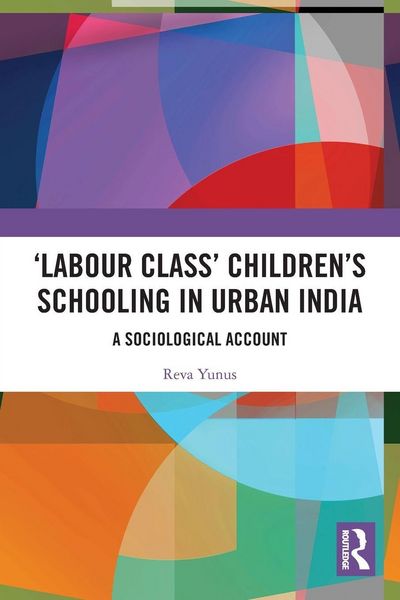

• Produktbild: 'Labour Class' Children's Schooling in Urban India
  • Produktbild: 'Labour Class' Children's Schooling in Urban India

'Labour Class' Children's Schooling in Urban India A Sociological Account

Fr. 73.90

inkl. gesetzl. MwSt., Versandkostenfrei


Beschreibung

Produktdetails

Einband

Taschenbuch

Erscheinungsdatum

18.12.2024

Verlag

Taylor and Francis

Seitenzahl

170

Maße (L/B/H)

23.4/15.6/1 cm

Gewicht

453 g

Sprache

Englisch

ISBN

978-0-367-64750-6

Beschreibung

Produktdetails

Einband

Taschenbuch

Erscheinungsdatum

18.12.2024

Verlag

Taylor and Francis

Seitenzahl

170

Maße (L/B/H)

23.4/15.6/1 cm

Gewicht

453 g

Sprache

Englisch

ISBN

978-0-367-64750-6

Herstelleradresse

Libri GmbH
Europaallee 1
36244 Bad Hersfeld
DE

Email: gpsr@libri.de

Noch keine Bewertungen vorhanden

Verfassen Sie die erste Bewertung zu diesem Artikel

Helfen Sie anderen Kundinnen und Kunden durch Ihre Meinung.

Kundinnen und Kunden meinen

Bewertungen (0)

Die Leseprobe wird geladen.
  • Produktbild: 'Labour Class' Children's Schooling in Urban India
  • Produktbild: 'Labour Class' Children's Schooling in Urban India
  • Dedication

    Table of contents

    Acknowledgments

    1. Making a case for sociological accounts of childhood, labour and schooling
      1. Theorising the link between educational and socioeconomic inequalities
      2. Poverty and poor children's schooling in development discourses
        1. The 'girl effect'

      3. Informal work
        1. A note on the term, 'labour class'

      4. Methods
      5. Organisation of the book
      6. Theorising intersections: poverty, patriarchy and urban children's schooling in India
        1. Socioeconomic and educational stratification and access to schooling
          1. Stratification, participation and access
          2. Decision-making within families

        2. Classroom processes, experience and social relations
          1. Teacher attitudes and discrimination
          2. Welfare, poverty and social class difference

        3. Theoretical framework
          1. Childhood, the school/labour binary and political economy
          2. Caste, class and informal work
          3. Poverty, gendered work and social reproduction
          4. Caste patriarchy and children's lives

        4. Contributions
        5. Labour class students and their families: a look at urban lives and labours
          1. Introduction
          2. Migrating to Indore
            1. Children migrating without parents

          3. Labour class parents' work
            1. OBC families
            2. SC families

          4. Children's gendered work
            1. Boys' work
            2. Girls' work

          5. Conclusion
          6. Ghar, bahar and the gendered place of school in children's lives
            1. Introduction
            2. Ghar: Why school is dearer than home
              1. (Un)freedom: village versus city
              2. (Un)freedom: no bargains within patriarchy
              3. (Un)freedom: when protecting becomes policing

            3. Bahar: What could be more important than school?
              1. The rewards of (waged) work
              2. The reward is in recognition: jaan-pehchan

            4. Conclusion: Gendered and classed significance of school
            5. 'Sarkari skool', 'sarkari bacche': unpacking the narrative of deficiency
              1. Introduction
              2. The 'sarkari' school
                1. Overview of infrastructure, facilities and routine
                2. What is 'sarkari' about the school?

              3. Teachers' 'deficit view' of labour class children
                1. Differences between teachers' practices

              4. Challenging the deficit view
                1. Labour class parents' struggles and strategies
                2. Labour class pupils' struggles and efforts

              5. Conclusion
              6. The hidden moral curriculum for 'labour class' children
                1. Introduction
                2. Disciplining the welfare-dependent labour class
                3. Keeping labour class children 'clean'
                  1. Countering the narrative, cleaning the school

                4. For the love of caste patriarchy: policing clothes, space and interaction
                  1. Constructing and negotiating labour class femininities
                  2. Policing techniques in the classroom
                  3. Negotiating gender policing

                5. Conclusion
                6. Schooling, social inequality and impossibilities of change
                  1. Children in families
                  2. Children in classrooms
                  3. Conclusion

                  References

                  Index