Produktbild: Roaming Objects

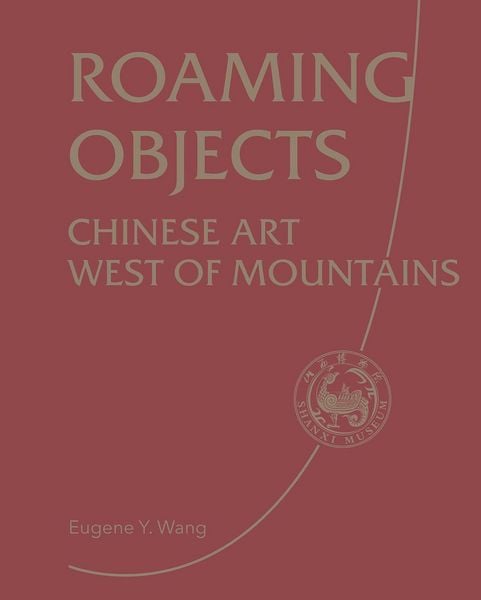
Roaming Objects Chinese Art West of Mountains

Fr. 76.90

inkl. gesetzl. MwSt., Versandkostenfrei


Beschreibung

Produktdetails

Einband

Gebundene Ausgabe

Erscheinungsdatum

05.05.2026

Herausgeber

Eugene Wang

Verlag

Acc Art Books

Seitenzahl

240

Maße (L/B)

33.5/27.6 cm

Sprache

Englisch

ISBN

978-1-78884-331-7

Beschreibung

Produktdetails

Einband

Gebundene Ausgabe

Erscheinungsdatum

05.05.2026

Herausgeber

Eugene Wang

Verlag

Acc Art Books

Seitenzahl

240

Maße (L/B)

33.5/27.6 cm

Sprache

Englisch

ISBN

978-1-78884-331-7

Herstelleradresse

Libri GmbH
Europaallee 1
36244 Bad Hersfeld
DE

Email: gpsr@libri.de

Kundinnen und Kunden meinen

0 Bewertungen

Informationen zu Bewertungen

Zur Abgabe einer Bewertung ist eine Anmeldung im Konto notwendig. Die Authentizität der Bewertungen wird von uns nicht überprüft. Wir behalten uns vor, Bewertungstexte, die unseren Richtlinien widersprechen, entsprechend zu kürzen oder zu löschen.

Die Bewertungen sind nach Format, Anzahl Sterne und Datum sortiert.

Verfassen Sie die erste Bewertung zu diesem Artikel

Helfen Sie anderen Kund*innen durch Ihre Meinung

Kundinnen und Kunden meinen

0 Bewertungen filtern

  • Produktbild: Roaming Objects
  • 1.Introduction 2.Who Roamed Around the North Star? Early Chinese creation myths and celestial mapping through art. 3.Why Do Alligator-Shaped Vessels Grow Horns? The zoomorphic language of hybrid ritual objects, encoding cycles of life, death, and regeneration. 4.Why Does the Drinking Vessel Have Anything to Do with a Bird-Snake Fight? The yin-yang cosmology that informs the design and symbolic function of bronze vessels. 5.What Does It Take to Manufacture Forms of Life? The conceptual and technical foundations of clay molds in artifact production and their evocation of vitalization. 6.Why Does the Quiet Tomb Need Thunderstorms? Cosmological processes that engender vitality and dynamism in the afterlife. 7.How Can One Reach Heaven by Diving into a Well? The symbolic layers behind filial piety narratives in funerary art and architecture. 8.Why Is the Cave the Best Place to Play Chess? The medieval Chinese concept of 'grotto-heaven' as a distinct experiential realm beyond ordinary life. 9.Which Buddha Land Would You Choose for Your Afterlife Destination? Competing Buddhist pure lands and their visual and ideological claims on medieval Chinese imagination. 10.Where Did the Europeans Go After They Died in Medieval China? Zoroastrian-influenced afterlife visions and their artistic representations in medieval China. 11.What Is It Like to Go to the Buddhist Monasteries in the Deep Mountains? The origin, evolution, and conceptual significance of monastery-bound mountain treks in Chinese landscape traditions. What Is It Like to Go Inside Our Own Bodies? The symbolic and conceptual agendas underpinning the pictorial scrolls of the Water Land ritual.