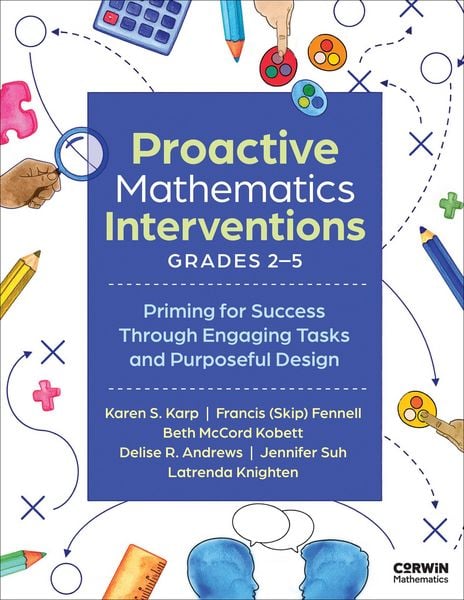
Produktbild: Proactive Mathematics Interventions, Grades 2-5

Proactive Mathematics Interventions, Grades 2-5 Priming for Success Through Engaging Tasks and Purposeful Design

Fr. 61.90

inkl. gesetzl. MwSt., Versandkostenfrei


Beschreibung

Produktdetails

Einband

Taschenbuch

Erscheinungsdatum

05.12.2025

Verlag

Sage Publications

Seitenzahl

448

Maße (L/B/H)

27.8/21.7/2.7 cm

Gewicht

964 g

Sprache

Englisch

ISBN

978-1-07-197367-7

Beschreibung

Produktdetails

Einband

Taschenbuch

Erscheinungsdatum

05.12.2025

Verlag

Sage Publications

Seitenzahl

448

Maße (L/B/H)

27.8/21.7/2.7 cm

Gewicht

964 g

Sprache

Englisch

ISBN

978-1-07-197367-7

Herstelleradresse

Libri GmbH
Europaallee 1
36244 Bad Hersfeld
DE

Email: gpsr@libri.de

Kundinnen und Kunden meinen

0 Bewertungen

Informationen zu Bewertungen

Zur Abgabe einer Bewertung ist eine Anmeldung im Konto notwendig. Die Authentizität der Bewertungen wird von uns nicht überprüft. Wir behalten uns vor, Bewertungstexte, die unseren Richtlinien widersprechen, entsprechend zu kürzen oder zu löschen.

Die Bewertungen sind nach Format, Anzahl Sterne und Datum sortiert.

Verfassen Sie die erste Bewertung zu diesem Artikel

Helfen Sie anderen Kund*innen durch Ihre Meinung

Kundinnen und Kunden meinen

0 Bewertungen filtern

  • Produktbild: Proactive Mathematics Interventions, Grades 2-5
  • Preface
    What Is This Book About?
    Who Is This Book For?
    How Does This Book Work?
    More on Priming
    How Do We Use Certain Language in This Book?
    Why Do We Choose Certain Terms?
    How Does Strengths-Based Language Change Mindsets?
    How Do We Define Terms Throughout the Text?
    Acknowledgements
    About the Authors
    Part 1: Introduction to Priming
    Chapter 1: Introduction. Proactive Intervention: Fixing Structures, Not Children
    So What's the Problem?
    What's Being Done?
    What Needs to Change?
    What Is the Research Base?
    Recommendation 1: Systematic Instruction
    Recommendation 2: Mathematical Language
    Recommendation 3: Representations
    Recommendation 4: Number Lines
    Recommendation 5: Word Problems
    Recommendation 6: Timed Activities
    When We Talk About Intervention, What Do We Mean?
    What Do We Mean by Tutoring?
    What Are Some Key Elements of the Intervention Instruction?
    Employing Multiple Representations
    Collaborating Across the Team
    Using a Preemptive and Proactive Approach
    What Should We Think About Next?
    Reflection Opportunities for Chapter 1
    Chapter 2: Characteristics of Effective Strengths-Based Interventions
    What Is Strengths-Based Teaching and Learning?
    What Is the Strengths-Spotting Process
    Four Steps to Spotting Strengths
    Example of the Process Using a Student's Representation
    How Do We Build Rapport and Relationships?
    What Does It Mean to Be a Warm Demander?
    How Can We Integrate Culturally Responsive Mathematics
    Teaching as We Engage in Intervention Activities?
    How Can We Leverage Family Involvement in Supporting
    Math Proactive Intervention?
    How Can We Help Students Avoid or Overcome Math Anxiety?
    Reflection Opportunities for Chapter 2
    Chapter 3: Formative Assessment: Targeting and Monitoring Interventions
    What Is Formative Assessment, and Why Is It Important?
    What's the Role of Summative Assessments?
    And What About Feedback?
    How Can We Focus on Formative Assessment in Intervention Settings?
    Observation Tools
    Interview Tools
    Show Me Tool
    What Is the Importance of Task Selection in Assessment?
    How Can We Connect Assessment and Instruction?
    Reflection Opportunities for Chapter 3
    Chapter 4: YOUR TURN: A Proactive Preventative Mathematics Intervention/Tutoring Model in Action
    Considering Elements of Your Mathematics Intervention Program
    How Is Our Approach Different?
    What Does Planning for Priming Look Like?
    What Does a Planning Conversation Sound Like?
    How Do We Connect Strengths-Based Teaching and Formative Assessment?
    How Can We Communicate Student Progress?
    What Are Other Considerations We Need to Think About?
    Staffing
    Time and Location
    Program Size
    Instructional Materials
    Instruction and Assessment
    Where Do You Begin Priming Intervention Lessons?
    What Can We Learn From Listening to the Voices of Others Trying Priming in Their Schools?
    And Now, It's Your Turn!
    Reflection Opportunities for Chapter 4
    Part 2: Putting Priming Into Action
    Chapter 5 Intervention Tasks
    Task 1: Mystery Number Riddles
    Task 2: Come on Down!
    Task 3: Trading Places
    Task 4: Adding It Up
    Task 5: What's the Difference?
    Task 6: Targeted Sum
    Task 7: Targeted Differences
    Task 8: Valuable Digits
    Task 9: Picture This
    Task 10: Balancing Act
    Task 11: Escape Room
    Task 12: Things That Come in Groups
    Task 13: Garden Spaces
    Task 14: Build It Bingo
    Task 15: Rearrange It
    Task 16: Multiplication Chains
    Task 17: Speed Estimator
    Task 18: Magic Pot Patterns
    Task 19: Fraction Frenzy
    Task 20: Cake Time
    Task 21: Line 'Em Up
    Task 22: To Be or Not to Be: Equivalent Fractions
    Task 23: Fraction Equivalence Through Quilts and Fringes
    Task 24: Sport Stats
    Task 25: Fraction Zap
    Task 26: Fraction Sums
    Task 27: Fraction Multiplication: Fundraiser
    Task 28: Fraction Multiplication: Farmland
    Task 29: Fraction Races
    Task 30: Shape Sort
    Task 31: Alike and Different
    Task 32: Shape Shifting
    Task 33: Shapes: Build It!
    Task 34: What's My Rule?
    Task 35: Counting Coins
    Task 36: Smart About Money
    Task 37: Measure Up!
    Task 38: Comparing With Measurement
    Task 39: On the Edge
    Task 40: Field Day
    Task 41: Broken Clock
    Task 42: Tip and Plot
    Task 43: Picture Perfect
    References
    Index