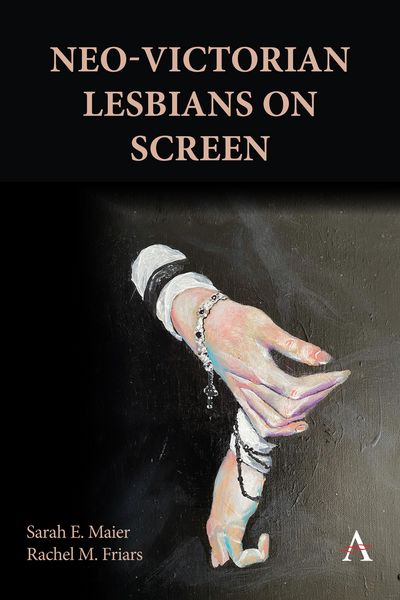
Neo-Victorian Lesbians on Screen
Fr. 38.90
inkl. gesetzl. MwSt.Beschreibung
Produktdetails
Format
ePUB
Kopierschutz
Nein
Family Sharing
Nein
Text-to-Speech
Ja
Erscheinungsdatum
09.09.2025
Verlag
Anthem PressSeitenzahl
226 (Printausgabe)
Dateigröße
667 KB
Sprache
Englisch
EAN
9781839994562
Neo-Victorian Lesbians on Screen examines how transmedia adaptations of the long nineteenth-century challenge historical representations of lesbians by revoicing their experiences and altering viewer perceptions, thus blending past and present in complex ways.
If neo-Victorianism is, as Ann Heilmann and Mark Llewellyn remark, 'more than historical fiction set in the nineteenth century', then it is because it 'must in some respect be self-consciously engaged with the act of (re)interpretation, (re)discovery and (re)vision concerning the Victorians' while keeping in mind the ethical, metafictional and metacritical parameters in 'acts of (readerly/writerly) appropriation' in the metafictional mode. They acknowledge the initial definition had to be aware of 'metafictional and metahistorical concern with the process of narrating/re-imagining/re-visioning histories, and had to be self-conscious about its own position as literary or filmic reconstruction' but now they are alert to the global, ongoing 'discourse around nostalgia, heritage and cultural memory' in other parts of the long-nineteenth century world as portrayed in neo-Victorian narratives. Neo-Victorian Lesbians on Screen argues the portrayal on screen of lesbians situated in the long nineteenth century across various countries is at the very least a dual task; the imperative project of revoicing lesbian silence and female companionship is complicated by the lack of and/or complex representation of such women in the past. The adaptations, with varying degrees of success, carefully manipulate the gaze of the viewer to illustrate both how crucial the act of looking proves to be for lesbian attachment in these films and how the viewer's own gaze changes the way the lesbian is represented. Texts, subtexts and intertextualities help elucidate the memories and sexualities of the various women. Men - in their silence, abuse, misunderstanding or love - relate to the women with a lack of social roadmap to govern their responses. Maier and Friars consider the adaptations' awareness of the audience and the ways in which the films implicitly acknowledge the stakes behind bringing the lesbian to life, as it were, in visual media. Because screen adaptations disrupt historical distance by literally picturing Victorian subjects via a medium they did not have, films of novels as well as biofictions, and new narratives are challenged by the lesbian subject's vivid presence on screen. The lesbian is no longer a contained (neo)Victorian presence in the 'othered' nineteenth century, but her very existence on screen signals her effervescent modernity, which filmmakers alternately embrace or reject.
Noch keine Bewertungen vorhanden
Verfassen Sie die erste Bewertung zu diesem Artikel
Helfen Sie anderen Kundinnen und Kunden durch Ihre Meinung.