A Marsh Island
-
- Hardcover
- Taschenbuch
- eBook ausgewählt
-
Form:Einzelkauf Download
-
Sprache:Englisch
Fr. 40.90
inkl. gesetzl. MwSt.Beschreibung
Produktdetails
Format
ePUB
Kopierschutz
Nein
Family Sharing
Nein
Text-to-Speech
Ja
Erscheinungsdatum
13.06.2023
Herausgeber
Don James McLaughlinVerlag
Penguin Random House South AfricaSeitenzahl
216 (Printausgabe)
Sprache
Englisch
EAN
9781512824278
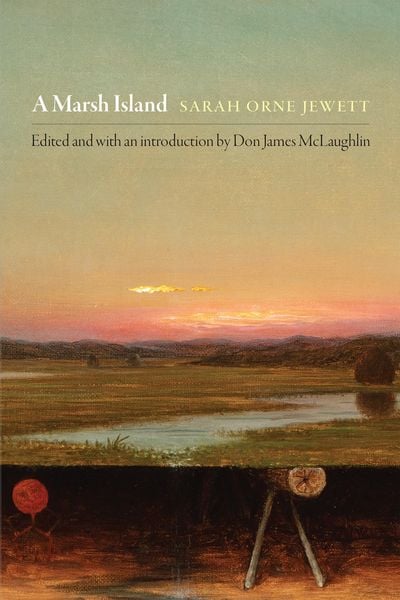
Toward the end of her life, Sarah Orne Jewett (1849-1909) made a surprising disclosure. Instead of the critically lauded The Country of the Pointed Firs, Jewett declared her "best story" to be A Marsh Island (1885), a little-known novel. Why? One reason is that it demonstrates Jewett's range. Known primarily for her vignettes, Jewett accomplished in these pages a truly great novel. Undoubtedly, another reason lies in the novel's themes of queer kinship and same-sex domesticity, as enjoyed by the flamboyant protagonist Dick Dale. Written a few years into Jewett's decades-long companionship with Annie Fields, A Marsh Island echoes Jewett's determination to split time between her family home in Maine and Fields's place on Charles Street in Boston. The novel follows the adventures of Dale, a Manhattanite landscape painter in the Great Marsh of northeastern Massachusetts and envisions the latter region's saltmarsh as a figure for dynamic selfhood: the ever-shifting boundaries between land and sea a model for valuing both individuality and a porous openness to the gifts of others.
Jewett's works played a major role in popularizing the genre of American regionalism and have garnered praise, both in her time and ours, for her skill in rendering the local landscapes and fishing villages along or near the coasts of New England. Just as Jewett brought attention to the unique beauty and value of the Great marsh region, editor Don James McLaughlin reveals a convergence of regionalism and sexuality in Jewett's work in his introduction. A Marsh Island reminds us that queer kinship has a long tradition of being extended to incorporate queer ecological belonging, and that the meaning of "companionship" itself is enriched when we acknowledge its indebtedness to environment.
Kundinnen und Kunden meinen
Verfassen Sie die erste Bewertung zu diesem Artikel
Helfen Sie anderen Kund*innen durch Ihre Meinung