Beschreibung
Produktdetails
Einband
Taschenbuch
Verlag
TurnaroundSeitenzahl
600
Maße (L/B)
23.5/17.8 cm
Gewicht
369 g
Sprache
Englisch
ISBN
978-1-71850-458-5
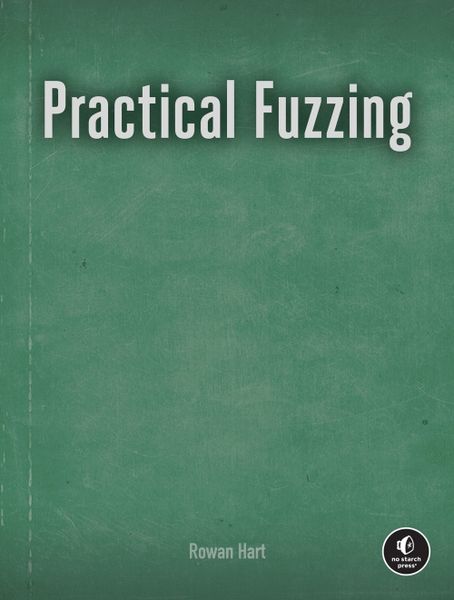
A hands-on, from-first-principles guide to building a modern, research-grade fuzzer you fully understand and control. Written for vulnerability researchers, security engineers, and tool builders who want to go beyond running AFL and actually own the techniques behind real bug discovery.
Fuzzers find the bugs that everyone else misses. But most practitioners treat fuzzing as a black box: point a tool at a binary, hope for crashes, and pray something interesting comes out.
Practical Fuzzing tears that mindset apart. Instead of running someone else’s fuzzer, you build your own—step by step, from historical techniques to the modern coverage-guided engines used in serious research. Along the way, you’ll apply your fuzzer to real software, generate real crashes, triage failures, minimize inputs, and learn how cutting-edge fuzzers evolve.
By the end, you won’t just know how fuzzing works. You’ll have a working, extensible fuzzer you can tune, experiment with, and adapt for anything from userland binaries to kernels and emulated systems. You’ll also gain the research literacy needed to understand and implement new ideas as the field advances.
This is the book to read if you want to stop being a fuzzing user and start being a fuzzing engineer.
Fuzzers find the bugs that everyone else misses. But most practitioners treat fuzzing as a black box: point a tool at a binary, hope for crashes, and pray something interesting comes out.
Practical Fuzzing tears that mindset apart. Instead of running someone else’s fuzzer, you build your own—step by step, from historical techniques to the modern coverage-guided engines used in serious research. Along the way, you’ll apply your fuzzer to real software, generate real crashes, triage failures, minimize inputs, and learn how cutting-edge fuzzers evolve.
By the end, you won’t just know how fuzzing works. You’ll have a working, extensible fuzzer you can tune, experiment with, and adapt for anything from userland binaries to kernels and emulated systems. You’ll also gain the research literacy needed to understand and implement new ideas as the field advances.
This is the book to read if you want to stop being a fuzzing user and start being a fuzzing engineer.
Kundinnen und Kunden meinen
Verfassen Sie die erste Bewertung zu diesem Artikel
Helfen Sie anderen Kund*innen durch Ihre Meinung