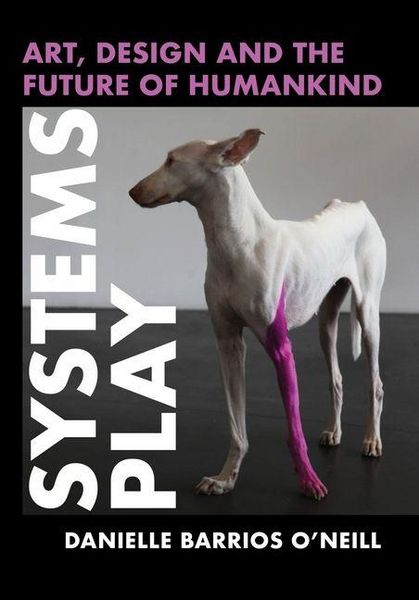
Systems Play Art, Design and the Future of Humankind
-
- Hardcover
- Taschenbuch ausgewählt
- eBook
-
Sprache:Englisch
Fr. 52.90
inkl. gesetzl. MwSt.,
Beschreibung
Produktdetails
Einband
Taschenbuch
Erscheinungsdatum
17.08.2026
Verlag
Intellect Books - IPSUKSeitenzahl
168
Maße (L/B/H)
21/15/0.9 cm
Gewicht
212 g
Sprache
Englisch
ISBN
978-1-83595-338-9
Blends critical theory with accessible storytelling to argue that experimental art and design provide blueprints for navigating complex systems.
Systems Play: Art, Design and the Future of Humankind introduces the concept of systems play, a contemporary approach in art and design that helps humans navigate an increasingly complex and uncertain world. By moving away from human-centric and linear perspectives, the author argues, contemporary artists are challenging established ideas regarding identity, progress, and kinship. The book views experimental artists as epistemologists who use biotechnology, AI, and immersive experiences to reveal the deep structural interdependencies between humans and the natural environment.
Through various thematic lenses--such as personhood, family, and time--the sources suggest that our reality is a fluid, emergent construction rather than a fixed truth. Ultimately, these creative strategies offer new intellectual models for a future defined by ecological awareness and a more compassionate, collective existence. This shift requires a re-evaluation of agency, urging us to see ourselves not as masters of nature, but as participants in a vast, non-linear system.
The book offers an engaging look at how systems play and speculative design can illuminate social challenges and support collective action for the good of humans and non-humans alike. It presents a rich set of multidisciplinary examples that will inspire researchers and artists alike. Through richly illustrated case studies across fields such as speculative design, immersive installation, and interactive media, it examines how creative work can expand human perception beyond biological limits; challenge anthropocentric assumptions; reconceive personhood as relational and distributed; rethink family, community, and care as dynamic systems; and reframe our experience of time. Each chapter situates these practices within broader cultural, technological, and ecological contexts, showing how they resist reductive narratives and open space for alternative futures.
Noch keine Bewertungen vorhanden
Verfassen Sie die erste Bewertung zu diesem Artikel
Helfen Sie anderen Kundinnen und Kunden durch Ihre Meinung.