KI-Beratung Beta

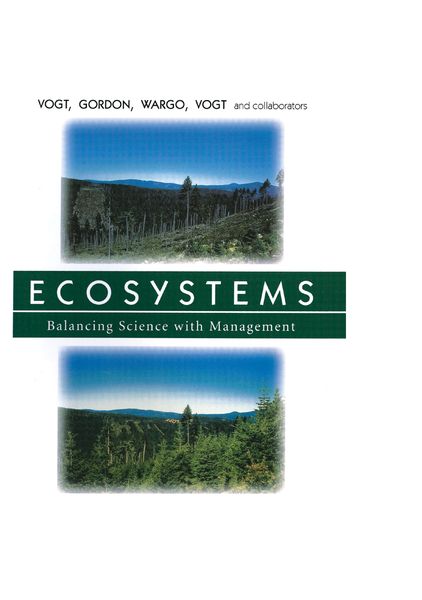
  • Produktbild: Ecosystems
  • Produktbild: Ecosystems
  • Produktbild: Ecosystems

Ecosystems Balancing Science with Management

Fr. 191.00

inkl. gesetzl. MwSt., Versandkostenfrei


Beschreibung

Ecosystem management has gained widespread visibility as an approach to the management of land to achieve sustainable natural resource use. Despite widespread interest in this emerging management paradigm, Ecosystems: Balancing Science with Management is the first book to directly propose approaches...

Beschreibung

Ecosystem management has gained widespread visibility as an approach to the management of land to achieve sustainable natural resource use. Despite widespread interest in this emerging management paradigm,
Ecosystems: Balancing Science
with Management
is the first book to directly propose approaches for implementing ecosystem management, give examples of viable tools, and discuss the potential implications of implementing an ecosystem approach. These ideas are framed in a historical context that examines the disjunction between ecological theory, environmental legislation and natural resources management.

Produktdetails

Einband

Gebundene Ausgabe

Erscheinungsdatum

13.12.1996

Abbildungen

IX, 470 p.

Verlag Springer Us

Produktdetails

Einband

Gebundene Ausgabe

Erscheinungsdatum

13.12.1996

Abbildungen

IX, 470 p.

Verlag Springer Us
Seitenzahl

470

Maße (L/B/H)

26/18.3/3.1 cm

Gewicht

1035 g

Auflage

1997

Sprache

Englisch

ISBN

978-0-387-94813-3

Herstelleradresse

Springer-Verlag GmbH
Europaplatz 3
69115 Heidelberg
DE

Email: ProductSafety@springernature.com

Noch keine Bewertungen vorhanden

Verfassen Sie die erste Bewertung zu diesem Artikel

Helfen Sie anderen Kundinnen und Kunden durch Ihre Meinung.

Kundinnen und Kunden meinen

Bewertungen (0)

  • Produktbild: Ecosystems
  • Produktbild: Ecosystems
  • Produktbild: Ecosystems
  • 1 Introduction.- 2 Ecosystem Concept: Historical and Present Review of Definitions and Development of Ecosystem Ecology, Ecosystem Management, and Its Legal Framework.- 2.1 Roots of the Ecosystem Ecology Concept.- 2.2 Roots of Management.- 2.3 Ecosystem Management.- 3 Tools and Knowledge Base Presently Available to Do Ecosystem Management and to Assess Its Success.- 3.1 Overview.- 3.2 Factors Contributing to Ecosystem Scales.- 3.3 Spatial Boundary Considerations.- 3.4 Spatial Scales Overview.- 3.5 Disturbances as Temporal Agents of Ecosystem Change.- 3.6 Parameters Used to Study Ecosystems.- 4 Detecting Resistance and Resilience of Ecosystems.- 4.1 Signs of Ecosystem Degradation and Indicators of Ecosystem State Change.- 4.2 Useful Approaches for Detecting Ecosystem Change.- 5 Case Studies: Degrees of Ecosystem Management.- 5.1 Ecosystem Management: What Is Happening in the Field.- 5.2 Forest Ecosystem Management Assessment Team’s Management Plan for Old-Growth Ecosystems Within Range of the Northern Spotted Owl in the Pacific Northwest United States.- 5.3 National Forest Ecosystem Management.- 5.4 Developing Sustainable Management: Cases from the Pulp and Paper Companies.- 5.5 Adirondack Park Case Study.- 6 Science and Management of Ecosystems Synthesis.- 6.1 Ecosystem Management Framework.- 6.2 What Should Be Monitored for Ecosystem Management.- 6.3 Impediments to Utilizing the Ecosystem Management Approach.- 6.4 Adaptive Management.- 6.5 Principles of Ecosystem Management.- 6.6 Costs and Benefits of Instituting Ecosystem Management as a New Environmental Management Scheme.- References.- Appendix: Ecological, Management and Legal Development of Concepts Relevant to Ecosystems Through Time.