KI-Beratung Beta

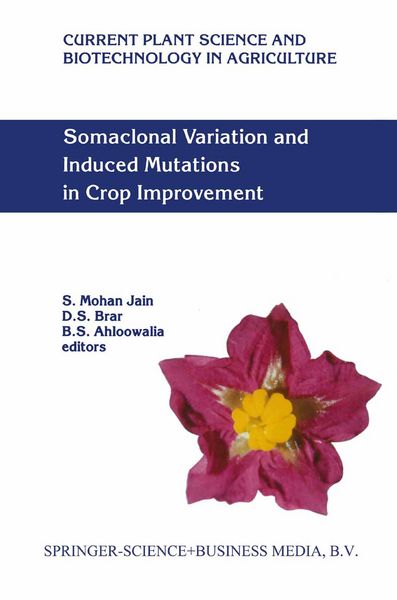
  • Produktbild: Somaclonal Variation and Induced Mutations in Crop Improvement
  • Produktbild: Somaclonal Variation and Induced Mutations in Crop Improvement
Band 32

Somaclonal Variation and Induced Mutations in Crop Improvement

Fr. 359.00

inkl. gesetzl. MwSt., Versandkostenfrei


Beschreibung

Genetic variability is an important parameter for plant breeders in any con ventional crop improvement programme. Very often the desired variation is un available in the right combination, or simply does not exist at all. However, plant breeders have successfully recombined the desired genes from cultivated...

Beschreibung

Genetic variability is an important parameter for plant breeders in any con ventional crop improvement programme. Very often the desired variation is un available in the right combination, or simply does not exist at all. However, plant breeders have successfully recombined the desired genes from cultivated crop gerrnplasm and related wild species by sexual hybridization, and have been able to develop new cultivars with desirable agronomie traits, such as high yield, disease, pest, and drought resistance. So far, conventional breeding methods have managed to feed the world's ever-growing population. Continued population growth, no further scope of expanding arable land, soil degradation, environ mental pollution and global warrning are causes of concern to plant biologists and planners. Plant breeders are under continuous pressure to improve and develop new cultivars for sustainable food production. However, it takes several years to develop a new cultivar. Therefore, they have to look for new technologies, which could be combined with conventional methods to create more genetic variability, and reduce the time in developing new cultivars, with early-maturity, and improved yield. The first report on induced mutation of a gene by HJ. Muller in 1927 was a major mi1estone in enhancing variation, and also indicated the potential applica tions of mutagenesis in plant improvement. Radiation sources, such as X-rays, gamma rays and fast neutrons, and chemical mutagens (e. g. , ethyl methane sulphonate) have been widely used to induce mutations.

Produktdetails

Einband

Gebundene Ausgabe

Erscheinungsdatum

31.05.1998

Abbildungen

XIV, 620 p.

Herausgeber S.M. Jain + weitere

Produktdetails

Einband

Gebundene Ausgabe

Erscheinungsdatum

31.05.1998

Abbildungen

XIV, 620 p.

Herausgeber
Verlag Springer Netherland
Seitenzahl

620

Maße (L/B/H)

24.1/16/4 cm

Gewicht

1058 g

Auflage

1998

Sprache

Englisch

ISBN

978-0-7923-4862-7

Herstelleradresse

Springer-Verlag KG
Sachsenplatz 4-6
1201 Wien
AT

Email: ProductSafety@springernature.com

Noch keine Bewertungen vorhanden

Verfassen Sie die erste Bewertung zu diesem Artikel

Helfen Sie anderen Kundinnen und Kunden durch Ihre Meinung.

Kundinnen und Kunden meinen

Bewertungen (0)

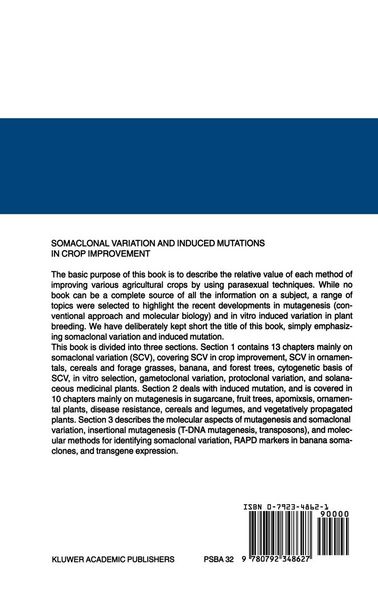
  • Produktbild: Somaclonal Variation and Induced Mutations in Crop Improvement
  • Produktbild: Somaclonal Variation and Induced Mutations in Crop Improvement
  • 1. Introduction.- 2. Somaclonal variation: mechanism and applications in crop improvement.- 3. Clonal variation in cereals and forage grasses.- 4. Genetic fidelity of plants regenerated from somatic embryos of cereals.- 5. Somaclonal variation in improving ornamental plants.- 6. Somaclonal genetics of forest trees.- 7. Gametoclonal variation in crop plants.- 8. Protoclonal variation in crop improvement.- 9. Chromosomal basis of somaclonal variation in plants.- 10. Somaclonal variation and in vitro selection for crop improvement.- 11. Somaclonal variation in crop improvement.- 12. Field performance of banana micropropagules and somaclones.- 13. Somaclonal variation in Solanaceous medicinal plants.- 14. Induced mutation in plant breeding: current status and future outlook.- 15. In vitro techniques and mutagenesis for the improvement of vegetatively propagated plants.- 16. Mutation breeding in cereals and legumes.- 17. Induced mutations in ornamental plants.- 18. In-vitro-induced mutations for disease resistance.- 19. EMS and transposon mutagenesis for the isolation of apomictic mutants in plants.- 20. Induced mutation in fruit trees.- 21. Induced mutations and somaclonal variation in sugarcane.- 22. Field performance of selected sugarcane (Saccharum spp. hybrids) mutants.- 23. Molecular basis of heritable tissue culture-induced variation in plants.- 24. Molecular and biochemical characterization of somaclonal variation.- 25. Recombinase-mediated gene integration in plants.- 26. T-DNA insertion mutagenesis and the untagged mutants.- 27. Phenotypic variation between transgenic plants: what is making gene expression unpredictable?.- 28. Transposable elements and genetic variation.- 29. Detection of dwarf somaclones of banana cultivars (Musa) by RAPD markers.