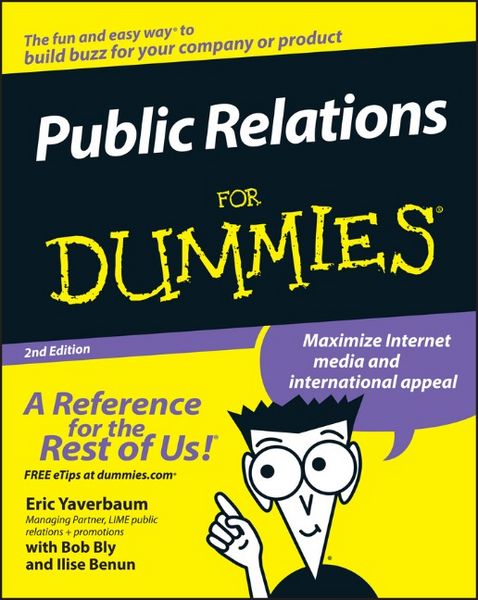
Produktbild: Public Relations For Dummies

Public Relations For Dummies

Fr. 29.90

inkl. gesetzl. MwSt., zzgl. Versandkosten


  • Kostenlose Lieferung ab Fr. 30 Einkaufswert

    Schweiz & Liechtenstein:

    Versandkostenfrei ab Fr. 30.00
    Versandkosten bis Fr. 30.00: Fr. 3.50

    Andere Lieferländer

    Fr. 18.00 unabhängig vom Warenwert

Beschreibung

Produktdetails

Einband

Taschenbuch

Erscheinungsdatum

30.05.2006

Verlag

John Wiley & Sons Inc

Seitenzahl

384

Maße (L/B/H)

23.3/18.9/2.5 cm

Gewicht

574 g

Auflage

2. Auflage

Sprache

Englisch

ISBN

978-0-471-77272-9

Beschreibung

Rezension

"...the ideas herein will make your creative mind fly for sure!" ( TamsPalm Blog , September 2006)

Produktdetails

Einband

Taschenbuch

Erscheinungsdatum

30.05.2006

Verlag

John Wiley & Sons Inc

Seitenzahl

384

Maße (L/B/H)

23.3/18.9/2.5 cm

Gewicht

574 g

Auflage

2. Auflage

Sprache

Englisch

ISBN

978-0-471-77272-9

Kundinnen und Kunden meinen

0 Bewertungen

Informationen zu Bewertungen

Zur Abgabe einer Bewertung ist eine Anmeldung im Konto notwendig. Die Authentizität der Bewertungen wird von uns nicht überprüft. Wir behalten uns vor, Bewertungstexte, die unseren Richtlinien widersprechen, entsprechend zu kürzen oder zu löschen.

Die Bewertungen sind nach Format, Anzahl Sterne und Datum sortiert.

Verfassen Sie die erste Bewertung zu diesem Artikel

Helfen Sie anderen Kund*innen durch Ihre Meinung

Kundinnen und Kunden meinen

0 Bewertungen filtern

Die Leseprobe wird geladen.
  • Produktbild: Public Relations For Dummies
  • Foreword xxiii

    Introduction 1

    About This Book 2

    Conventions Used in This Book 2

    Foolish Assumptions 3

    How This Book is Organized 3

    Part I: PR: What It Is, How It Works 4

    Part II: Brainstorming and Thinking Creatively 4

    Part III: Putting the Wheels in Motion 4

    Part IV: Choosing the Right Medium for Your Message 4

    Part V: Creating Buzz 5

    Part VI: The Part of Tens 5

    Appendix 5

    Icons Used in This Book 6

    Where to Go from Here 6

    Part I: PR: What It Is, How It Works 7

    Chapter 1: The Power of PR 9

    Who Needs PR, Anyway? 10

    Beyond Stunts: The Real Value of PR 11

    The Relationship between PR and the Media 12

    Publicity Plus: The Many Components of PR 14

    What PR is Not 15

    Marketing: The four Ps 15

    Paying for advertising while PR is (practically) free 16

    Key Audiences PR Can Reach 18

    The Changing Role of PR in the Marketing Mix Today 19

    Assessing Your Situation: How to Tell When PR is the Missing (Or Weak) Ingredient 20

    Chapter 2: X-Raying the PR Process 23

    Pre-Planning Steps 23

    Using Research to Shape the Process 23

    Defining Your Goals and Objectives 25

    Working Out the Plan Details 25

    Putting together the PR plan 26

    Budgeting to get the job done 27

    Devising Winning PR Concepts: The Four Essential Elements 28

    Newsmaking 28

    Commercial message 29

    Media target 30

    Audience target 31

    Sharpening Ideas to Form Creative Promotions 32

    Assessing PR Ideas: Will It Work? 34

    Controlling Time and Chance 35

    Chapter 3: Hiring Professional PR Help 37

    Getting Help 37

    Advertising agencies 38

    Public relations agencies 38

    Freelancers 42

    Graphic design studios 43

    Web designers 43

    Search engine specialists 44

    Getting the Most out of Hired Help 44

    Part II: Brainstorming and Thinking Creatively 47

    Chapter 4: Setting Up Your PR Department and Program 49

    Picking the PR Team 49

    Defining the Scope of Your Authority 50

    Integrating PR with the Rest of Your Business 51

    Setting Up the PR Command and Control Center 52

    Getting in gear 52

    Creating and maintaining a media contact list 55

    Targeting Your PR Efforts 56

    Industry 57

    Size of company 57

    Location 59

    Job function or title of prospect within the company 60

    Application or use of your product 60

    Channels of distribution 61

    Affinity groups 62

    Users of specific devices, products, machines, systems, or technologies 63

    Buying habits 63

    Chapter 5: Formulating Ideas 65

    Giving New Ideas a Chance 65

    Creating Profitable PR Programs 66

    Step 1: Clearly establish the goals of a PR program 66

    Step 2: Assemble pertinent facts 67

    Step 3: Gather general knowledge 67

    Step 4: Look for combinations 67

    Step 5: Sleep on it 67

    Step 6: Use a checklist 69

    Step 7: Get feedback 69

    Step 8: Team up 70

    Finding Other Ways to Turn on the Light Bulb 70

    Chapter 6: Using PR Tactics 73

    Going Where the Cameras Are 73

    Creating a Tie-in to a TV Show or Movie 74

    Spotlighting the Product 74

    Staging a Contest 75

    Working for a Worthy Cause 77

    Tying In to a Holiday 77

    Conducting a Survey 78

    Staging an Event 80

    Making Them Laugh 80

    Waging a Trade-in Campaign 81

    Creating a Character 81

    Using Viral Marketing 82

    Part III: Putting the Wheels in Motion 83

    Chapter 7: Creating a Company Newsletter 85

    Meeting Internal Needs: The Employee Newsletter 86

    Staying in Touch with Your External Audience 87

    Reaching a busy audience 87

    Knowing what's newsworthy 87

    Deciding on Size and Frequency 88

    Creating a Mailing List 89

    Designing Your Company Newsletter 90

    Making some design decisions 90

    Putting together your newsletter 91

    Using the Company Newsletter as a Marketing Tool 93

    Creating an e-mail newsletter 93

    Integrating print and e-mail newsletters 94

    Making your e-mail newsletter a must-read 94

    Chapter 8: Putting Your Message in Writing: The Press Release 97

    Writing a Press Release That Gets Picked Up by Media 98

    At the top 99

    The headline act and the lead role 99

    Body building 100

    Putting News in Your News Releases 102

    Using a Press Release Checklist 104

    Deciding How to Send Press Releases 105

    Chapter 9: Writing and Placing Feature Articles 107

    Getting Exposure in Feature Articles 108

    Avoiding beginners' mistakes 108

    Coming up with ideas for articles 109

    Selecting the Right Magazine 111

    Finding the best target for articles 112

    Avoiding puffery 114

    Approaching editors one at a time 114

    Making the Initial Contact 114

    Writing a Query Letter 115

    Querying the editor 115

    Getting the query letter written 116

    Using illustrations or photos 120

    Following up on your query 120

    Writing a Pitch Letter 122

    Getting the Editor's Go-Ahead 125

    Placing Articles Online 126

    Chapter 10: Promoting Yourself through Public Speaking 129

    Reaching Key Audiences through Public Speaking 129

    Finding speaking opportunities 130

    Choosing the right talk 131

    Screening speaking invitations 132

    Negotiating your promotional deal 133

    Preparing and Delivering Your Presentation 135

    Organizing your presentation 136

    Mastering the three parts of a talk 136

    Timing it right 138

    Using Visual Aids 140

    Thinking twice about audiovisual aids 141

    Giving your audience a handout 141

    Using the "green sheet" method 142

    Capturing Attendee Names for Your Prospect Database 144

    Part IV: Choosing the Right Medium for Your Message 145

    Chapter 11: Getting Your Message Out 147

    Compiling a Personal Contact List 147

    Developing a Mass Media List 148

    Distributing Materials to the Media 149

    Getting to Know Global PR 149

    Taking cultural differences into account 150

    Keeping up with different media 150

    Selecting PR Media 151

    Reaching Reporters the Right Way 152

    Turning the Press into a Client 152

    Breaking through the PR Clutter 153

    Using the surround strategy 153

    Having a go-to guy 154

    Offering an exclusive 155

    Tying in to an existing story 155

    Using timing in your favor 156

    Following Up: The Media Blitz 156

    Working Your ABC Lists 157

    Separating Advertising and Editorial 157

    Chapter 12: Handling the Media 159

    Meeting the Press 159

    Analyst meetings 160

    Media tours 161

    Press conferences 161

    Deskside briefings 162

    Becoming Savvy with Media Interviews 162

    Handling media interviews like a pro 162

    Framing your story 164

    Turning bad press into favorable coverage: The 15-10-15 formula 165

    Handling hostile interviewers 166

    Bettering your broadcast interviews 168

    Chapter 13: Tuning In to Radio 171

    Getting the Facts about Radio 172

    Looking at the Advantages of Radio over Other Media 172

    Taking Advantage of Satellite Radio 174

    Getting on the Radio 175

    Making a pitch for yourself 175

    Being an accessible expert 176

    Preparing for Airtime 177

    Boning up on your topic 178

    Putting together a tip sheet 178

    Being interviewed at home 179

    Making a Good Impression during the Interview 179

    Handling surprise gracefully 180

    Don't make product pitches on the air 181

    Chapter 14: Getting PR on the Tube 183

    Understanding How TV PR Differs from Print 183

    Sorting Out the TV Shows 185

    Targeting a Specific Show for Your PR Campaign 186

    Preparing Your TV Media Kit 187

    Article reprints 188

    Media alerts 188

    Prepared footage 190

    Satellite feed services 191

    Video news releases 192

    Pitching Your Story to Producers 192

    Doing TV PR on a Shoestring 193

    Getting a Tape of Your Guest Appearance 194

    Chapter 15: Getting More Ink (Print Isn't Dead Yet) 197

    Cracking the Journalists' Secret 197

    Knowing What Not to Do 198

    Catching an Editor's Eye with a "Creative" Press Release 200

    Using a "Hook" to Snare Attention 201

    Free-booklet press release 202

    Special event, gimmick, or timely issue 204

    New-product press release 206

    Tie-in with current fad, event, or news 208

    Survey-results press release 208

    Trade-in press release 208

    Call-to-action press release 211

    Chapter 16: Going Public in Cyberspace: Your Web Site 213

    Designing a Media-Friendly Web Site 213

    Company background/history 214

    Key management 215

    Press release archive 215

    Financial information 216

    Product/service catalog 216

    Article/white paper library 216

    Trade show list 217

    Locations/facility information 217

    Avoiding "Speed Traps" on Your Web Site 217

    Ensuring Your Site is User-Friendly 218

    Understanding the Three Cs of E-Success 220

    Designing a Sticky Web Site 221

    Brainstorming More Ways to Make a Profit Online 222

    Driving Traffic to Your Web Site 224

    Making sure search engines can find your Web site 225

    Keying in to keywords 227

    Using paid search (or pay per click) 228

    Chapter 17: Getting a Grip on New Technology - Blogs, Webcasting, and Podcasting 231

    Using Blogs for PR 231

    Monitoring the blogs in your industry 232

    Pitching to blogs 235

    Creating your own blog 237

    Using a blog for business 238

    Podcasting 242

    Keeping in touch with the media via podcasts 242

    Getting started with podcasting 243

    Webcasting 244

    Part V: Creating Buzz 245

    Chapter 18: Getting Hits from Buzz Marketing and Viral Marketing 247

    Understanding the Difference between Buzz Marketing and Viral Marketing 247

    Examining the Effectiveness of Buzz Marketing 248

    Boning Up on Basic Buzz Techniques 249

    Educating people about your products and services 249

    Identifying people most likely to share their opinions 249

    Providing tools that make it easier to share information 251

    Studying how, where, and when opinions are being shared 251

    Listening and responding to supporters and detractors 252

    Determining the Right Moment for Buzz 252

    Generating More Exposure with Buzz Marketing 253

    Identifying Brand Evangelists and Terrorists 255

    Taking advantage of evangelists 255

    Dealing with brand terrorists 258

    Leveraging the Web and E-Mail for Maximum Buzz 259

    Measuring and Tracking Buzz 260

    Meeting the Legends of Buzz 261

    Chapter 19: Staging Publicity Events 263

    Drawing Crowds and Gaining Publicity 264

    Setting a Budget and Figuring the Cost 265

    Controlling Event Costs 266

    Determining Your Event's Theme and Concept 267

    Planning the Event and Logistics 269

    Publicizing Your Event 270

    Measuring Event Results 271

    Chapter 20: Spotting and Seizing Opportunities 273

    Remembering the Importance of Timing 273

    Reacting to Current News and Events 274

    Looking for an Opening 275

    Getting Messages Noticed Quickly 277

    Chapter 21: Knowing What to Do in a PR Crisis 279

    Defining a PR Crisis 279

    Developing a Crisis Management Plan 280

    Identifying a crisis 281

    Assessing and reviewing the crisis 281

    The crisis communications team meeting 282

    Planning a crisis response 282

    Communicating with key publics 282

    Remembering the Rules in a Crisis 283

    Demonstrating Care and Compassion 284

    Thinking of Every Crisis as a Red Alert 285

    Managing a Crisis with Success 285

    Chapter 22: Evaluating PR Results 287

    Measuring by Advertising Equivalency 288

    Making Media Impressions 289

    Using Key Message Points 290

    Market Research Isn't Always the Answer 291

    Watching the Word Spread: Hiring Clipping Services 292

    Measuring Inquiries and Sales 293

    Taking the Long View of PR Success 295

    Demonstrating Viability of the PR Department (Even in a Crunch) 296

    Part VI: The Part of Tens 297

    Chapter 23: The Ten Greatest PR Coups of All Time 299

    Lucky Strike 299

    John D. Rockefeller 300

    Tylenol 301

    Bill Clinton's 1992 Presidential Campaign 301

    The New VW Beetle 302

    Cabbage Patch Kids 303

    Domino's Pizza Meter 303

    IBM Big Blue versus Gary Kasparov 304

    Gillette Sensor Razor 305

    Howard Stern and Sirius Satellite Radio 305

    Chapter 24: Ten Myths about PR - Debunked 307

    Press Releases Don't Work Anymore 307

    "Legitimate" Media Snub PR 308

    Printed PR Doesn't Work without Follow-Up 308

    You Need "Contacts" to Get Publicity 309

    Editors Want to Be Wined and Dined 309

    Snail Mail is Awful; Overnight Delivery Services and Fax Work Great 310

    You Can't Buy PR with Advertising 311

    Every Fact Reported in the Media is Checked and Verified 311

    Getting Publicity is a Matter of Luck and Timing 312

    It Doesn't Take A Lot of Time 312

    Chapter 25: Ten Reasons to Do PR 313

    You're a Little Fish in a Big Pond 313

    Your Product or Service is the Best - and Nobody Knows about It 314

    Your Product or Service Isn't Better than Anyone Else's 314

    Management Cuts Your Marketing Communications Budget 315

    Management Demands Tangible Results from Marketing Expenditures 316

    Traditional Marketing Isn't Working as Well as It Used To 316

    Your Competitors Get All the Good Press 317

    You Need Venture Capital 317

    You Are Media-Genic 317

    You Really Enjoy Working with the Media 318

    Chapter 26: Ten Things You Should Never Do in the Name of PR 319

    Lie or Mislead 319

    Stonewall 319

    Procrastinate 320

    Be Inaccessible 320

    Offer a Bribe 321

    Turn Up Your Nose 321

    Bore People 322

    Be a "No Man" 322

    Sacrifice Long-Term Relationships for Short-Term Results 324

    Behave Unethically 324

    Chapter 27: Ten Steps to Better PR Writing 327

    Organizing! 327

    Knowing Your Reader 329

    Shunning "Corporatese" 329

    Avoiding Long Sentences 331

    Using Short, Simple Words 332

    Sidestepping "Writer's Block" 333

    Defining the Topic 334

    Gathering Lots of Information 335

    Writing, and Then Rewriting, Rewriting 335

    Being Consistent 336

    Appendix: Recommended Resources 337

    Index 343