KI-Beratung Beta

Produktbild: Glial Neurobiology

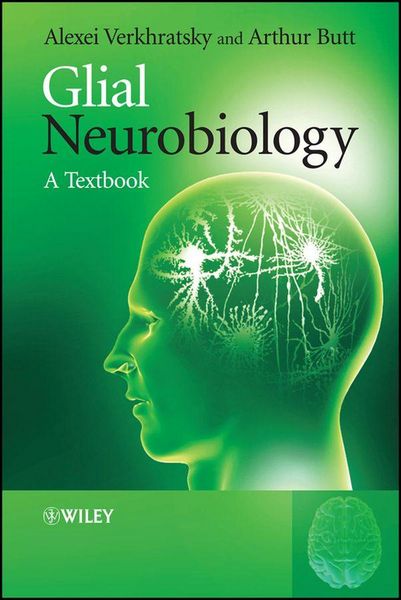
Glial Neurobiology A Textbook

Fr. 273.00

inkl. gesetzl. MwSt., Versandkostenfrei


Beschreibung

Glial cells are the most numerous cells in the human brain but for many years have attracted little scientific attention. Neurophysiologists concentrated their research efforts instead on neurones and neuronal networks, because it was thought that they were the key elements responsible for higher brain...

Beschreibung

Glial cells are the most numerous cells in the human brain but for many years have attracted little scientific attention. Neurophysiologists concentrated their research efforts instead on neurones and neuronal networks, because it was thought that they were the key elements responsible for higher brain function. Recent advances, however, indicate this isn't exactly the case. Not only are astroglial cells the stem elements from which neurones are born, but they also control the development, functional activity and death of neuronal circuits. These ground-breaking developments have revolutionized our understanding of the human brain and the complex interrelationship of glial and neuronal networks in health and disease.
 
Features of this book:
* an accessible introduction to glial neurobiology including an overview of glial cell function and its active role in neural processes, brain fusion and nervous system pathology
* an exploration of all the major types of glial cells including: the astrocytes, oligodendrocytes and microglia of the CNS and Schwann cells of the peripheral nervous system; the book also presents a broad overview of glial receptors and ion channels
* an investigation into the role of glial cells in various types of brain diseases including stroke, neurodegenerative diseases such as Alzheimer's, Parkinson's and Alexander's disease, brain oedema, multiple sclerosis and many more
* a wealth of illustrations, including unique images from the authors' own libraries of image,s describing the main features of glial cells
 
Written by two leading experts in the field, Glial Neurobiology provides a concise, authoritative introduction to glial physiology and pathology for undergraduate/postgraduate neuroscience, biomedical, medical, pharmacy, pharmacology,k and neurology, neurosurgery and physiology students. It will also appeal to researchers in neuroscience, physiology, pharmacology and pharmaceutics.

Rezension

"This volume is a very valuable and much needed contribution." ( Quarterly Review of Biology , December 2008)

Produktdetails

Einband

Gebundene Ausgabe

Erscheinungsdatum

11.09.2007

Verlag John Wiley & Sons Inc
Seitenzahl

230

Produktdetails

Einband

Gebundene Ausgabe

Erscheinungsdatum

11.09.2007

Verlag John Wiley & Sons Inc
Seitenzahl

230

Maße (L/B/H)

25.1/17.2/2 cm

Gewicht

558 g

Auflage

1. Auflage

Sprache

Englisch

ISBN

978-0-470-01564-3

Herstelleradresse

Libri GmbH
Europaallee 1
36244 Bad Hersfeld
DE

Email: gpsr@libri.de

Noch keine Bewertungen vorhanden

Verfassen Sie die erste Bewertung zu diesem Artikel

Helfen Sie anderen Kundinnen und Kunden durch Ihre Meinung.

Kundinnen und Kunden meinen

Bewertungen (0)

  • Produktbild: Glial Neurobiology
  • Preface.
     
    List of abbreviations.
     
    PART I Physiology of Glia.
     
    1 Introduction to Glia.
     
    1.1 Founders of glial research: from Gabriel Valentin to Karl-Ludwig Schleich.
     
    1.2 Beginning of the modern era.
     
    1.3 Changing concepts: Glia express molecules of excitation.
     
    1.4 Glia and neurones in dialogue.
     
    2 General Overview of Signalling in the Nervous System.
     
    2.1 Intercellular signalling: Wiring and volume modes of transmission.
     
    2.2 Intracellular signalling.
     
    3 Morphology of Glial Cells.
     
    3.1 Astrocytes.
     
    3.2 Oligodendrocytes.
     
    3.3 NG2 expressing glia.
     
    3.4 Schwann cells.
     
    3.5 Microglia.
     
    4 Glial Development.
     
    4.1 Phylogeny of glia and evolutionary specificity of glial cells in human brain.
     
    4.2 Macroglial cells.
     
    4.3 Astroglial cells are brain stem cells.
     
    4.4 Schwann cell lineage.
     
    4.5 Microglial cell lineage.
     
    5 General Physiology of Glial Cells.
     
    5.1 Membrane potential and ion distribution.
     
    5.2 Ion channels.
     
    5.3 Receptors to neurotransmitters and neuromodulators.
     
    5.4 Glial syncytium - gap junctions.
     
    5.5 Glial calcium signalling.
     
    5.6 Neurotransmitter release from astroglial cells.
     
    5.7 Glial neurotransmitter transporters.
     
    5.8 Glial cells produce and release neuropeptides.
     
    5.9 Glial cell derived growth factors.
     
    6 Neuronal-Glial Interactions.
     
    6.1 Close apposition of neurones and astroglia: the tripartite synapse.
     
    6.2 Neuronal-glial synapses.
     
    6.3 Signalling from neurones to astrocytes.
     
    6.4 Signalling from astrocytes to neurones.
     
    6.5 Signalling between oligodendrocytes and neurones.
     
    6.6 Signalling between Schwann cells and peripheral nerves and nerve endings.
     
    PART II Glial Cells and Nervous System Function.
     
    7 Astrocytes.
     
    7.1 Developmental function - producing new neural cells.
     
    7.2 Developmental function - neuronal guidance.
     
    7.3 Regulation of synaptogenesis and control of synaptic maintenance and elimination.
     
    7.4 Structural function - creation of the functional microarchitecture of the brain.
     
    7.5 Vascular function - creation of glial-vascular interface (blood-brain barrier) and glia-neurone-vascular units.
     
    7.6 Regulation of brain microcirculation.
     
    7.7 Ion homeostasis in the extracellular space.
     
    7.8 Regulation of extracellular glutamate concentration.
     
    7.9 Water homeostasis and regulation of the extracellular space volume.
     
    7.10 Neuronal metabolic support.
     
    7.11 Astroglia regulate synaptic transmission.
     
    7.12 Integration in neuronal-glial networks.
     
    7.13 Astrocytes as cellular substrate of memory and consciousness?
     
    8 Oligodendrocytes, Schwann Cells and Myelination.
     
    8.1 The myelin sheath.
     
    8.2 Myelination.
     
    8.3 Myelin and propagation of the action potential.
     
    PART III Glia and Nervous System Pathology.
     
    9 General Pathophysiology of Glia.
     
    9.1 Reactive astrogliosis.
     
    9.2 Wallerian degeneration.
     
    9.3 Activation of microglia.
     
    10 Glia and Diseases of the Nervous System.
     
    10.1 Alexander's disease.
     
    10.2 Spreading depression.
     
    10.3 Stroke and ischaemia.
     
    10.4 Cytotoxic brain oedema.
     
    10.5 Neurodegenerative diseases.
     
    10.6 Neuropathic pain.
     
    10.7 Demyelinating diseases.
     
    10.8 Infectious diseases.
     
    10.9 Peripheral neuropathies.
     
    10.10 Psychiatric