KI-Beratung Beta

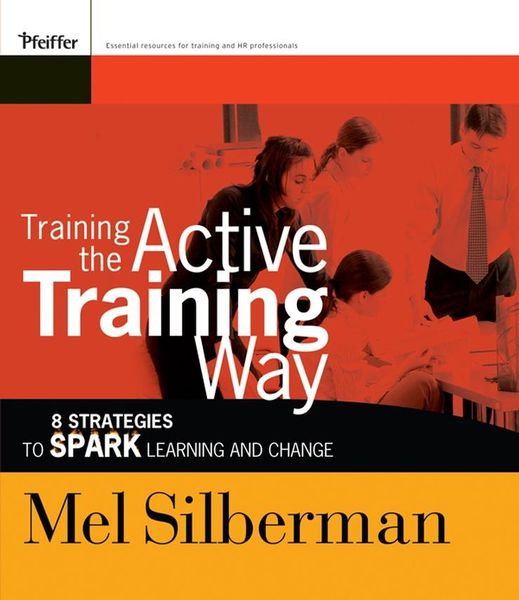
Produktbild: Training the Active Training Way

Training the Active Training Way 8 Strategies to Spark Learning and Change

Fr. 73.90

inkl. gesetzl. MwSt., Versandkostenfrei


Beschreibung

Produktdetails

Einband

Taschenbuch

Erscheinungsdatum

10.02.2006

Verlag

John Wiley & Sons Inc

Seitenzahl

204

Maße (L)

23 cm

Gewicht

372 g

Sprache

Englisch

ISBN

978-0-7879-7613-2

Beschreibung

Produktdetails

Einband

Taschenbuch

Erscheinungsdatum

10.02.2006

Verlag

John Wiley & Sons Inc

Seitenzahl

204

Maße (L)

23 cm

Gewicht

372 g

Sprache

Englisch

ISBN

978-0-7879-7613-2

Noch keine Bewertungen vorhanden

Verfassen Sie die erste Bewertung zu diesem Artikel

Helfen Sie anderen Kundinnen und Kunden durch Ihre Meinung.

Kundinnen und Kunden meinen

Bewertungen (0)

  • Produktbild: Training the Active Training Way
  • Acknowledgments.
    Introduction.

    STRATEGY 1: ENGAGE YOUR PARTICIPANTS FROM THE START.

    Tip 1: Give Participants Something to Do Before the Session Formally Begins.

    Tip 2: Structure the Initial Social Interactions Among Participants.

    Tip 3: Create Icebreakers That Focus Solely on Immediate Learning Involvement.

    Tip 4: Enlarge the Pool of Participation at the Very Beginning.

    STRATEGY 2: BE A BRAIN-FRIENDLY PRESENTER.

    Tip 5: Build Brain Interest in What Is Being Presented.

    Tip 6: Help Your Participants' Brains to "Get It".

    Tip 7: Involve Participants Throughout Your Presentation.

    Tip 8: Help Participants "Save" the Presentation in Their Brains.

    STRATEGY 3: ENCOURAGE LIVELY AND FOCUSED DISCUSSION.

    Tip 9: Engage Participants Before Plunging into the Discussion.

    Tip 10: State Effective Questions for Discussion.

    Tip 11: Improve the Quality of Discussion Through Participant Preparation.

    Tip 12: Alter the Discussion Format.

    Tip 13: Facilitate the Flow of Conversation.

    STRATEGY 4: URGE PARTICIPANTS TO ASK QUESTIONS.

    Tip 14: Help Participants Get Started.

    Tip 15: Create the Need for Questions.

    Tip 16: Let Participants Know You Expect Questions.

    STRATEGY 5: LET YOUR PARTICIPANTS LEARN FROM EACH OTHER.

    Tip 17: Choose How You Compose Learning Teams.

    Tip 18: Build Learning Teams Before Giving Them Work.

    Tip 19: Gradually Immerse Participants in Team Learning.

    Tip 20: Use a Variety of Team Learning Activities.

    Tip 21: Invite Participants to Teach Each Other.

    STRATEGY 6: ENHANCE LEARNING BY EXPERIENCING AND DOING.

    Tip 22: Create Experiences That Simulate or Match Reality.

    Tip 23: Ask Participants to Reflect on the Experience.

    Tip 24: Avoid "Monkey See, Monkey Do".

    Tip 25: Use Role Play to Develop Verbal Skills.

    STRATEGY 7: BLEND IN TECHNOLOGY WISELY.

    Tip 26: Transform Active Classroom Strategies into e-Learning.

    Tip 27: Use e-Learning to Supplement Classroom Learning.

    Tip 28: Use Classroom Sessions to Supplement e-Learning Activities.

    STRATEGY 8: MAKE THE END UNFORGETTABLE.

    Tip 29: Get Participants to Review What's Been Learned.

    Tip 30: Ask Participants to Evaluate Their Accomplishments.

    Tip 31: Have Participants Plan for the Future.

    Tip 32: Let Participants Celebrate the End.

    FINAL ADVICE.

    About the Author.

    Pfeiffer Publications Guide.