KI-Beratung Beta

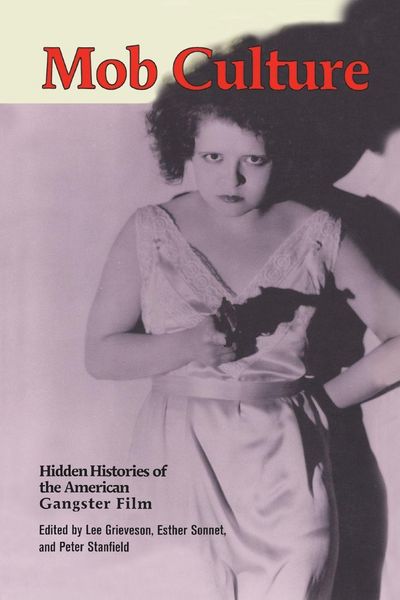
Produktbild: Mob Culture

Mob Culture

Fr. 49.90

inkl. gesetzl. MwSt., Versandkostenfrei


Beschreibung

The gangster is perhaps the most potent figure in American cinema. Yet film criticism has focused almost entirely on a few canonical films such as Little Caesar, The Public Enemy, and The Godfather trilogy, resulting in a limited and distorted understanding of the compelling presence and persistence...

Beschreibung

The gangster is perhaps the most potent figure in American cinema. Yet film criticism has focused almost entirely on a few canonical films such as Little Caesar, The Public Enemy, and The Godfather trilogy, resulting in a limited and distorted understanding of the compelling presence and persistence of the gangster. Mob Culture presents a detailed examination of the ideological richness of the gangster film throughout Hollywood's production history, from the silent period to the present.Mob Culture explores how the gangster figure has been connected to various cultural and racial identities, how issues of gender and sexuality are frequently highlighted by the genre, and how film criticism has drawn on eugenics, sociology and psychology to try to explain and contain the gangster. An ideal guide to both the film history and the critical literature, Mob Culture redefines the American gangster at the movies.

Produktdetails

Einband

Taschenbuch

Erscheinungsdatum

01.06.2005

Abbildungen

40 b&w illustrations, bibliography, index

Herausgeber Lee Grieveson + weitere

Produktdetails

Einband

Taschenbuch

Erscheinungsdatum

01.06.2005

Abbildungen

40 b&w illustrations, bibliography, index

Herausgeber
Verlag Berg Publishers
Seitenzahl

324

Maße (L/B/H)

23.4/15.6/1.9 cm

Gewicht

569 g

Sprache

Englisch

ISBN

978-1-84520-330-6

Noch keine Bewertungen vorhanden

Verfassen Sie die erste Bewertung zu diesem Artikel

Helfen Sie anderen Kundinnen und Kunden durch Ihre Meinung.

Kundinnen und Kunden meinen

Bewertungen (0)

  • Produktbild: Mob Culture
  • I. Producing Crime: Gangs and the Gangster Film Gangsters and Governance in the Silent Era Lee Grieveson, King's College, University of London Why Boys Go Wrong: Gangsters, Hoodlums, and the Natural History of Delinquent Careers Richard Maltby, School of Humanities at Flinders University, South Australia Gang Busters: The Kefauver Crime Committee and the Syndicate Films of the 1950s Ronald W. Wilson, independent scholar residing in Lawrence, Kansas II. Gangster Transgressions: Gender and Sexuality Ladies Love Brutes: Reclaiming Female Pleasures in the Lost History of Hollywood Gangster Cycles, 1929-1931 Esther Sonnet, University of Portsmouth A Gunsel Is Being Beaten: Gangster Masculinity and the Homoerotics of the Crime Film, 1941-1942 Gaylyn Studlar, University of Michigan, Ann Arbor Mother Barker: Film Star and Public Enemy No. 1 Mary Elizabeth Strunk, Syracuse University "Good Evening Gentlemen, Can I Check Your Hats Please?": Masculinity, Dress, and the Retro Gangster Cycles of the 1990s Esther Sonnet, University of Portsmouth, and Peter Stanfield, University of Kent at Canterbury Waddaya Lookin' At?: Re-reading the Gangster Film Through The Sopranos Martha P. Nochimson, Mercy College Film Studies Program III. "Other" Gangsters: Race, Politics, and the Gangster Film Black Hands and White Hearts: Southern Italian Immigrants, Crime, and Race in Early American Cinema Giorgio Bertellini, University of Michigan "American Like Chop Suey": Invocations of Gangsters in Chinatown, 1920-1935 Peter Stanfield, University of Kent at Canterbury The Underworld Films of Oscar Micheaux and Ralph Cooper: Toward a Genealogy of the Black Screen Gangster Jonathan Munby, Institute for Cultural Research, Lancaster University, UK Walking the Streets: Black Gangsters and the "Abandoned City" in the 1970s Blaxploitation Cycle Peter Stanfield, University of Kent at Canterbury