• Produktbild: The Computer as Medium
  • Produktbild: The Computer as Medium

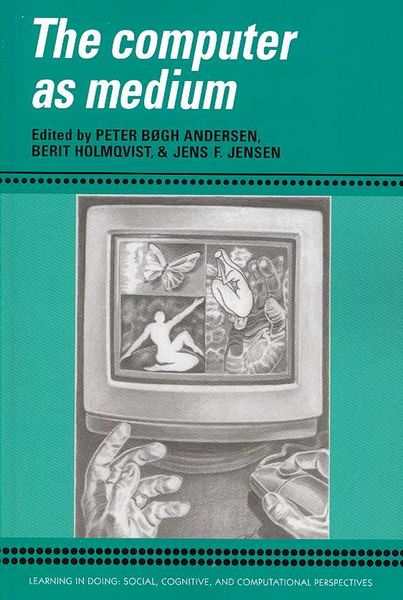
The Computer as Medium

Fr. 78.90

inkl. gesetzl. MwSt., Versandkostenfrei


Beschreibung

Produktdetails

Einband

Taschenbuch

Erscheinungsdatum

31.01.2007

Herausgeber

Andersen Peter Bxgh + weitere

Verlag

Cambridge Academic

Seitenzahl

508

Maße (L/B/H)

22.9/15.2/3 cm

Gewicht

752 g

Sprache

Englisch, Französisch

ISBN

978-0-521-03580-4

Beschreibung

Produktdetails

Einband

Taschenbuch

Erscheinungsdatum

31.01.2007

Herausgeber

Verlag

Cambridge Academic

Seitenzahl

508

Maße (L/B/H)

22.9/15.2/3 cm

Gewicht

752 g

Sprache

Englisch, Französisch

ISBN

978-0-521-03580-4

Herstelleradresse

Libri GmbH
Europaallee 1
36244 Bad Hersfeld
DE

Email: gpsr@libri.de

Kundinnen und Kunden meinen

0 Bewertungen

Informationen zu Bewertungen

Zur Abgabe einer Bewertung ist eine Anmeldung im Konto notwendig. Die Authentizität der Bewertungen wird von uns nicht überprüft. Wir behalten uns vor, Bewertungstexte, die unseren Richtlinien widersprechen, entsprechend zu kürzen oder zu löschen.

Die Bewertungen sind nach Format, Anzahl Sterne und Datum sortiert.

Verfassen Sie die erste Bewertung zu diesem Artikel

Helfen Sie anderen Kund*innen durch Ihre Meinung

Kundinnen und Kunden meinen

0 Bewertungen filtern

Weitere Artikel finden Sie in

  • Produktbild: The Computer as Medium
  • Produktbild: The Computer as Medium
  • Series foreword; Preface; Contributors; Part I. Computer-Based Signs: Introduction Peter Bøgh Andersen; 1. A semiotic approach to programming Peter Bøgh Andersen; 2. Structuralism, computation and cognition: the contribution of glossematics David Piotrowski; 3. The shortest way between two points is a good idea: signs, Peirce and theorematic machines Keld Gall Jørgensen; 4. Logic grammar and the triadic sign relation Per Hasle; 5. Meaning and the machine: toward a semiotics of interaction Per Aage Brandt; Part II. The Rhetoric of Interactive Media: Introduction Berit Holmqvist; 6. Narrative computer systems: the dialectics of emotion and formalism Berit Holmqvist and Peter Bøgh Andersen; 7. Interactive fiction: artificial intelligence as a mode of sign production Peter Bøgh Andersen and Berit Holmqvist; 8. Plays, theatres and the art of acting in the eighteenth century: a formal analysis Jens Hougaard; 9. The meaning of plot and narrative Jørgen Bang; 10. Face to interface Berit Holmqvist; 11. Drawing and programming Bjørn Laursen and Peter Bøgh Andersen; 12. Hypermedia communication and academic discourse: some speculations on a future genre Gunnar Liestøl; Part III. Computers In Context: Introduction Jens F. Jensen; 13. Computer culture: the meaning of technology and the technology of meaning Jens F. Jensen; 14. One person, one computer: the social construction of the personal computer Klaus Bruhn Jensen; 15. Hi-tech network organizations as self-referential systems Lars Qvortrup; Comment: disturbing communication Peter Bøgh Andersen; 16. Dialogues in networks Elsebeth Korsgaard Sorensen; 17. Historical trends in computer and information technology Jens Christensen; Comment: the history of computer-based signs Peter Bøgh Andersen; 18. A historical perspective on work practices and technology Randi Markussen; 19. Hypertext: from modern utopia to post-modern dystopia? Bjørn Sørenssen; Index.