KI-Beratung Beta

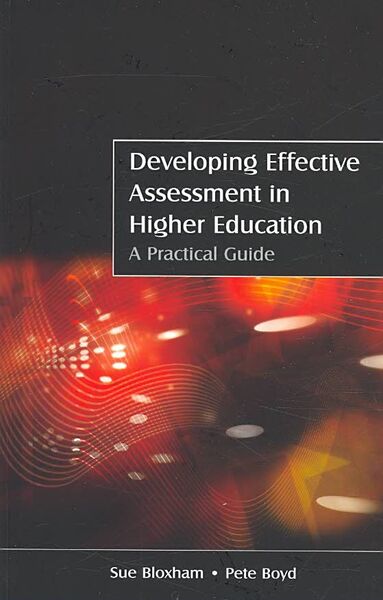
Produktbild: Developing Effective Assessment in Higher Education: A Practical Guide

Developing Effective Assessment in Higher Education: A Practical Guide

Fr. 61.90

inkl. gesetzl. MwSt., Versandkostenfrei


Beschreibung

"As an overview, Developing Effective Assessment in Higher Education makes a very useful contribution to assessment literature, providing a publication that is relevant and accessible to practitioners whilst giving rigorous exploration of issues associated with student assessment. It should find a readership...

Beschreibung

"As an overview, Developing Effective Assessment in Higher Education makes a very useful contribution to assessment literature, providing a publication that is relevant and accessible to practitioners whilst giving rigorous exploration of issues associated with student assessment. It should find a readership on that basis and will be welcomed as a considered and insightful contribution to the literature on student assessment."
Higher Education Review

  • What are the main issues when considering the design and management of effective assessment strategies for academic programmes?
  • How should lecturers design and use assessment in university so that it helps students to learn, as well as judging their achievement?
  • How can students be prepared for assessment, including peer, self and group assessment?
This book provides comprehensive practical guidance on managing and improving assessment within higher education. It tackles all stages in the assessment cycle including:
  • Assessment design
  • Preparing students for assessment
  • Marking and moderation
  • Providing feedback
  • Quality assurance
It also provides a concise introduction to the research literature on assessment which will inform practice, debate, programme enhancement and practitioner research within university departments, teaching teams and courses for higher education teachers.

The practical guidance in the book is substantiated with reference to relevant research and policy. In particular, it considers how the different purposes of assessment create conflicting demands for staff; often characterised by the tension between attempting to support student learning whilst meeting imperatives for quality assurance and demonstrable maintenance of standards. Issues are debated using concrete examples and workable solutions are illustrated. Consideration is also given to the management of assessment as well as to how new technologies might be used to develop assessment methods and enhance student learning.

Developing Effective Assessment in Higher Education is key reading for both new and experienced lecturers, programme leaders and academic developers, and will enhance their efforts to use assessment to improve students' learning as well as to grade them fairly, reliably and efficiently.

Produktdetails

Einband

Taschenbuch

Erscheinungsdatum

01.04.2008

Verlag McGraw-Hill Publishing Company
Seitenzahl

272

Produktdetails

Einband

Taschenbuch

Erscheinungsdatum

01.04.2008

Verlag McGraw-Hill Publishing Company
Seitenzahl

272

Maße (L/B/H)

22.8/16.2/1.7 cm

Gewicht

445 g

Sprache

Englisch

ISBN

978-0-335-22107-3

Herstelleradresse

Libri GmbH
Europaallee 1
36244 Bad Hersfeld
DE

Email: gpsr@libri.de

Noch keine Bewertungen vorhanden

Verfassen Sie die erste Bewertung zu diesem Artikel

Helfen Sie anderen Kundinnen und Kunden durch Ihre Meinung.

Kundinnen und Kunden meinen

Bewertungen (0)

  • Produktbild: Developing Effective Assessment in Higher Education: A Practical Guide
  • Contributors

    Acknowledgements

    PART 1: INTRODUCTION AND CONTEXT

    1.Introduction

    2.The Evidence base for assessment practice in higher education

    3.The conflicting purposes of assessmentValidity

    PART 2: DEALING WITH ASSESSMENT

    4.Teaching a module: maximising the potential of assessment

    5.Preparing students for assessment

    6.Marking

    7.Providing effective feedback for learning

    8.Moderation: towards greater consistency in markingSetting the context

    9.Managing assessment in different roles

    10. Supporting widening participation through assessment

    PART 3: DEVELOPING ASSESSMENT

    11. Planning a programme assessment strategy

    12.Planning the assessment for a module

    13. Diversifying assessment methods

    14. Computer aided assessment

    15. Professional development and assessment

    References

    Glossary

    Index