• Produktbild: Crime Science
  • Produktbild: Crime Science

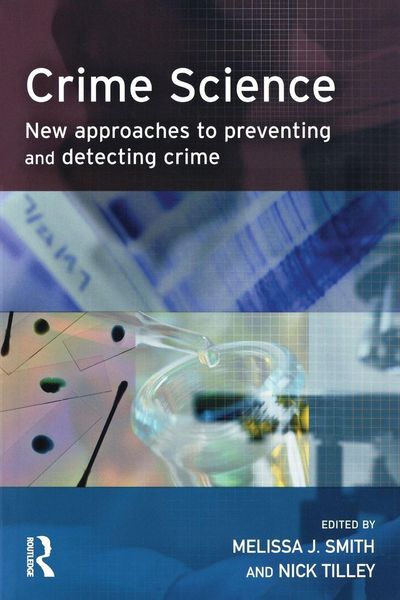
Crime Science

Fr. 73.90

inkl. gesetzl. MwSt., Versandkostenfrei


Beschreibung

Produktdetails

Einband

Taschenbuch

Erscheinungsdatum

01.02.2005

Herausgeber

Melissa Smith + weitere

Verlag

Taylor and Francis

Seitenzahl

242

Maße (L/B/H)

23.4/15.6/1.3 cm

Gewicht

374 g

Sprache

Englisch

ISBN

978-1-84392-089-2

Beschreibung

Portrait

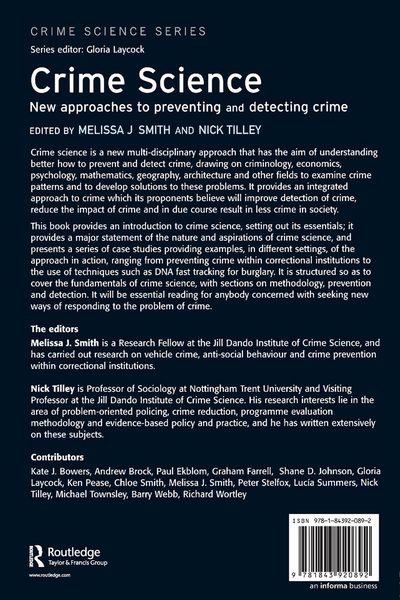
Melissa J. Smith works within the Jill Dando Institute of Crime Science, University College London, UK.

Nick Tilley is Professor of Security and Crime Science at the Jill Dando Institute of Crime Science, University College London, UK. He is also Professor Emeritus of Sociology at Nottingham Trent University, UK.

Produktdetails

Einband

Taschenbuch

Erscheinungsdatum

01.02.2005

Herausgeber

Verlag

Taylor and Francis

Seitenzahl

242

Maße (L/B/H)

23.4/15.6/1.3 cm

Gewicht

374 g

Sprache

Englisch

ISBN

978-1-84392-089-2

Herstelleradresse

Libri GmbH
Europaallee 1
36244 Bad Hersfeld
DE

Email: GPSR Kontakt

Noch keine Bewertungen vorhanden

Verfassen Sie die erste Bewertung zu diesem Artikel

Helfen Sie anderen Kundinnen und Kunden durch Ihre Meinung.

Kundinnen und Kunden meinen

Bewertungen (0)

Die Leseprobe wird geladen.
  • Produktbild: Crime Science
  • Produktbild: Crime Science
  • Introduction Part 1: Background 1. Defining crime science Part 2: Theory and Methodology 2. How to police the future: scanning for scientific and technological innovations which generate potential threats and opportunities in crime, policing and crime reduction 3. Cost-benefit analysis for crime science: making cost benefit analysis useful through a portfolio of outcomes Part 3: Case Studies in Preventive Crime Science 4. Reducing prison disorder through situational prevention: the Glen Parva experience 5. Driving down crime at motorway service areas 6. Vehicle excise duty evasion in the UK 7. Predicting the future or summarising the past? Crime mapping as anticipation Part 4: Case Studies in Crime Science for Detection 8. DNA fast-tracking 9. Cognition and detection: reluctant bedfellows?