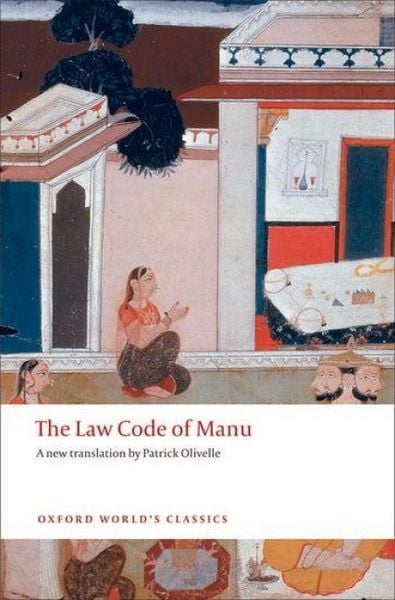
The Law Code of Manu
-
- Englisch ausgewählt
Fr. 27.90
inkl. gesetzl. MwSt.,
-
Kostenlose Lieferung ab Fr. 30 Einkaufswert
Schweiz & Liechtenstein:
Versandkostenfrei ab Fr. 30.00
Versandkosten bis Fr. 30.00: Fr. 3.50Andere Lieferländer
Fr. 18.00 unabhängig vom Warenwert
Beschreibung
Produktdetails
Einband
Taschenbuch
Erscheinungsdatum
23.04.2009
Verlag
Oxford AcademicSeitenzahl
368
Maße (L/B/H)
20.4/13.1/2.3 cm
Gewicht
268 g
Übersetzt von
Olivelle Patrick
Sprache
Englisch
ISBN
978-0-19-955533-8
'Manu was seated, when the great seers came up to him: "Please, Lord, tell us the Laws of all the social classes, as well as of those born in between..."'
The Law Code of Manu is the most authoritative and the best-known legal text of ancient India. Famous for two thousand years it still generates controversy, with Manu's verses being cited in support of the oppression of women and members of the lower castes. A seminal Hindu text, the Law Code is important for its classic description of so many social institutions that have come to be identified with Indian society. It deals with the relationships between social and ethnic groups, between men and women, the organization of the state and the judicial system, reincarnation, the workings of karma, and all aspects of the law.
Patrick Olivelle's lucid translation is the first to be based on his critically edited text, and it incorporates the most recent scholarship on ancient Indian history, law, society, and religion.
ABOUT THE SERIES: For over 100 years Oxford World's Classics has made available the widest range of literature from around the globe. Each affordable volume reflects Oxford's commitment to scholarship, providing the most accurate text plus a wealth of other valuable features, including expert introductions by leading authorities, helpful notes to clarify the text, up-to-date bibliographies for further study, and much more.
Noch keine Bewertungen vorhanden
Verfassen Sie die erste Bewertung zu diesem Artikel
Helfen Sie anderen Kundinnen und Kunden durch Ihre Meinung.