Gutscheinbedingungen

*Gültig bis 20.09.2026 auf (fast) alles. Ausgeschlossen sind Smartboxen, Zeitschriften, Tickets, Lebensmittel, Gaming-Elektroartikel, Tinte/Toner, Gutscheine, Geschenkkarten, Blumen und Abos | Einlösbar in allen Buchhandlungen von Orell Füssli, Barth Bücher, Buchladen Rapunzel, Schuler Orell Füssli, Stauffacher und ZAP unter Vorweisung des Gutscheins, auf www.orellfüssli.ch durch Eingabe des Gutscheincodes. Beim Service „eBooks verschenken“ und bei eBook-Käufen via eReader nicht einlösbar | Mindesteinkaufswert: Fr. 100.- | Nicht mit anderen Rabatten kumulierbar.

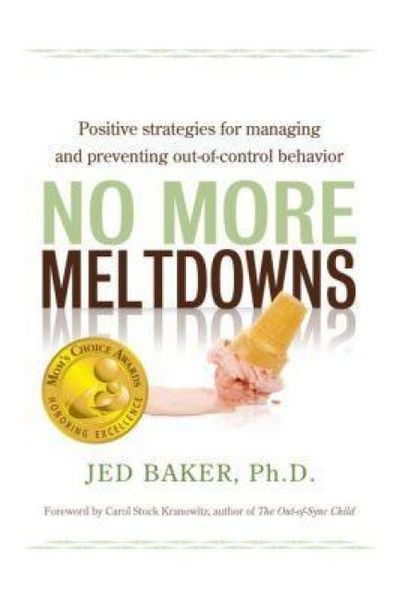
Produktbild: No More Meltdowns

No More Meltdowns Positive Strategies for Managing and Preventing Out-Of-Control Behavior

Aus der Reihe Future Horizons, Inc

Fr. 27.90

inkl. gesetzl. MwSt., zzgl. Versandkosten


  • Kostenlose Lieferung ab Fr. 30 Einkaufswert

    Schweiz & Liechtenstein:

    Versandkostenfrei ab Fr. 30.00
    Versandkosten bis Fr. 30.00: Fr. 3.50

    Andere Lieferländer

    Fr. 18.00 unabhängig vom Warenwert

Beschreibung

Produktdetails

Einband

Taschenbuch

Erscheinungsdatum

01.04.2008

Verlag

Future Horizons

Seitenzahl

150

Maße (L/B/H)

23.4/15.4/1.3 cm

Gewicht

232 g

Sprache

Englisch

ISBN

978-1-932565-62-1

Beschreibung

Produktdetails

Einband

Taschenbuch

Erscheinungsdatum

01.04.2008

Verlag

Future Horizons

Seitenzahl

150

Maße (L/B/H)

23.4/15.4/1.3 cm

Gewicht

232 g

Sprache

Englisch

ISBN

978-1-932565-62-1

Herstelleradresse

Libri GmbH
Europaallee 1
36244 Bad Hersfeld
DE

Email: gpsr@libri.de

Noch keine Bewertungen vorhanden

Verfassen Sie die erste Bewertung zu diesem Artikel

Helfen Sie anderen Kundinnen und Kunden durch Ihre Meinung.

Kundinnen und Kunden meinen

Bewertungen (0)

Die Leseprobe wird geladen.
  • Produktbild: No More Meltdowns
    • Foreword
    • Introduction
    • THE PROBLEM
    • Chapter 1: Meltdowns: When rewards and punishments are not enough
      • What is a meltdown?
      • The usual parenting advice: start with rules and consequences
      • The limits of discipline: when rewards and punishments no longer work
      • But aren’t meltdowns just manipulative behavior?
      • Can we really expect no more meltdowns?
      • An overview of the four-step model for reducing meltdowns
      • Chapter 2: What are meltdowns made of?
      • Fight, flight or freeze response
      • Temperament
      • Difficulties with abstract thinking and perspective taking
      • Inflexibility
      • An explosive combination
      • THE SOLUTION
      • Chapter 3: Accepting and appreciating our children
      • Controlling our own frustration
      • Building competence
      • Avoiding learned helplessness
      • The 80/20 rule
      • Anticipating frustration as part of learning
      • When to avoid power struggles
      • Chapter 4: De-escalating a meltdown
        • How to de-escalate a meltdown
        • Distractions
        • When too much distraction can make things worse
        • Helping children find their own distractions and calming strategies
        • Steps for creating self-calming strategies
        • Chapter 5: Understanding why repeat problems occur
        • Understanding the triggers
        • The ABCs of behavior: Antecedent, Behavior, Consequence
        • Getting the ABCs: Interviews and observations
        • Seeing the pattern
        • Chapter 6: Creating a prevention plan
        • The components of a good prevention plan
        • A prevention plan for Kevin
        • The four types of meltdown situations
        • Plans for the Four Types of Meltdown Situations
        • Chapter 7: Demands
        • Do your schoolwork
        • Try it, it’s delicious
        • Hurry up, the bus is coming
        • Clean up
        • Let’s go to the party
        • Chapter 8: Waiting
        • Just wait
        • You can’t always get what you want
        • Okay, time to stop playing
        • Chapter 9: Threats to self-image
        • Winning isn’t everything
        • It’s okay to make mistakes
        • But names will never hurt you
        • Chapter 10: Unmet wishes for attention
        • I can’t play with you now
        • Don’t be jealous
        • Time to go to bed
        • Chapter 11: Closing thoughts: Finding your own way
        • Prevention plan form
        • References