• Produktbild: Latino Education
  • Produktbild: Latino Education

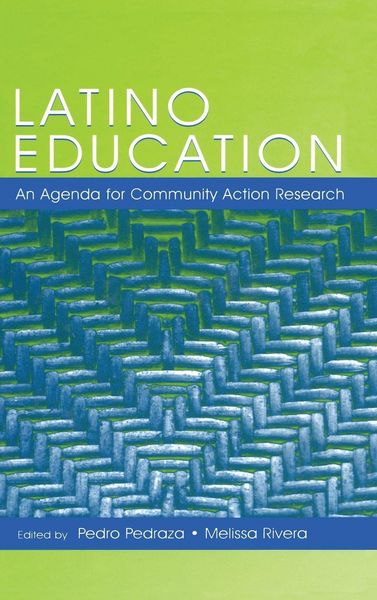
Latino Education An Agenda for Community Action Research

Fr. 303.00

inkl. gesetzl. MwSt., Versandkostenfrei


Beschreibung

Produktdetails

Einband

Gebundene Ausgabe

Erscheinungsdatum

08.07.2005

Herausgeber

Pedraza Pedro + weitere

Verlag

Taylor and Francis

Seitenzahl

584

Maße (L/B/H)

23.5/15.7/3.6 cm

Gewicht

1240 g

Sprache

Englisch

ISBN

978-0-8058-4986-8

Beschreibung

Produktdetails

Einband

Gebundene Ausgabe

Erscheinungsdatum

08.07.2005

Herausgeber

Verlag

Taylor and Francis

Seitenzahl

584

Maße (L/B/H)

23.5/15.7/3.6 cm

Gewicht

1240 g

Sprache

Englisch

ISBN

978-0-8058-4986-8

Herstelleradresse

Libri GmbH
Europaallee 1
36244 Bad Hersfeld
DE

Email: gpsr@libri.de

Kundinnen und Kunden meinen

0 Bewertungen

Informationen zu Bewertungen

Zur Abgabe einer Bewertung ist eine Anmeldung im Konto notwendig. Die Authentizität der Bewertungen wird von uns nicht überprüft. Wir behalten uns vor, Bewertungstexte, die unseren Richtlinien widersprechen, entsprechend zu kürzen oder zu löschen.

Die Bewertungen sind nach Format, Anzahl Sterne und Datum sortiert.

Verfassen Sie die erste Bewertung zu diesem Artikel

Helfen Sie anderen Kund*innen durch Ihre Meinung

Kundinnen und Kunden meinen

0 Bewertungen filtern

Die Leseprobe wird geladen.
  • Produktbild: Latino Education
  • Produktbild: Latino Education
  • Contents: Foreword. Preface. Part I: Introduction--Creating the Collective Vision.P. Pedraza, M. Rivera, Origins of the National Latino/a Education Research and Policy Project (NLERAP). C.I. Mercado, L.J. Santamaría, A New Vision for Latino/a Education: A Comparative Perspective on Research Agendas. Part II: Sociohistorical Revisioning.V-M. MacDonald, K. Monkman, Setting the Context: Historical Perspectives on Latino/a Education. B.M. Flores, The Intellectual Presence of the Deficit View of Spanish-Speaking Children in the Educational Literature During the 20th Century. M. Montero-Sieburth, Explanatory Models of Latino Education During the Reform Movement of the 1980s. Part III: Exposing the Colonizing Effects of Reform.H.R. Cordero-Guzmán, Latinos and Education: A Statistical Portrait. R. González, Standards-Based Reform and the Latino/a Community: Opportunities for Advocacy. R. Rueda, Student Learning and Assessment: Setting an Agenda. T.I. Márquez-López, California's Standards Movement: How English Learners Have Been Left Out of the Equation for Success. J.G.A. Grinberg, K.P. Goldfarb, E. Saavedra,Con Pasíon y Con Coraje: The Schooling of Latino/a Students and Their Teachers' Education. Part IV: Collapsing the Paradox, Imagining New Possibilities.C. Tejeda, K.D. Gutierrez, Fighting the Backlash: Decolonizing Perspectives and Pedagogies in Neocolonial Times. L.C. Moll, R. Ruiz, The Educational Sovereignty of Latino/a Students in the United States. O.A. Vásquez, Social Action and the Politics of Collaboration. A. De Jesús, Theoretical Perspectives on the Underachievement of Latino/a Students in U.S. Schools: Toward a Framework for Culturally Additive Schooling. Part V: Actualizing the Future.N.M. Hidalgo, Latino/a Families' Epistemology. R.V. Padilla, Latino/a Education in the 21st Century. R. Rocco, Democracy, Education, and Human Rights in the United States: Strategies of Latino/a Empowerment. Part VI: Realizing the Power of Community Action.P. Pedraza, Reflections on Collaborative Research and the NLERAP Process. S. Nieto, Afterword: A Project of Hope: Defining a New Agenda for Latino/a Education in the 21st Century. Appendices: NLERAP: Education Research Framework and Agenda. Incorporating Latino Communities into Educational Research: Statement on Methodology.