Beschreibung
Produktdetails
Einband
Taschenbuch
Erscheinungsdatum
06.03.1997
Verlag
Ingram Publishers ServicesSeitenzahl
146
Maße (L/B/H)
22.6/14.8/1 cm
Gewicht
245 g
Sprache
Englisch
ISBN
978-0-7914-3302-7
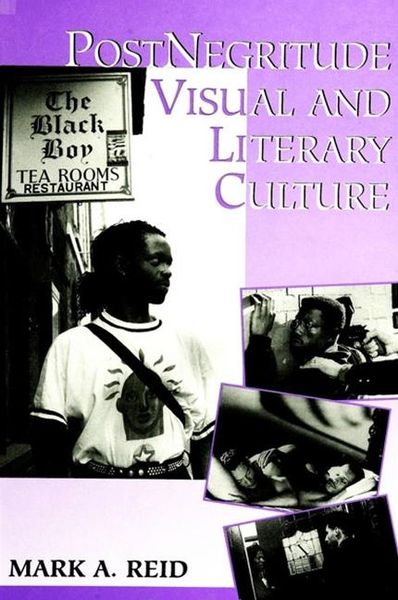
Shows how film, literature, photography, and television news broadcasts construct myths about race, gender, sexuality, and nation and reinforce socialized ways of looking at these identities, and examines how some creative works and public reactions challenge these myths.
In the 1960s and 1970s, the civil rights movement and other national and cultural movements fractured dominant paradigms of American identity and demanded a reformulation of American values and norms. This book borrows the moral, ethical, and political purposes of these movements to show how film, literature, photography, and television news broadcasts construct essentialist myths about race, gender, sexuality, and nation. It also examines how some visual and literary works and public reactions challenge these essentialist myths by exploring racial, sexual, and national anxieties.
Reid explains how artists such as filmmakers Julie Dash, Spike Lee, and Marlon Riggs, photographers Rotimi Fani-Kayode and Gordon Parks, novelists John A. Williams and Ayi Kwei Armah, playwright Adrienne Kennedy, and poet Bob Kaufman portray the fears of people in the grips of social and psychological change. In each chapter, he explores how an important social issue -- black feminism, interracial intimacy, biracial and homosexual identity, and black erotica, for example -- is presented in film, literature, and photography. Throughout the book Reid's analysis is driven by a postNegritude understanding of race and cultural identity as a socially acquired and unfixed process rather than a biological fact. By showing how visual and literary artists challenge hegemonies of power through the creative imagination, he challenges monolithic andfixed notions of race, ethnicity, sexuality, gender, religion, and cultural identity.
"...The topic is of the greatest import right now, particularly in the aftermath of the Simpson trial. I think this book will incite an enormous amount of discussion and controversy in th
In the 1960s and 1970s, the civil rights movement and other national and cultural movements fractured dominant paradigms of American identity and demanded a reformulation of American values and norms. This book borrows the moral, ethical, and political purposes of these movements to show how film, literature, photography, and television news broadcasts construct essentialist myths about race, gender, sexuality, and nation. It also examines how some visual and literary works and public reactions challenge these essentialist myths by exploring racial, sexual, and national anxieties.
Reid explains how artists such as filmmakers Julie Dash, Spike Lee, and Marlon Riggs, photographers Rotimi Fani-Kayode and Gordon Parks, novelists John A. Williams and Ayi Kwei Armah, playwright Adrienne Kennedy, and poet Bob Kaufman portray the fears of people in the grips of social and psychological change. In each chapter, he explores how an important social issue -- black feminism, interracial intimacy, biracial and homosexual identity, and black erotica, for example -- is presented in film, literature, and photography. Throughout the book Reid's analysis is driven by a postNegritude understanding of race and cultural identity as a socially acquired and unfixed process rather than a biological fact. By showing how visual and literary artists challenge hegemonies of power through the creative imagination, he challenges monolithic andfixed notions of race, ethnicity, sexuality, gender, religion, and cultural identity.
"...The topic is of the greatest import right now, particularly in the aftermath of the Simpson trial. I think this book will incite an enormous amount of discussion and controversy in th
Kundinnen und Kunden meinen
Verfassen Sie die erste Bewertung zu diesem Artikel
Helfen Sie anderen Kund*innen durch Ihre Meinung