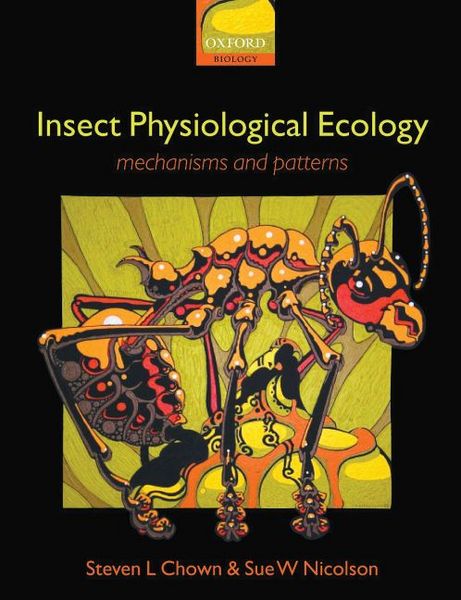
Insect Physiological Ecology Mechanisms and Patterns
-
- Hardcover ausgewählt
- Taschenbuch
- eBook
-
Sprache:Englisch
Fr. 236.00
inkl. gesetzl. MwSt.,
Beschreibung
Produktdetails
Einband
Gebundene Ausgabe
Erscheinungsdatum
01.09.2004
Verlag
Oxford University PressSeitenzahl
256
Sprache
Englisch
ISBN
978-0-19-851548-7
This book provides a modern, synthetic overview of interactions between insects and their environments from a physiological perspective that integrates information across a range of approaches and scales. It shows that evolved physiological responses at the individual level are translated intocoherent physiological and ecological patterns at larger, even global scales. This is done by examining in detail the ways in which insects obtain resources from the environment, process these resources in various ways, and turn the results into energy which allows them to regulate their internalenvironment as well as cope with environmental extremes of temperature and water availability. The book demonstrates that physiological responses are not only characterized by substantial temporal variation, but also show coherent variation across several spatial scales. At the largest, globalscale, there appears to be substantial variation associated with the hemisphere in which insects are found. Such variation has profound implications for patterns of biodiversity as well as responses to climate change, and these implications are explicitly discussed. The book provides a novelintegration of the understanding gained from broad-scale field studies of many species and the more narrowly focused laboratory investigations of model organisms. In so doing it reflects the growing realization that an integration of mechanistic and large-scale comparative physiology can result inunexpected insights into the diversity of insects.
Kundinnen und Kunden meinen
Verfassen Sie die erste Bewertung zu diesem Artikel
Helfen Sie anderen Kund*innen durch Ihre Meinung