KI-Beratung Beta

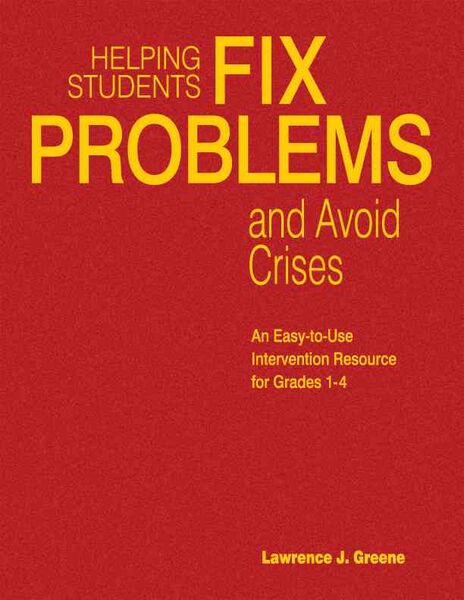
Produktbild: Greene, L: Helping Students Fix Problems and Avoid Crises

Greene, L: Helping Students Fix Problems and Avoid Crises An Easy-to-Use Intervention Resource for Grades 1-4

Fr. 92.90

inkl. gesetzl. MwSt., Versandkostenfrei


Beschreibung

This easy-to-use resource for teachers, counsellors, and school administrators working with children ages 6-9 uses instructional principles to help educators model effective life skills behaviours:

- breaking tasks and challenges into manageable pieces

- modeling solutions

- structuring opportunities...

Beschreibung

This easy-to-use resource for teachers, counsellors, and school administrators working with children ages 6-9 uses instructional principles to help educators model effective life skills behaviours:

- breaking tasks and challenges into manageable pieces

- modeling solutions

- structuring opportunities for practice

- providing feedback

- and affirming progress.

The book offers units covering topics that include the child who doesn't have friends, who does poorly in sports, who has difficulty learning, who steals, who tells lies, who bullies others. Each unit provides a succinct discussion of the topic for the educator, a 10-minute read-aloud story, strategic thinking questions, optional paper-and-pencil activities, and photocopiable exercises.

The book includes two appendices to guide the teacher through more complex psychological problems and psychological overlay, which may require referral and counselling. This book will be an essential resource for every primary teacher who wants to help guide learners through many of the developmental challenges of childhood.

Produktdetails

Einband

Gebundene Ausgabe

Erscheinungsdatum

03.08.2005

Verlag Sage Publications
Seitenzahl

200

Produktdetails

Einband

Gebundene Ausgabe

Erscheinungsdatum

03.08.2005

Verlag Sage Publications
Seitenzahl

200

Maße (L/B/H)

28.7/21.9/1.7 cm

Gewicht

710 g

Sprache

Englisch

ISBN

978-1-4129-0469-8

Noch keine Bewertungen vorhanden

Verfassen Sie die erste Bewertung zu diesem Artikel

Helfen Sie anderen Kundinnen und Kunden durch Ihre Meinung.

Kundinnen und Kunden meinen

Bewertungen (0)

Weitere Artikel finden Sie in

  • Produktbild: Greene, L: Helping Students Fix Problems and Avoid Crises
  • Introduction
    Being Attuned
    Can I Really Do It?
    How the Program Works
    Acknowledgments
    About the Author
    Unit 1: The Child Who Doesn't Have Friends
    For Educators: Examining the Dynamics and Implications of Social Rejection
    Struggling With Seemingly Insoluble Problems
    The Nuts and Bolts of Self-Esteem
    Identifying and Expressing Feelings
    Concept and Application
    Developing Analytical Thinking Skills
    Key Objectives for Enhancing Students' Awareness
    Can Children Be Taught to Be More Empathetic?
    Examining the Story
    The Questions That Follow the Story
    Cause-and-Effect Principles
    Brainstorming
    Getting Started
    For Students: The Child Who Doesn't Have Friends
    The Story
    Oral Questions
    Optional Activity: Careful Reading and Analysis of the Story
    Supplemental Reproducible Exercises
    Follow-Up and Application
    Additional Concrete Reinforcements
    Unit 2: The Child Who Has Difficulty Learning
    For Educators: Examining the Emotional Implications of Learning Problems
    The Effects of Learning Differences
    Conduct Commonly Associated With Learning Problems
    Classroom Scripts
    Restrictive Assessment Criteria
    Identifying and Applying Multiple Intelligences
    Learning Preferences
    Identifying Preferred Learning Modalities
    Learning Modality Inventory
    Interpreting the Survey
    Using Dominant and Preferred Learning Modalities
    Examining the Story
    The Questions That Follow the Story
    For Students: The Child Who Has Difficulty Learning
    The Story
    Oral Questions
    Optional Activity: Careful Reading and Analysis of the Story
    Supplemental Reproducible Exercises
    Follow-Up and Application
    Concrete Reinforcements
    Unit 3: The Child Who Steals
    For Educators: Examining the Dynamics and Implications of Stealing
    Common Explanations for Stealing
    An Alternative to the Traditional Adult Responses to Stealing
    Examining the Story
    The Questions That Follow the Story
    For Students: The Child Who Steals
    The Story
    Oral Questions
    Optional Activity: Careful Reading and Analysis of the Story
    Supplemental Reproducible Exercises
    Follow-Up and Application
    Concrete Reinforcements
    Unit 4: The Child Who Tells Lies
    For Educators: Examining the Dynamics and Implications of Lying
    Training Children to Be Truthful
    Expanding the List of Explanations for Lying
    Traditional Adult Responses to Lying
    The Role of the Teacher
    Examining the Story
    The Questions That Follow the Story
    For Students: The Child Who Tells Lies
    The Story
    Oral Questions
    Optional Activity: Careful Reading and Analysis of the Story
    Supplemental Reproducible Exercises
    Follow-Up and Application
    Concrete Reinforcements
    Unit 5: The Child Who Is a Bully
    For Educators: Examining the Dynamics and Implications of Bullying
    Power as a Surrogate Social Acceptance
    Training Children to Be Kind
    The Role of the Teacher
    Examining the Story
    The Questions That Follow the Story
    For Students: The Child Who Is a Bully
    The Story
    Oral Questions
    Optional Activity: Careful Reading and Analysis of the Story
    Supplemental Reproducible Exercises
    Follow-Up and Application
    Concrete Reinforcements
    Unit 6: The Child Who Does Poorly in Sports
    For Educators: Examining the Implications of Being Poorly Coordinated
    The Ethos of Sports
    The Consequences of Poor Coordination
    Antidotes for Athletic Insufficiencies
    Examining the Story
    The Questions That Follow the Story
    For Students: The Child Who Does Poorly in Sports
    The Story
    Oral Questions
    Optional Activity: Careful Reading and Analysis of the Story
    Supplemental Reproducible Exercises
    Follow-up and Application
    Concrete Reinforcements
    Appendix 1: Psychological Overlay and Learning Differences
    Understanding Psychological Overlay
    Identifying the Symptoms of Psychological Overlay
    Behaviors and Attitudes That May Indicate Psychological Overlay
    Appendix 2: Psychological Problems
    Red Flag Symptoms of a Possible Psychological Problem
    Referral and Intervention
    Index