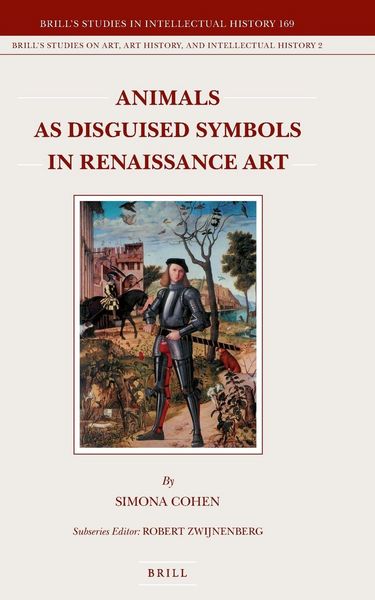
Animals as Disguised Symbols in Renaissance Art
-
- Englisch ausgewählt
Fr. 222.00
inkl. gesetzl. MwSt.,
Beschreibung
Produktdetails
Einband
Gebundene Ausgabe
Erscheinungsdatum
16.10.2008
Verlag
BrillSeitenzahl
320
Maße (L/B/H)
24.4/16.5/2.3 cm
Gewicht
975 g
Sprache
Englisch
ISBN
978-90-04-17101-5
The relationship between medieval animal symbolism and the iconography of animals in the Renaissance has scarcely been studied. Filling a gap in this significant field of Renaissance culture, in general, and its art, in particular, this book demonstrates the continuity and tenacity of medieval animal interpretations and symbolism, disguised under the veil of genre, religious or mythological narrative and scientific naturalism. An extensive introduction, dealing with relevant medieval and early Renaissance sources, is followed by a series of case studies that illustrate ways in which Renaissance artists revived conventional animal imagery in unprecedented contexts, investing them with new meanings, on a social, political, ethical, religious or psychological level, often by applying exegetical methodology in creating multiple semantic and iconographic levels.
Brill's Studies on Art, Art History, and Intellectual History, vol. 2
Brill's Studies on Art, Art History, and Intellectual History, vol. 2
Kundinnen und Kunden meinen
Verfassen Sie die erste Bewertung zu diesem Artikel
Helfen Sie anderen Kund*innen durch Ihre Meinung