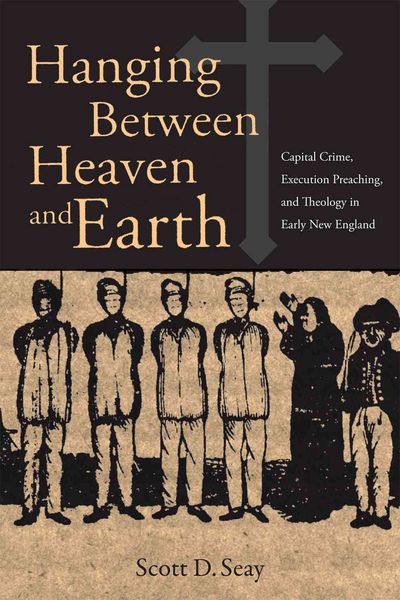
Hanging Between Heaven & Earth Capital Crime, Execution Preaching, and Theology in Early New England
-
- Englisch ausgewählt
Fr. 52.90
inkl. gesetzl. MwSt.,
Beschreibung
Produktdetails
Einband
Gebundene Ausgabe
Altersempfehlung
ab 18 Jahr(e)
Erscheinungsdatum
01.06.2009
Verlag
Cornell University PressSeitenzahl
232
Maße (L/B/H)
22.1/14.7/2 cm
Gewicht
410 g
Sprache
Englisch
ISBN
978-0-87580-402-6
One of the most heavily ritualized spectacles of the 17th and 18th centuries, the public execution, warned of the wages of sin, reconciled the convict to the community, and demonstrated the authority of the state and the church. In New England, a clergyman not only played a central role in this ritual, he also wrote his own monologuethe execution sermon. Seay analyzes nearly one hundred execution sermons preached and published in colonial and early national New England and explores the themes of human sinfulness, the economy of conversion, and the nature and function of civil governament and the ways in which theological thinking about these themes changed over time.
Kundinnen und Kunden meinen
Verfassen Sie die erste Bewertung zu diesem Artikel
Helfen Sie anderen Kund*innen durch Ihre Meinung