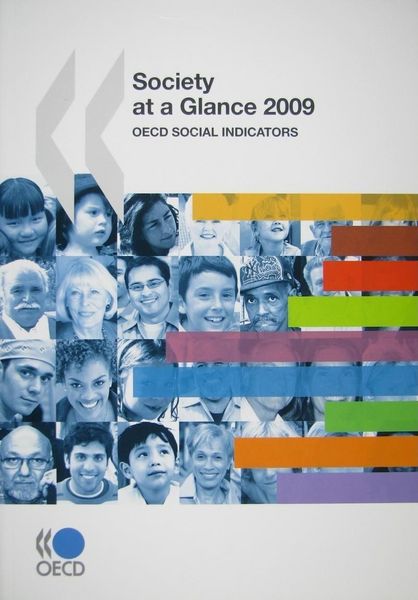
Society At a Glance-2009 OECD Social Indicators
Aus der Reihe
Society at a Glance
-
- Englisch ausgewählt
Fr. 71.90
inkl. gesetzl. MwSt.,
Beschreibung
Produktdetails
Einband
Taschenbuch
Erscheinungsdatum
01.06.2009
Verlag
Organisation for Economic Co-operation and Development OECDSeitenzahl
132
Maße (L/B/H)
26.7/18.8/1 cm
Gewicht
363 g
Auflage
2009
Sprache
Englisch
ISBN
978-92-64-04938-3
Society at a Glance offers a concise quantitative overview of social trends and policies across the OECD. This 2009 edition includes a wide range of information on social issues - such as demography and family characteristics, employment and unemployment, poverty and inequality, social and health care expenditure, and work and life satisfaction -as well as a guide to help readers understand the structure of OECD social indicators.
In addition to updating some of the indicators from previous editions, Society at a Glance 2009 adds several new and innovative social indicators, including adult height, perceived health status, risky youth behaviour and bullying. For the first time, the report also provides a condensed set of headline social indicators summarising social well-being in OECD countries. In addition, a special chapter examines leisure time across the OECD.
Tables des matières:
Chapter 1. Headline Social Indicators
-Introduction
-Headline Social Indicators across the OECD
-Eight Headline Indicators
--Employment Rate for the Working-Age Population
--Share of Students Aged 15 with Reading Competencies at Level 1 or Below
--Gini Coefficient of Household disposable Income
--Ratio of Median Earnings between Women and Men Working Full-Time
--Life Expectancy at Age 65
--Infant Mortality Rate
--Average Life Satisfaction
--Share of People Who Have Been Victims of a Criminal Offense
Chapter 2. Special Focus: Measuring Leisure in OECD Countries
-The Economic Theory of Leisure Time
-Trends in Residual of Paid Work Time
-Allocation of Time over the Life Course
-Leisure across the Average Day
-Time Trends in Leisure from Time-Use Surveys
-Patterns of Leisure Distribution
-Types of Leisure Activities
-Satisfaction with Time Spent on Different Activities
-Mandatory Holidays and Leisure Time
-Conclusion
-Annex 2.A1. Main Features of Time-Use Surveys
Chapter 3. Interpreting OECD Social Indicators
-The Purpose of Social Indicators
-The Framework of OECD Social Indicators
-The Selection and Description of Indicators
-What Can Be Found in This Publication
Chapter 4. General Context Indicators
-Net National Income per Capita
-Fertility Rates
-Migration
-Marriage and Divorce
Chapter 5. Self-Sufficiency Indicators
-Employment
-Unemployment
-Childcare
-Student Performance
-Not in Employment, Education or Training
-Age of Labour Force Exit
-Spending on Education
Chapter 6. Equity Indicators
-Income Inequality
-Poverty
-Poverty among Children
-Adequacy of Benefits of Last Resort
-Public Social Spending
-Total Social Spending
Chapter 7. Health Indicators
-Life Expectancy
-Perceived Health Status
-Infant Health
-Obesity
-Height
-Mental Health
-Long-Term Care Recipients
-Health Care Expenditure
Chapter 8. Social Cohesion Indicators
-Life Satisfaction
-Work Satisfaction
-Crime Victimisation
-Suicides
-Bullying
-Risky Behaviour
In addition to updating some of the indicators from previous editions, Society at a Glance 2009 adds several new and innovative social indicators, including adult height, perceived health status, risky youth behaviour and bullying. For the first time, the report also provides a condensed set of headline social indicators summarising social well-being in OECD countries. In addition, a special chapter examines leisure time across the OECD.
Tables des matières:
Chapter 1. Headline Social Indicators
-Introduction
-Headline Social Indicators across the OECD
-Eight Headline Indicators
--Employment Rate for the Working-Age Population
--Share of Students Aged 15 with Reading Competencies at Level 1 or Below
--Gini Coefficient of Household disposable Income
--Ratio of Median Earnings between Women and Men Working Full-Time
--Life Expectancy at Age 65
--Infant Mortality Rate
--Average Life Satisfaction
--Share of People Who Have Been Victims of a Criminal Offense
Chapter 2. Special Focus: Measuring Leisure in OECD Countries
-The Economic Theory of Leisure Time
-Trends in Residual of Paid Work Time
-Allocation of Time over the Life Course
-Leisure across the Average Day
-Time Trends in Leisure from Time-Use Surveys
-Patterns of Leisure Distribution
-Types of Leisure Activities
-Satisfaction with Time Spent on Different Activities
-Mandatory Holidays and Leisure Time
-Conclusion
-Annex 2.A1. Main Features of Time-Use Surveys
Chapter 3. Interpreting OECD Social Indicators
-The Purpose of Social Indicators
-The Framework of OECD Social Indicators
-The Selection and Description of Indicators
-What Can Be Found in This Publication
Chapter 4. General Context Indicators
-Net National Income per Capita
-Fertility Rates
-Migration
-Marriage and Divorce
Chapter 5. Self-Sufficiency Indicators
-Employment
-Unemployment
-Childcare
-Student Performance
-Not in Employment, Education or Training
-Age of Labour Force Exit
-Spending on Education
Chapter 6. Equity Indicators
-Income Inequality
-Poverty
-Poverty among Children
-Adequacy of Benefits of Last Resort
-Public Social Spending
-Total Social Spending
Chapter 7. Health Indicators
-Life Expectancy
-Perceived Health Status
-Infant Health
-Obesity
-Height
-Mental Health
-Long-Term Care Recipients
-Health Care Expenditure
Chapter 8. Social Cohesion Indicators
-Life Satisfaction
-Work Satisfaction
-Crime Victimisation
-Suicides
-Bullying
-Risky Behaviour
Kundinnen und Kunden meinen
Verfassen Sie die erste Bewertung zu diesem Artikel
Helfen Sie anderen Kund*innen durch Ihre Meinung